Javier Milei has opened a sharper phase in Argentina’s claim to the Falkland Islands, moving from symbolic rhetoric to legal and defense measures that could raise the cost for companies operating in the disputed territory and deepen friction with the UK.
Argentina Falklands decree raises energy legal risk

The most economically significant step is the planned decree to tighten enforcement of Argentina’s hydrocarbons law against firms that explore or produce natural resources in the archipelago without authorization. That could directly target projects such as Sea Lion, the offshore development led by Rockhopper Exploration and Navitas Petroleum, and complicate financing, contracting and future market access for companies seen as operating in defiance of Buenos Aires.
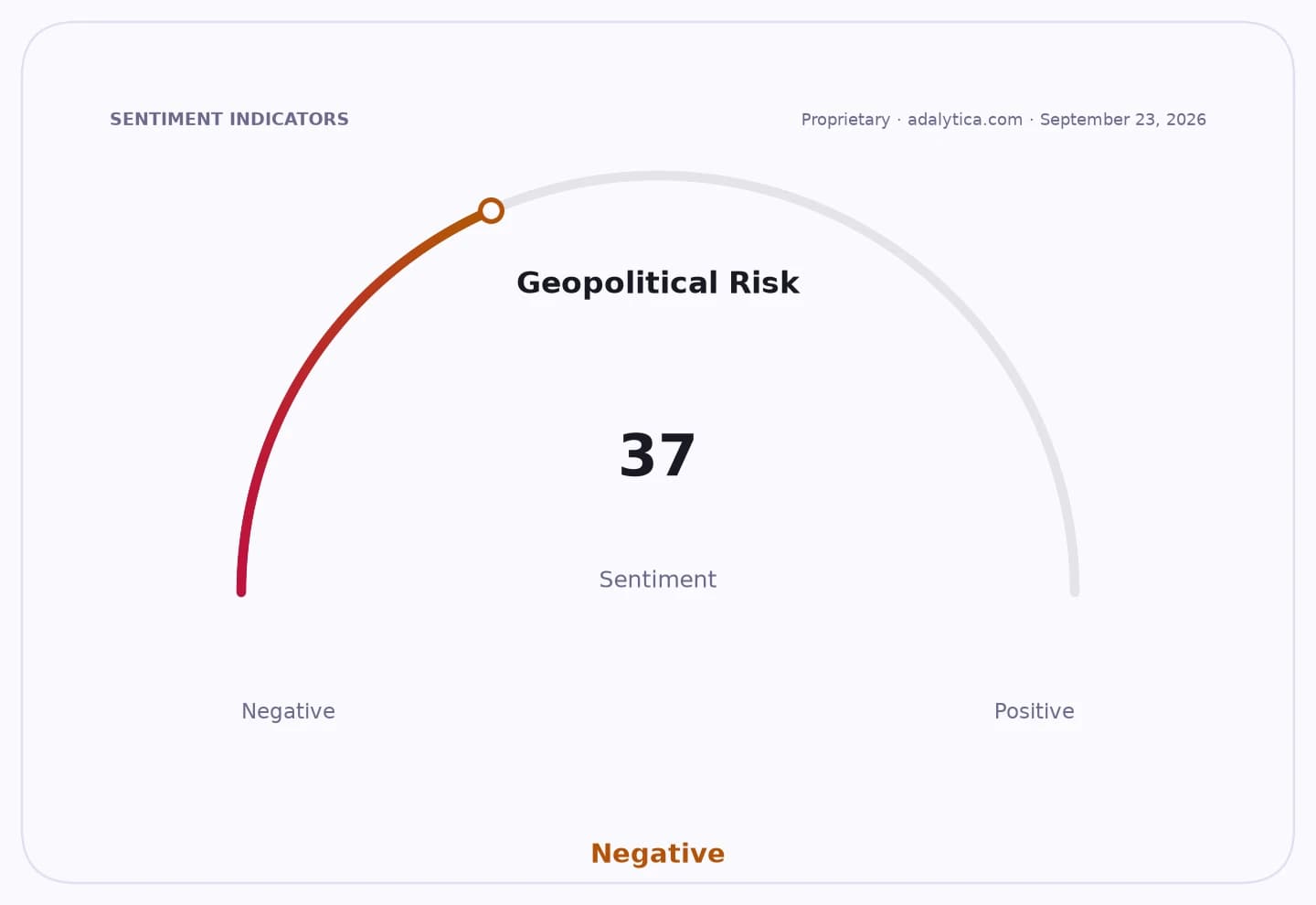
Sentiment IndicatorsⓘProprietary · adalytica.com · September 4, 2026
This is a snapshot — live sentiment, awareness and momentum for 130+ markets update continuously in the dashboard.Open AlphaPulse

Milei said he will also send Congress a broader National Sovereignty Defense bill that would toughen penalties further, create a National Security Council and give it fast-response powers to act against infringements in the islands. In parallel, his government plans to lift defense spending to build an integrated naval base in Tierra del Fuego, part of an effort to strengthen Argentina’s logistical and communications reach in the South Atlantic.
For investors, the significance is twofold. First, the government is trying to convert the Malvinas dispute into a concrete regulatory risk for energy companies, not just a diplomatic one. If enforced, the measures could add legal uncertainty to upstream projects tied to the islands and raise the hurdle for contractors, lenders and service providers weighing exposure to the basin.

Second, the initiative broadens the geopolitical risk premium around the South Atlantic at a time when resource nationalism and security competition are already shaping capital flows. The new naval base plan is designed to bolster Argentina’s strategic posture, but it also signals a more muscular state presence in a region long watched by Washington and Beijing. The area has drawn scrutiny from the U.S. Southern Command, underscoring how infrastructure in Tierra del Fuego carries implications beyond Argentina’s domestic politics.
The political path is uncertain. While a decree takes effect immediately, opposition lawmakers can push to review it and both chambers could still overturn the changes. The separate bill will need support in a fragmented Congress, and lawmakers from the opposition have already signaled they want the text before committing. That means the announcement is important less for instant implementation than for the legal and market battles that may follow.
The market backdrop suggests investors are not yet pricing a full-blown escalation. Argentine ETF ARGT has climbed to $96.43, with its 50-day moving average at $93.46 and 200-day average at $92.14, while RSI at 66.1 points to firm but not extreme momentum. Mexico’s EWW and Germany’s EWG are also trading above their longer-term averages, implying broader risk appetite remains intact. Still, any hardening of the Malvinas dispute could lift volatility in Argentine assets and in companies with direct or indirect exposure to the disputed basin.
Milei’s move is ultimately about leverage: using law, defense spending and institutional structure to back a sovereignty claim that has been dormant in practical terms for years. Whether it becomes a durable policy shift will depend on Congress, the courts and how aggressively the government enforces the decree. For investors, the key question is whether this becomes another source of headline risk — or a lasting constraint on South Atlantic energy development.
| Entity | Gains | Losses |
|---|---|---|
| Argentine government | ▲Sovereignty leverage | ▼Political and legal pushback |
| UK-linked operators | ▲None | ▼Higher legal risk |
| Rockhopper / Navitas | ▲None | ▼Project uncertainty |
| Argentina’s defense sector | ▲Higher budgets | ▼Fiscal pressure |