Argentina’s President Javier Milei is trying to turn a painful economic slowdown into a political asset, arguing that his austerity drive has brought inflation down even as growth loses momentum and the recovery remains fragile.
Argentina inflation falls as growth slows
That matters because inflation has been the central fault line in Argentina for years: tame prices can stabilize real wages, rebuild confidence and help the country regain access to capital, but only if the adjustment does not strangle output. Milei now says the economy has cooled more than he wanted and that inflation is falling more slowly than he planned, a reminder that the hardest phase of his overhaul may be the transition from stabilization to sustained expansion.
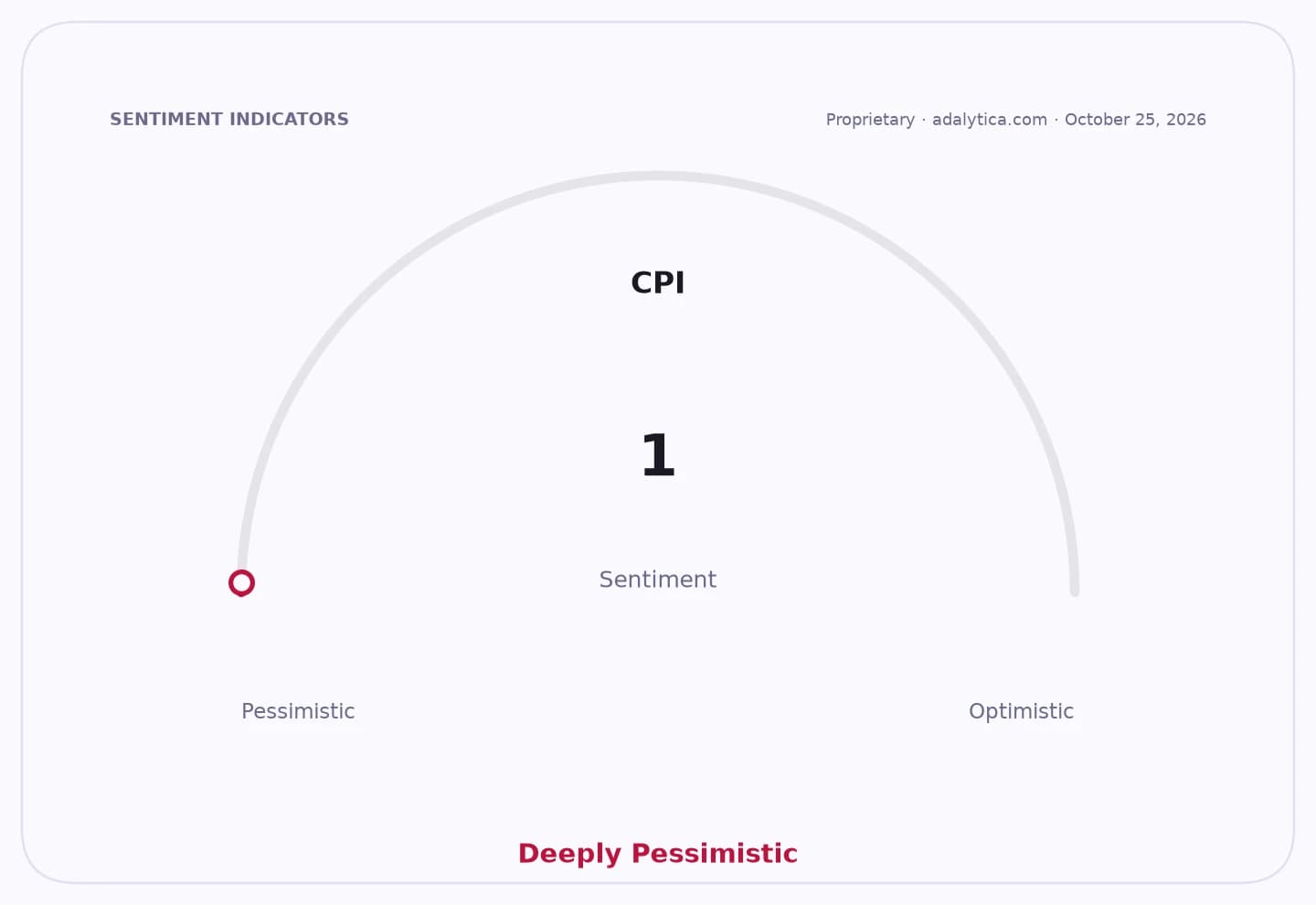
Sentiment Indicators
His comments came as he defended what he called “18,000 reforms” and insisted, “You can’t tell me that I haven’t lowered inflation.” For investors, that is the core trade-off in Argentina right now. The president is banking on disinflation to sustain support for his libertarian program, while markets are watching whether the policy mix can produce growth without reigniting price pressures.
The tension shows up in the numbers. Argentina’s manufacturing sector is running far below capacity, with July data showing it used only 58% of potential output, a sign of slack demand and a still-vulnerable industrial base. At the same time, the IMF has approved a fresh $900 million disbursement, underscoring that Milei’s fiscal discipline has helped shore up external financing and foreign-exchange reserves.
That combination is why the market story matters beyond Argentine politics. Lower inflation can support the peso, improve the country’s credit profile and make local assets more investable over time. But when growth stalls, earnings, tax revenue and employment all come under pressure, limiting how quickly the economy can normalize.
Milei’s remarks also reflect the political stakes ahead of the 2027 election. He is framing the inflation fight as proof that his agenda works, while conceding that activity has slowed. For long-term investors, the question is not whether Argentina has made progress — it has — but whether that progress can be converted into a durable investment case in the next several years. Right now, that still argues for patience, selectivity and a watchful eye on whether disinflation starts to feed real growth again.
| Entity | Gains | Losses |
|---|---|---|
| Milei government | ▲Disinflation credibility | ▼Faster growth momentum |
| Argentine consumers | ▲Slower price rises | ▼Near-term activity and wages |
| IMF and bondholders | ▲Reform commitment | ▼Recession risk |
| Industrial companies | ▲Potential future stability | ▼Weak capacity utilization |