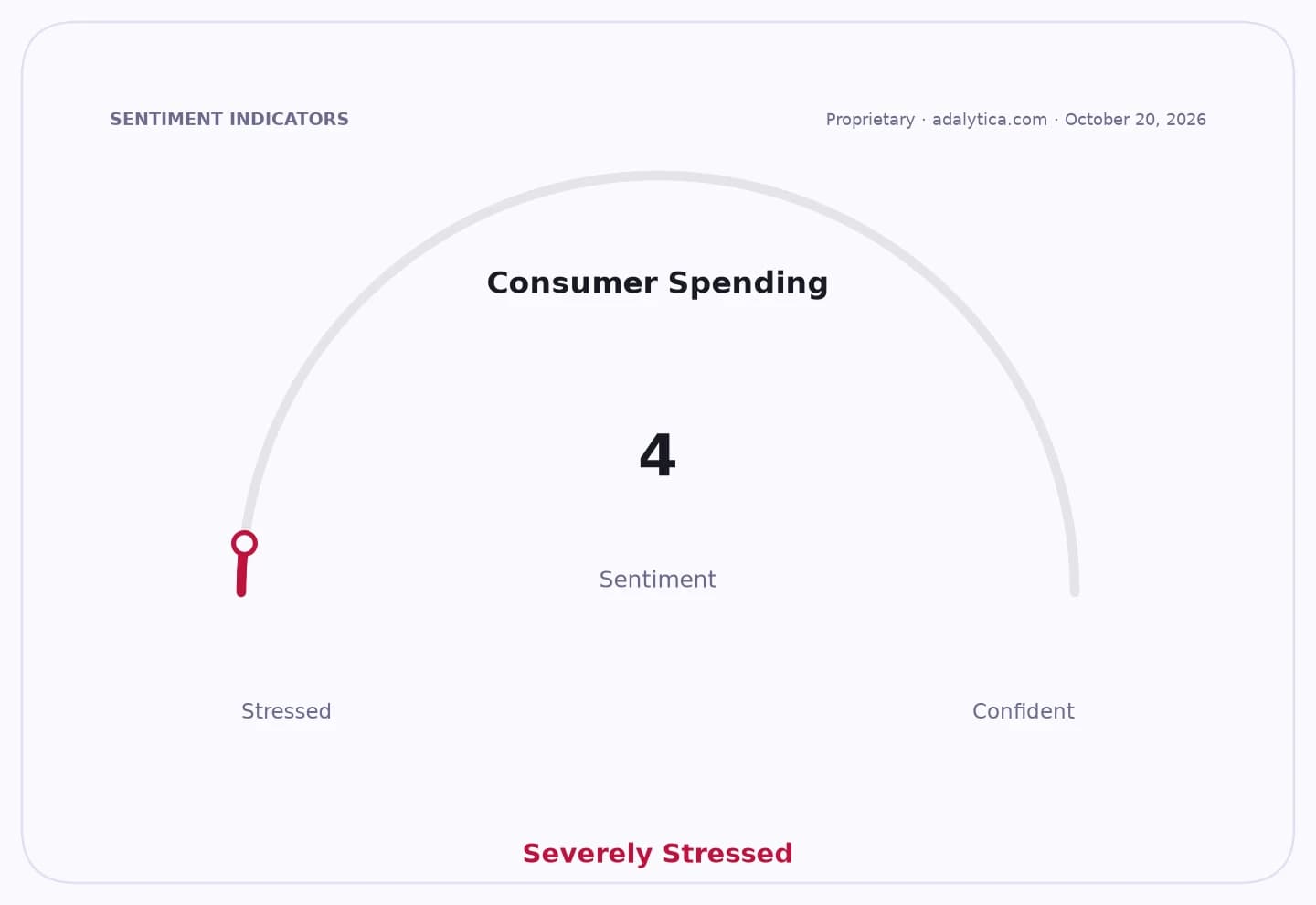
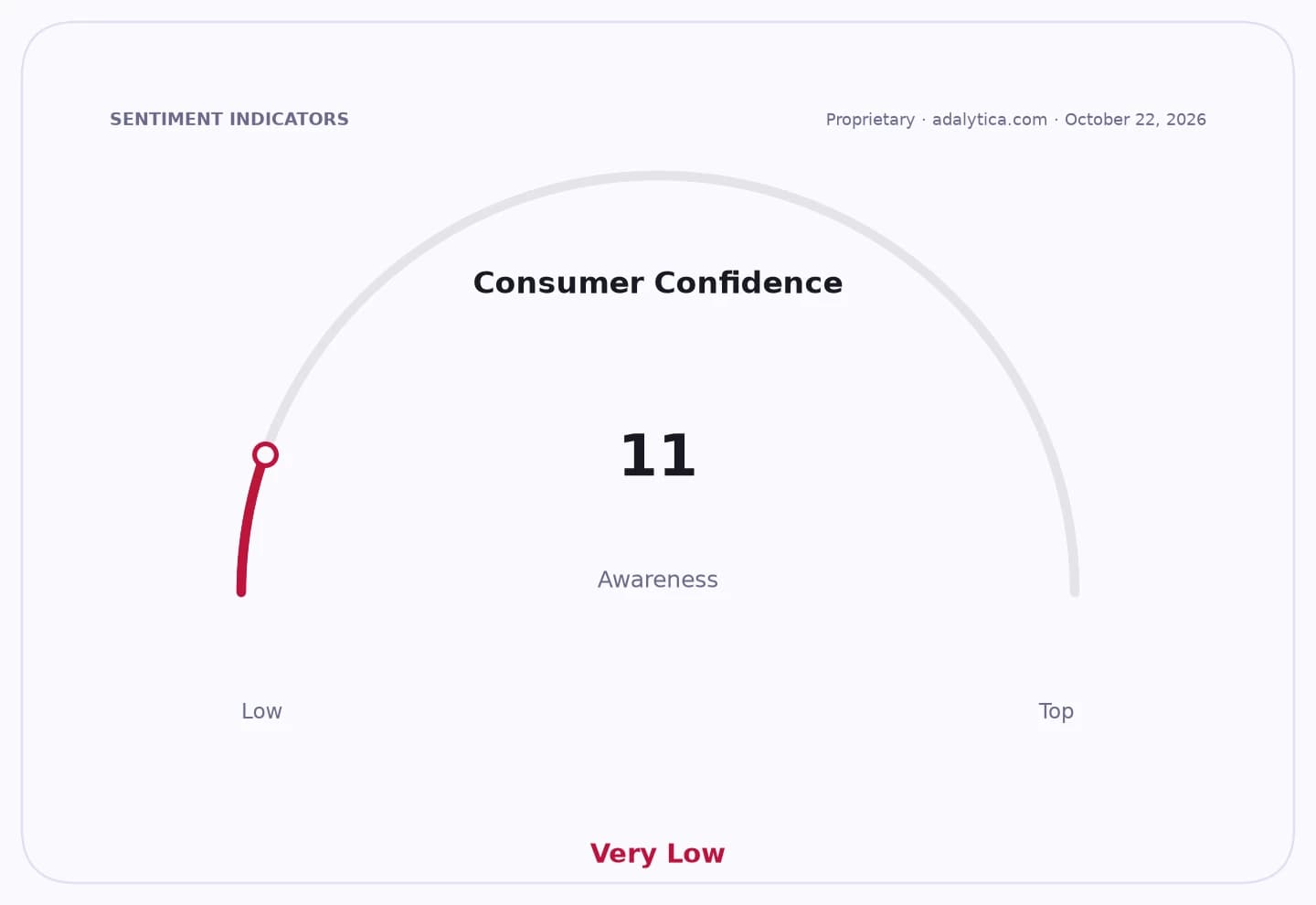
Inflation may look only modestly worse in Argentina’s official numbers, but the cost of staying afloat has risen much faster for households forced to spend on food, rent and utilities.
Argentina Inflation: Food, Rent, Utilities Rise Faster
That is the real story behind the latest Indec comparison of 2025 and 2026: while consumer prices rose 23.6% in the first nine months of 2026 versus 22% a year earlier, the expenses that define daily life climbed far more sharply, amplifying the squeeze on lower-income families and exposing how uneven Argentina’s disinflation has been.
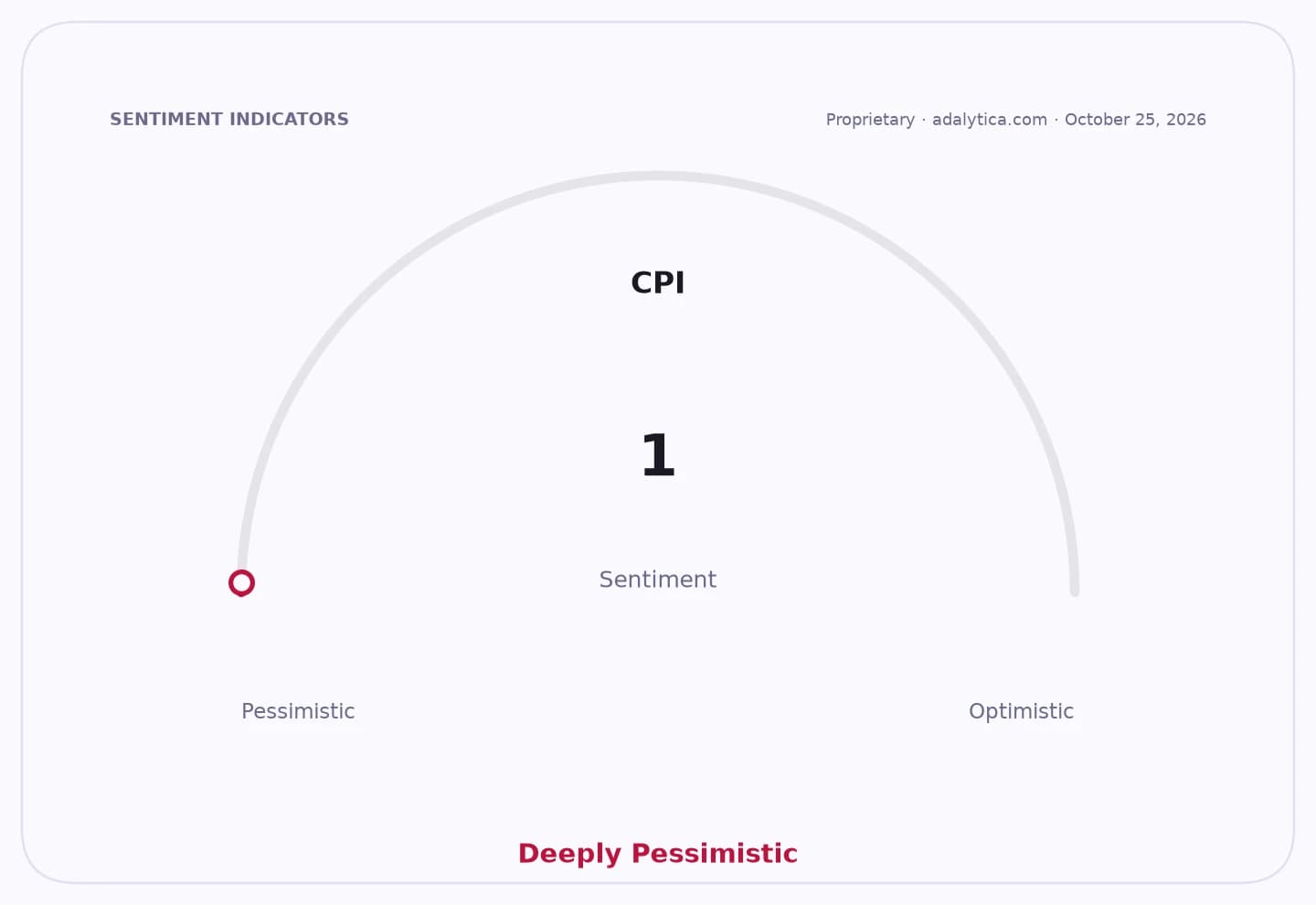
Sentiment IndicatorsⓘProprietary · adalytica.com · October 25, 2026
This is a snapshot — live sentiment, awareness and momentum for 130+ markets update continuously in the dashboard.Open AlphaPulse
The clearest evidence is in the basic baskets that set the poverty and indigence thresholds. The total basic basket, or CBT, jumped 24.7% through September 2026, up from 14.9% in the same period of 2025 — a 9.8 percentage point acceleration that far outpaced the headline CPI. The food basket, or CBA, rose 25.3%, compared with 17.5% previously. Food and non-alcoholic beverages within the CPI also advanced 24.5%, slightly above last year’s pace and well above the overall index.
Housing and utilities are doing even more damage to family budgets. The Indec category covering housing, water, electricity, gas and other fuels increased 35.6% in the period, a 6.8 point acceleration from 2025 and 12 points above the general CPI. That matters because these are fixed or hard-to-cut costs. When they rise faster than wages, households lose flexibility and are forced to trim other spending, often on the very goods and services that support local consumption.
The broader implication for policymakers is uncomfortable. President Javier Milei has argued that slower wholesale inflation should eventually filter through to consumers, but the wholesale price index also accelerated, rising 22.8% versus 20% a year earlier. In other words, cost pressure has not vanished upstream; it has simply shifted through the chain.
Wages are not yet making up the gap. Registered workers’ pay rose 21.5% in the first nine months of 2025, just below inflation, while the overall wage index was up 21.8% through July 2026 from December 2025. That leaves real purchasing power fragile, especially for households concentrated in food, rent and utilities. The official inflation debate, then, is less about whether prices are rising and more about who is paying the price.
For investors, this is an important clue. Argentina’s macro story is still one of disinflation, but the distribution of that inflation is what determines political durability, consumer demand and the path of wages, subsidies and fiscal policy. If the basket that matters most to ordinary households keeps running hotter than CPI, pressure on the government will persist even if the headline number improves. That keeps policy volatility high and makes domestic consumption a much weaker bet than the official index alone suggests.
The market takeaway is straightforward: the headline inflation trend may be easing, but the lived inflation story is still harsh. Until food, housing and utilities cool materially, Argentina’s consumers will feel poorer than the CPI implies — and that gap remains one of the biggest risks to the country’s recovery narrative.
| Entity | Gains | Losses |
|---|---|---|
| Households with fixed incomes | ▲None | ▼Real purchasing power |
| Low-income families | ▲Limited relief from CPI | ▼Food and utility budgets |
| Milei government | ▲Lower headline inflation optics | ▼Political support from consumers |
| Consumer-facing retailers | ▲Nominal price pass-through | ▼Volume growth and demand |