Argentina’s small and mid-sized retailers posted another weak Mother’s Day, with sales down 1.4% from a year earlier even after discounts and financing deals, underscoring how tight household budgets continue to cap discretionary spending.
Argentina retailers post fifth weak Mother’s Day
The Confederation of Medium-Sized Enterprises, or CAME, said sales at constant prices fell for a fifth straight Mother’s Day, extending a pattern that shows the holiday is no longer enough to meaningfully lift retail turnover. The average ticket reached 63,197 pesos, but that number masked sharp pressure on volumes: four of the six categories surveyed declined, led by household appliances, home goods and audio-video equipment, down 3.6%, while cosmetics and perfume, technology accessories and phones, and footwear and leather goods each fell 3.2% or more.
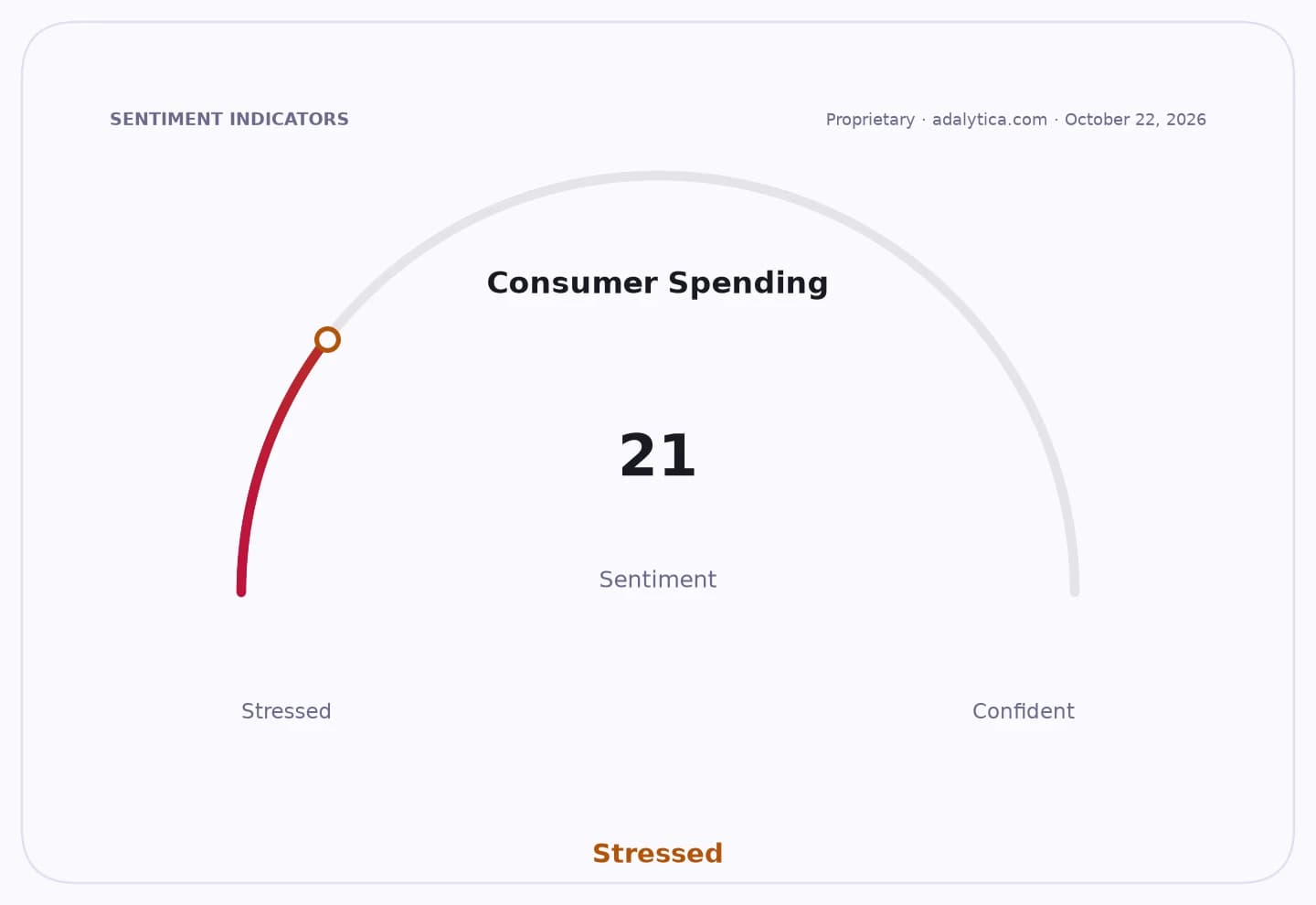
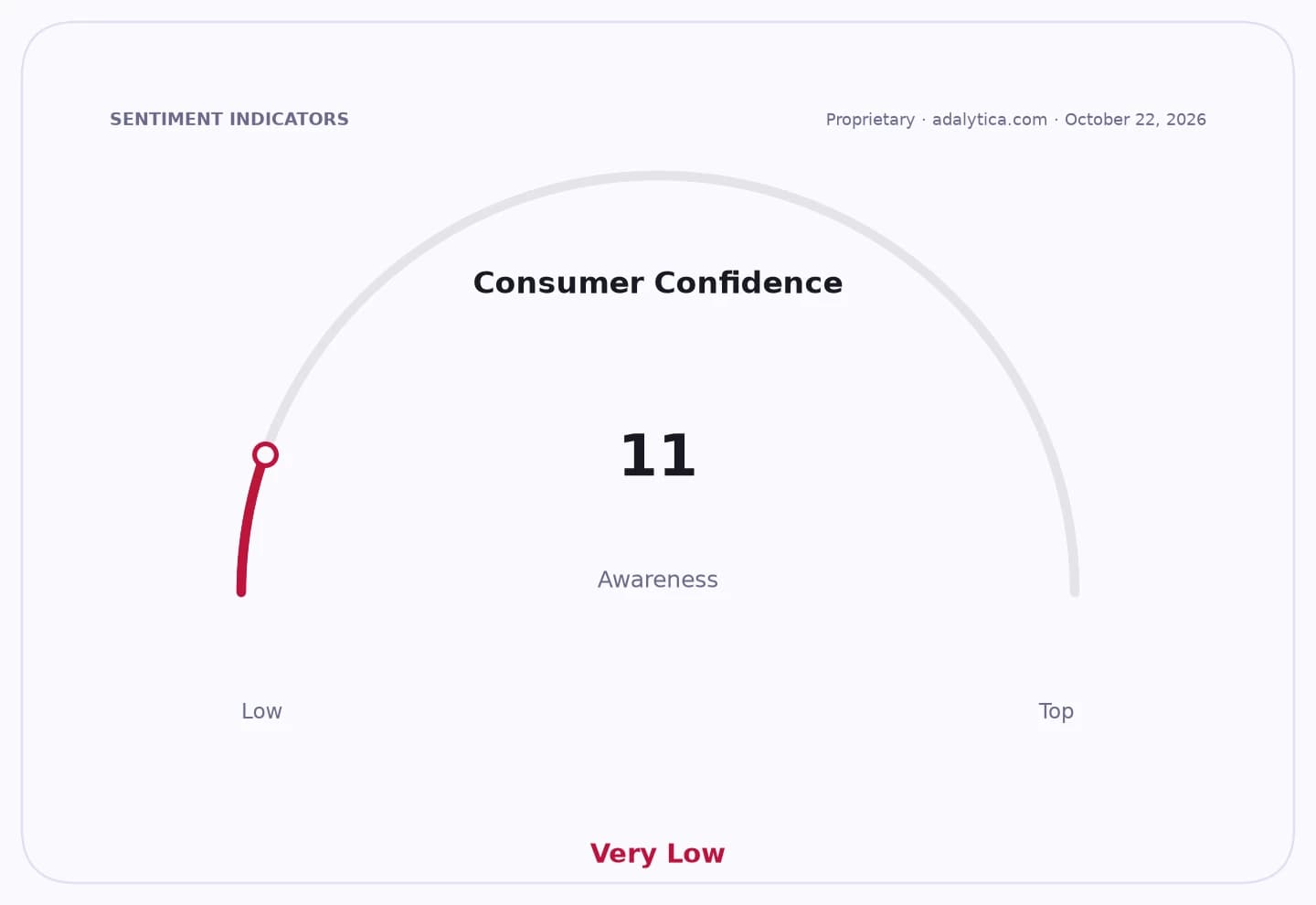
Sentiment IndicatorsⓘProprietary · adalytica.com · October 22, 2026
This is a snapshot — live sentiment, awareness and momentum for 130+ markets update continuously in the dashboard.Open AlphaPulse
For investors and analysts, the report is another reminder that Argentina’s consumer sector remains constrained by inflation-adjusted incomes, limited credit availability and households’ preference for cheaper gifts. Retailers leaned on bank promotions, installment plans and steep markdowns to preserve traffic, but those tactics appear to be protecting sales only at the margin while squeezing profitability. Merchants cited financing costs, card limits and weaker demand for higher-ticket items as key drags on the day’s performance.
The spending mix also points to a clear trade-down behavior. Cosmetics had the highest average ticket at 88,000 pesos, while books and stationery posted the lowest at 37,638 pesos and was the only category with a strong 3.4% gain. That suggests shoppers were looking for lower-cost alternatives rather than stretching for premium goods, a pattern consistent with broader consumer caution. Indumentary sales were essentially flat, rising just 0.1%, indicating that even categories usually helped by gifting occasions struggled to gain traction.
The broader macro message is that one of the country’s traditional retail peaks is now producing only a limited cushion for stores. CAME said 39.9% of merchants saw the date as only a moderate help to sales, while 19.3% said it had no impact at all. Just 9% viewed it as key to the month. That leaves little evidence of a durable pickup in demand, especially in a market where merchants are already contending with financing costs and weak traffic.
The data matter to investors because they suggest any recovery in Argentina’s domestic consumption will likely be uneven and highly dependent on credit conditions, wage gains and inflation stabilization. For listed consumer-facing names, the near-term risk is that promotional intensity rises faster than volumes, limiting margin recovery even if nominal sales improve. If household purchasing power does not recover, retailers could face another quarter of weak real growth and continued reliance on discounting to clear inventory.
| Entity | Gains | Losses |
|---|---|---|
| Shoppers | ▲Lower prices | ▼Limited product choice |
| Discount retailers | ▲Foot traffic support | ▼Profit margins |
| Premium goods sellers | ▲— | ▼Weak demand |
| Argentina’s SME retailers | ▲Partial sales relief | ▼Real turnover decline |