South Africa’s retail sector picked up in July, with real sales rising 3.4% from a year earlier as general dealers and other everyday shopping categories drove a broad-based rebound that could help support third-quarter economic growth.
South Africa Retail Sales Rise 3.4% in July
The reading matters because retail is one of the clearest monthly gauges of household demand, and July’s improvement suggests consumers were still spending despite a patchy first half of the quarter. Seasonally adjusted sales climbed 2.5% from June, recovering from a 0.8% drop in the previous month and a near-flat 0.1% rise in May. That sequence points to a firmer underlying trend rather than a one-off bounce.
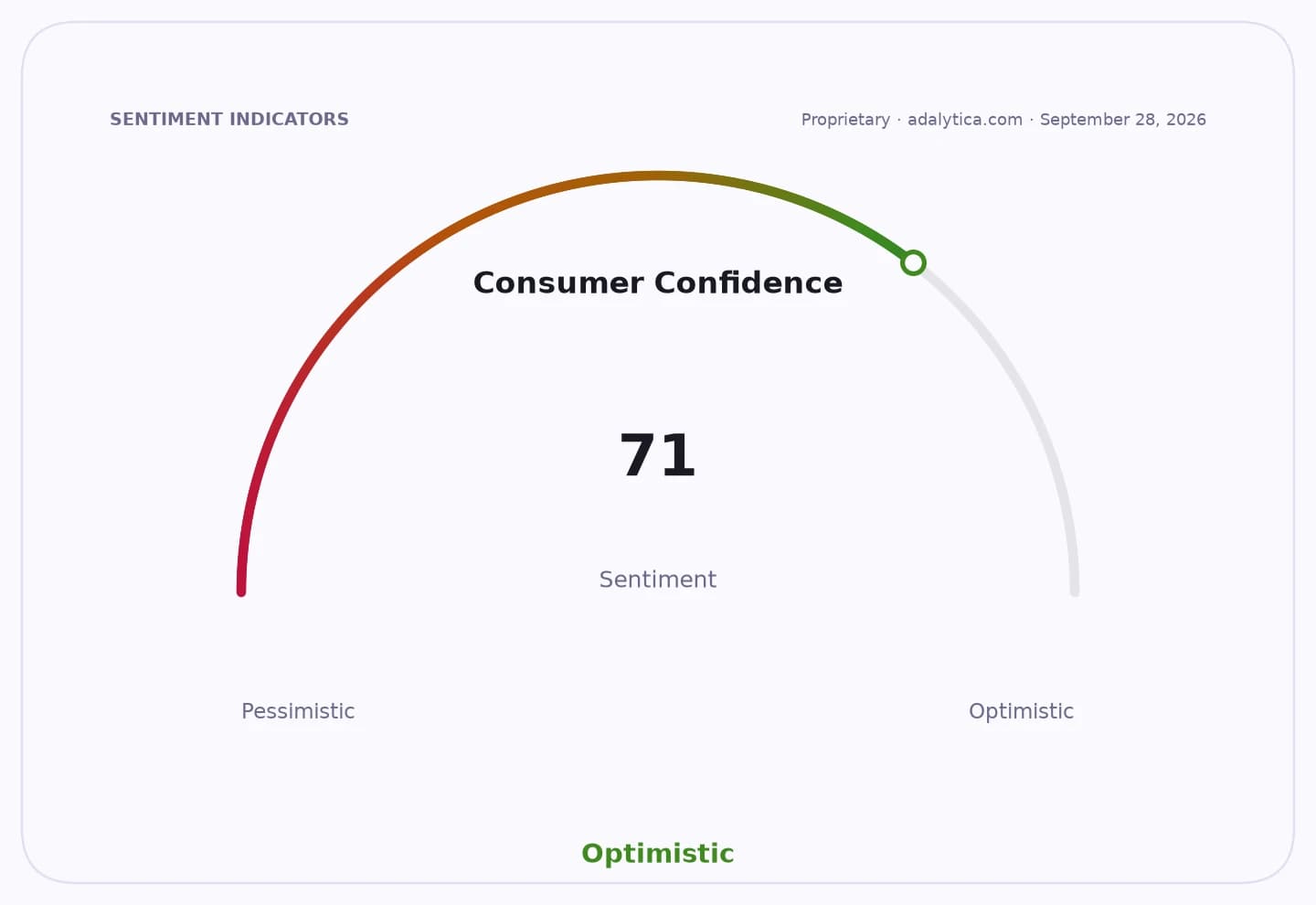
Sentiment IndicatorsⓘProprietary · adalytica.com · September 28, 2026
This is a snapshot — live sentiment, awareness and momentum for 130+ markets update continuously in the dashboard.Open AlphaPulse
General dealers were the main engine, rising 3.2% year on year and contributing 1.3 percentage points to the headline increase. The broader gain was not confined to groceries and essentials: “all other” retailers posted 6.8% growth, clothing, footwear and leather goods rose 2.9%, and specialised food, beverage and tobacco stores increased 4.8%. For investors and retailers alike, that mix is important because it indicates spending is broadening beyond basic household purchases.
On a shorter horizon, the momentum also improved. Retail trade sales were up 2.2% in the three months to July compared with a year earlier, and seasonally adjusted sales were 1.0% higher than in the preceding three-month period. General dealers again made the largest contribution, while food-related and discretionary categories also helped lift the result.
The data will be read as a modestly constructive sign for South Africa’s consumer economy, which has been pressured by high borrowing costs, weak labour-market conditions and uneven household confidence. Stronger retail turnover does not automatically translate into higher profits, especially if promotions and discounting are doing much of the work, but it does suggest volumes held up better than many feared. If the trend persists, it could ease some pressure on companies tied to domestic consumption and offer the central bank a little more comfort that demand is stabilising rather than rolling over.
For listed retailers, the implication is mixed but generally positive. Food and general-merchandise chains should continue to benefit from resilient basket spending, while apparel and specialty names may be seeing more room for discretionary demand. The risk is that the recovery remains uneven and vulnerable to any deterioration in real wages, credit conditions or consumer confidence.
The broader message from July is that South African consumers were still spending into the second half of the year, and doing so across a wider set of categories than just necessities. That makes the sector a little more resilient, but not yet strong enough to dispel concerns about the durability of household demand.
| Entity | Gains | Losses |
|---|---|---|
| General dealers | ▲Higher sales volumes | ▼Competitors in weak categories |
| South African retailers | ▲Better second-half momentum | ▼Margin pressure from discounting |
| Consumers | ▲More active retail availability | ▼Household budgets under strain |
| Discretionary retailers | ▲Improved non-essential demand | ▼Firms reliant on cautious shoppers |