Argentina is sliding back toward a technical recession as a weak August activity reading confirmed that Javier Milei’s austerity drive is still crushing domestic demand faster than export sectors can offset the damage.
Argentina activity weakens as recession risk rises
The most important economic point is not just that activity stalled in August, but that the rebound needed to avoid another quarterly contraction now looks out of reach. Official data showed economic output rose just 0.1% from July after a 2.8% drop the month before, leaving analysts to conclude that the third quarter is likely to post another decline after GDP fell 0.6% in the second quarter. By the standard definition, two consecutive quarterly contractions would mark a technical recession.
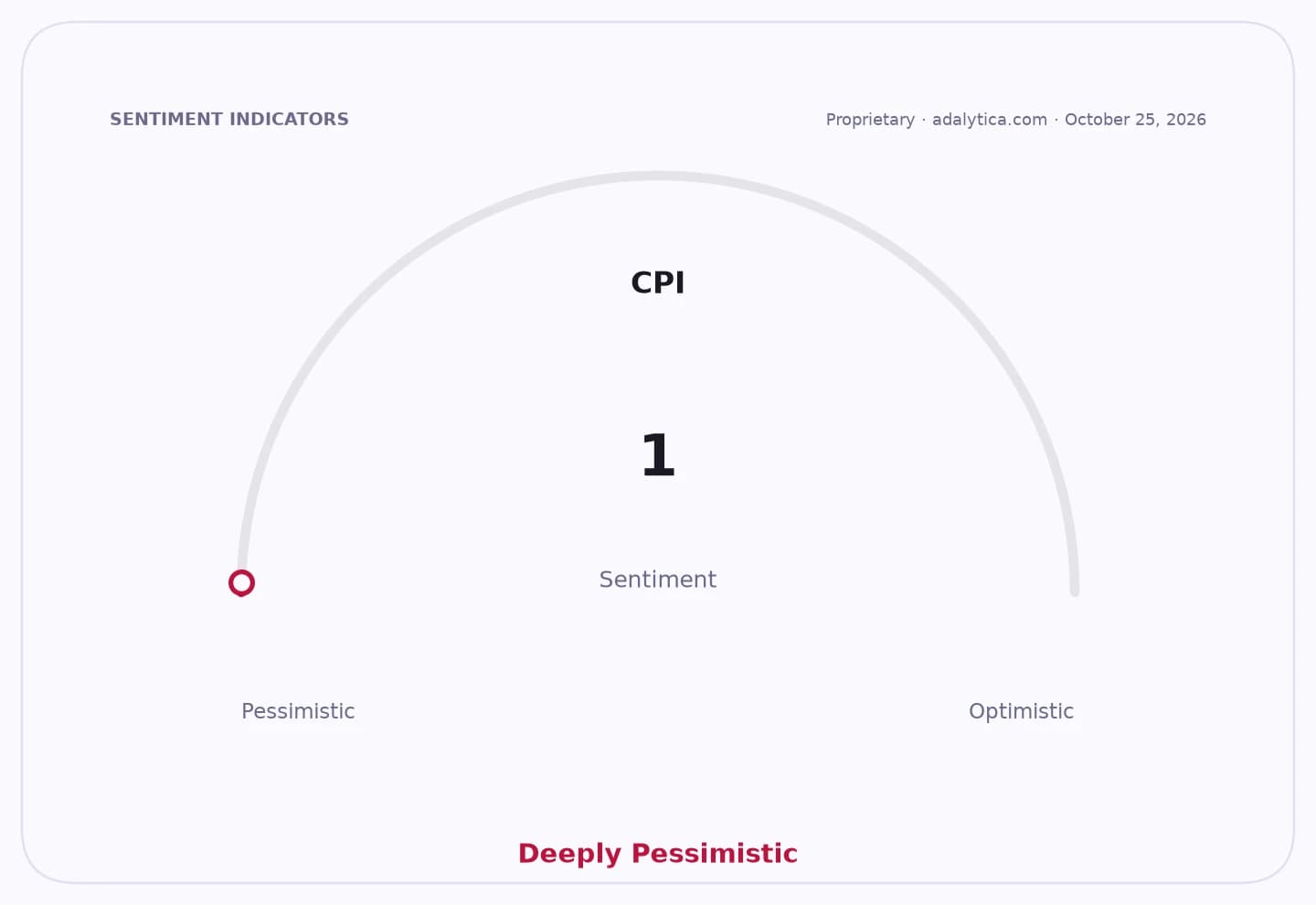
Sentiment Indicators
That matters because Argentina’s slowdown is no longer confined to one industry or one bad month. The statistics office showed 11 of 15 sectors contracted in August from a year earlier, with commerce down 3.5%, industry down 3.2% and financial activity down 3.8%. Only mining and hydrocarbons, up 11.1%, and hotels and restaurants, up 3.1%, posted notable growth. That split underscores an economy increasingly dependent on extractive industries while consumer-facing activity and manufacturing remain under pressure.
Private economists say the gap is too wide to close quickly. SBS Research calculated that activity would have needed to jump 8.6% in September from August just to avoid a third-quarter GDP contraction, calling the recession technically “almost a fact.” EcoAnalytics said the August data were “very bad” and argued that the collapse in domestic demand remains the main bottleneck, with no meaningful recovery likely without real credit growth. LCG added that wage earners’ purchasing power has deteriorated sharply and noted that private investment has now fallen for five straight quarters.
Geopolitical Risk vs ARGTadalytica.com
Explore this data interactively — full history, time series and cross-market comparisons.
For investors, the recession risk cuts to the heart of the Milei trade. The administration has won credit from markets for restoring fiscal discipline, but the latest data suggest the adjustment is coming with a deeper-than-expected hit to consumption, credit and business investment. That raises the probability of weaker tax receipts, more pressure on employment and a slower-than-forecast recovery in 2026. LCG has already cut its 2026 growth estimate to about 1% from 1.5%, far below the government’s 3% target.
The market response has been consistent with that deterioration. The ARGT exchange-traded fund, which tracks Argentina equities, has fallen to about $81.99 from $96.39 in late July, with its relative strength index near 28, a level that indicates the fund is deeply oversold by conventional technical standards. Argentine lenders Banco Macro and Grupo Financiero Galicia have also weakened sharply, reflecting investor concern that slower growth and squeezed household incomes will eventually weigh on loan demand and asset quality.
The broader message is that Milei’s adjustment is producing macro stability at the cost of near-term output. If the export and energy sectors keep expanding, they may cushion the economy, but they are not large enough to offset the drag from retail, industry and credit-sensitive services. The next catalysts will be whether September activity surprises on the upside, whether real wages stabilize, and whether the government can keep fiscal consolidation intact without pushing the economy into a deeper downturn.
| Entity | Gains | Losses |
|---|---|---|
| Milei government | ▲Fiscal credibility | ▼Near-term growth |
| Exporters and energy firms | ▲Stronger relative growth | ▼Domestic demand |
| Argentine banks | ▲Potential policy stability | ▼Loan growth and asset quality |
| Consumers and retailers | ▲Lower inflation over time | ▼Purchasing power |