Argentina’s headline inflation cooled again in August, but households are still getting squeezed by the part of the price basket they can least afford to cut: services.
Argentina inflation eases as services keep rising
That gap matters more than the softer monthly CPI suggests. Goods rose 1.4% in August, while services climbed 2%, and over the first eight months of the year services are up 27.1% versus 18.3% for goods — an 8.8-point spread that helps explain why inflation relief is failing to reach the family budget.
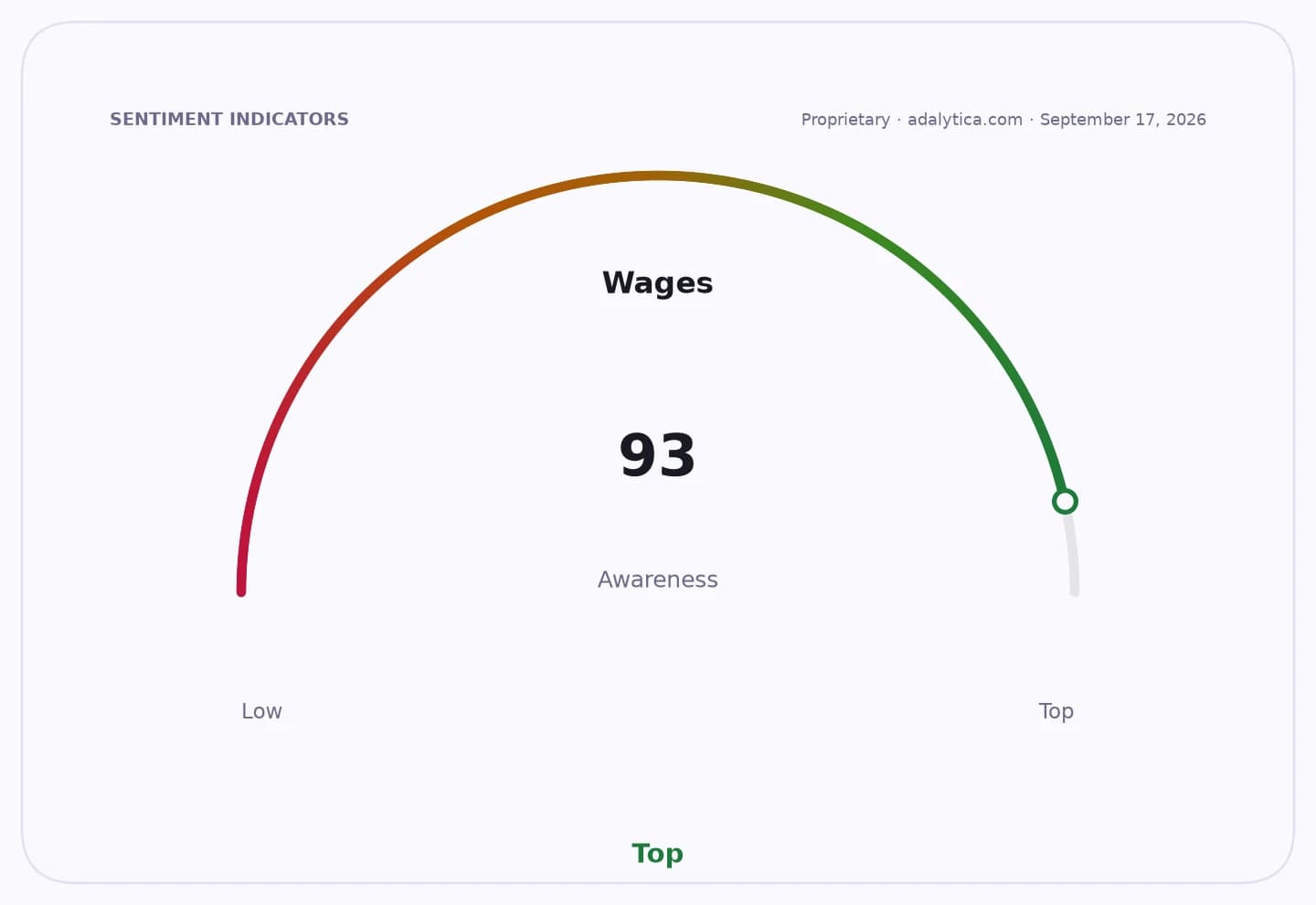
Sentiment IndicatorsⓘProprietary · adalytica.com · September 17, 2026
This is a snapshot — live sentiment, awareness and momentum for 130+ markets update continuously in the dashboard.Open AlphaPulse
For investors, that divergence is the real story. Argentina’s disinflation narrative may be intact at the top line, but the spending mix keeps deteriorating toward fixed costs such as utilities, transport, health, education and communications. Those categories are much harder for consumers to avoid, so the pressure on discretionary spending remains severe even as the monthly CPI eases.
The August data showed housing-related costs leading the advance, with the division covering housing, water, electricity, gas and other fuels rising 2.8% in the month and 49.1% from a year earlier, or 16 points above the general inflation rate. Transport climbed 1.5% in August and 38.2% year on year. Those are not optional purchases; they are the charges that arrive every month regardless of whether wages keep up.
That is why the composition of inflation matters as much as the headline pace. A consumer can delay buying a new appliance, but not a power bill or a subway fare. When services outpace goods for months at a time, the inflation slowdown feels weaker than the official figure implies, and real disposable income keeps eroding in the parts of the economy that drive day-to-day consumption.
The methodology issue only sharpens that point. INDEC still calculates the CPI using an older household spending basket from 2004-05, even though a newer 2017-18 basket would assign more weight to services and less to food. Under Equilibra’s estimate, August inflation would have been 1.8% instead of 1.7%, and the year-to-date figure would have been 22.6% rather than 21.3%. The difference is modest, but it underscores how the official index can understate the burden of the costs that have become more central to household budgets.
For markets, the message is mixed. Softer inflation supports the case for eventual policy normalization and stabilizes expectations around the peso, but persistent services inflation argues against a quick consumer rebound. That matters for retailers, transport names, utilities and lenders exposed to household stress, while favoring businesses with pricing power and income streams tied to essential spending rather than discretionary demand.
The bigger investment implication is that Argentina’s next phase is less about whether inflation falls and more about who gets paid first. Households are still reallocating income to fixed bills, and that means the winners are likely to be companies that sell necessities or can pass through costs, while the losers remain the consumer-facing businesses dependent on a broad, confident recovery in spending. The headline rate may be slowing, but the budget squeeze is not.
| Entity | Gains | Losses |
|---|---|---|
| Utilities and transport providers | ▲Pass through higher tariffs | ▼Face weak household affordability |
| Essential consumer firms | ▲Defensive demand holds up | ▼Optional spending stays soft |
| Argentine households | ▲Slower headline inflation | ▼Higher fixed-cost burden |
| Consumer-discretionary retailers | ▲Lower goods inflation | ▼Shrinking discretionary budget |