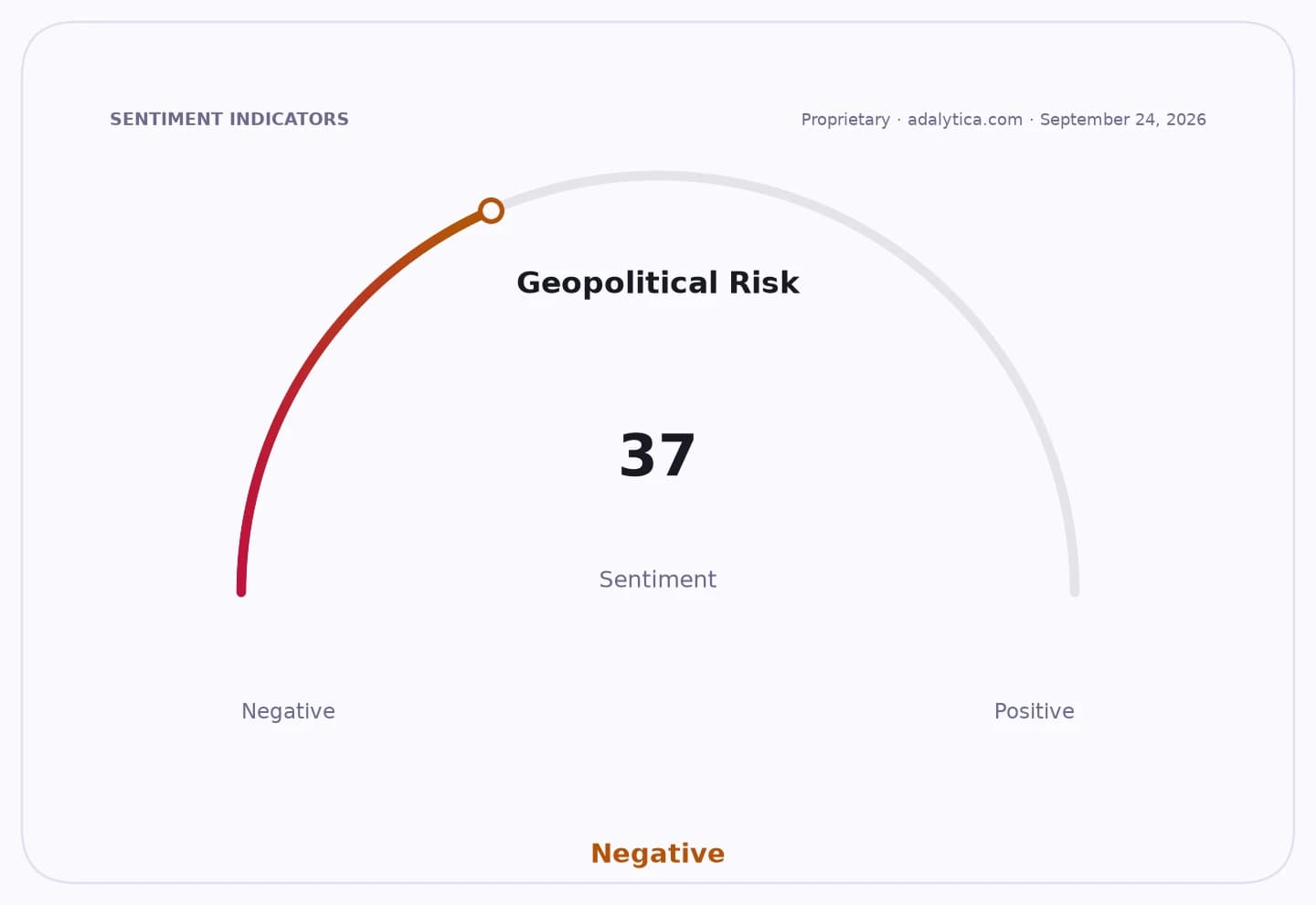
Javier Milei is broadening his re-election playbook around Malvinas while his economy minister, Luis Caputo, leans on fiscal and monetary tools to keep activity and markets moving, but the political payoff is still uncertain and the economic one remains more immediate.
Argentina equities, Milei Malvinas plan, Caputo tools

The biggest implication for investors is that Milei’s government is trying to stitch together a narrower but more practical growth-and-confidence story ahead of next year’s vote: stir nationalism around the Falkland Islands dispute, then back it with measures that could lift credit, deposits, investment and construction. The bet is that even modest gains in sentiment and activity can help keep the reform narrative alive long enough for the economy to do some of the work.
But the Malvinas angle is far less tangible than the policy package Caputo is assembling. The president has pushed hard in recent days with a national address, a bill to raise penalties on oil companies and promises of military investment, betting that Donald Trump could back Argentina’s claim and reopen some form of negotiation with Britain. Even then, any shift would likely be slow, limited and far more relevant to oil or fishing than to sovereignty, making it a risky campaign theme if expectations outrun results.
That is why the market focus stays on the domestic toolbox. The article points to a possible “Inocencia Fiscal II” that could add $30 billion to dollar deposits, supporting lending and real estate, while a small- and mid-sized company incentive scheme and strong soybean prices could bring forward investment and export inflows. Governors’ borrowing to fund public works may also bolster construction activity and indirectly support the central government’s financing calendar.
For investors in Argentina assets, the message is less about a diplomatic breakthrough than about whether Milei can keep confidence from slipping while maintaining macro stability. That matters for banks, consumers and local cyclicals: more deposits and credit would help lenders, construction spending would aid activity, and stronger export receipts would support the peso and reserve accumulation. It also leaves room for policy correction without a fresh inflation shock, which is what keeps the government’s economic narrative credible.
Argentine equities reflect that tension. The ARGT ETF trades at $96.41, near its recent Bollinger upper band of $98.09, with RSI at 66.0 and the 50-day moving average at $93.46, suggesting momentum remains firm but stretched. BBAR closed at $14.82, below its 50-day average of $17.63 and well under its September high, while YPF ended at $52.62, above both its 50-day and 200-day moving averages, underscoring how selective investors remain on Argentine risk.
The next catalyst is whether Milei can translate campaign messaging into measurable gains in deposits, credit, investment and activity before the election cycle intensifies, while avoiding disappointment from a Malvinas gambit that depends heavily on Washington and Britain.
| Entity | Gains | Losses |
|---|---|---|
| Milei government | ▲Nationalist support | ▼Credibility if expectations fade |
| Caputo economic team | ▲Room to boost activity | ▼Pressure if growth stalls |
| Argentine banks and lenders | ▲More deposits and credit | ▼Weak loan demand if confidence slips |
| YPF and oil-linked firms | ▲Possible policy tailwind | ▼Limits if sovereignty rhetoric outpaces results |