Argentina’s minimum wage now buys 40% less sweet bread than it did in late 2023, a stark gauge of how quickly Javier Milei’s adjustment has eroded purchasing power even after nominal pay was lifted sharply.
Argentina minimum wage buys less sweet bread
The comparison is most visible in pan dulce, a seasonal staple that distills the squeeze on households into one simple metric. In November 2023, a minimum wage could buy 60 sweet breads across five major brands; by 2026 it buys 36. Measured by weight, the basket has shrunk 44.4%, from 32.97 kilos to 18.34 kilos, showing that prices for the festive product have risen far faster than the legal floor for wages.
Sentiment Indicators
That matters because the minimum wage is not just a benchmark for the lowest-paid workers. In Argentina it also influences collective bargaining, private-sector pay negotiations and expectations about how much room firms and households have to absorb price increases. A worker paid the minimum could buy 162 Fantoche sweet breads two years ago; now the same wage buys 46. Fantoche’s 500-gram loaf has jumped 844% to about 8,492.44 pesos, almost five times the increase in the statutory wage over the period.
The broader message is that nominal wage gains have not kept pace with food inflation, leaving real incomes weaker even as the government points to disinflation efforts and tighter policy. The minimum wage rose 173% to 398,800 pesos from 146,000 pesos in November 2023, but that has still been overwhelmed by price increases across all the brands tracked. Don Satur’s kilo price is up 254%, Havanna’s 227%, Steinhauser’s 201% and Bonafide Premium’s 203%.
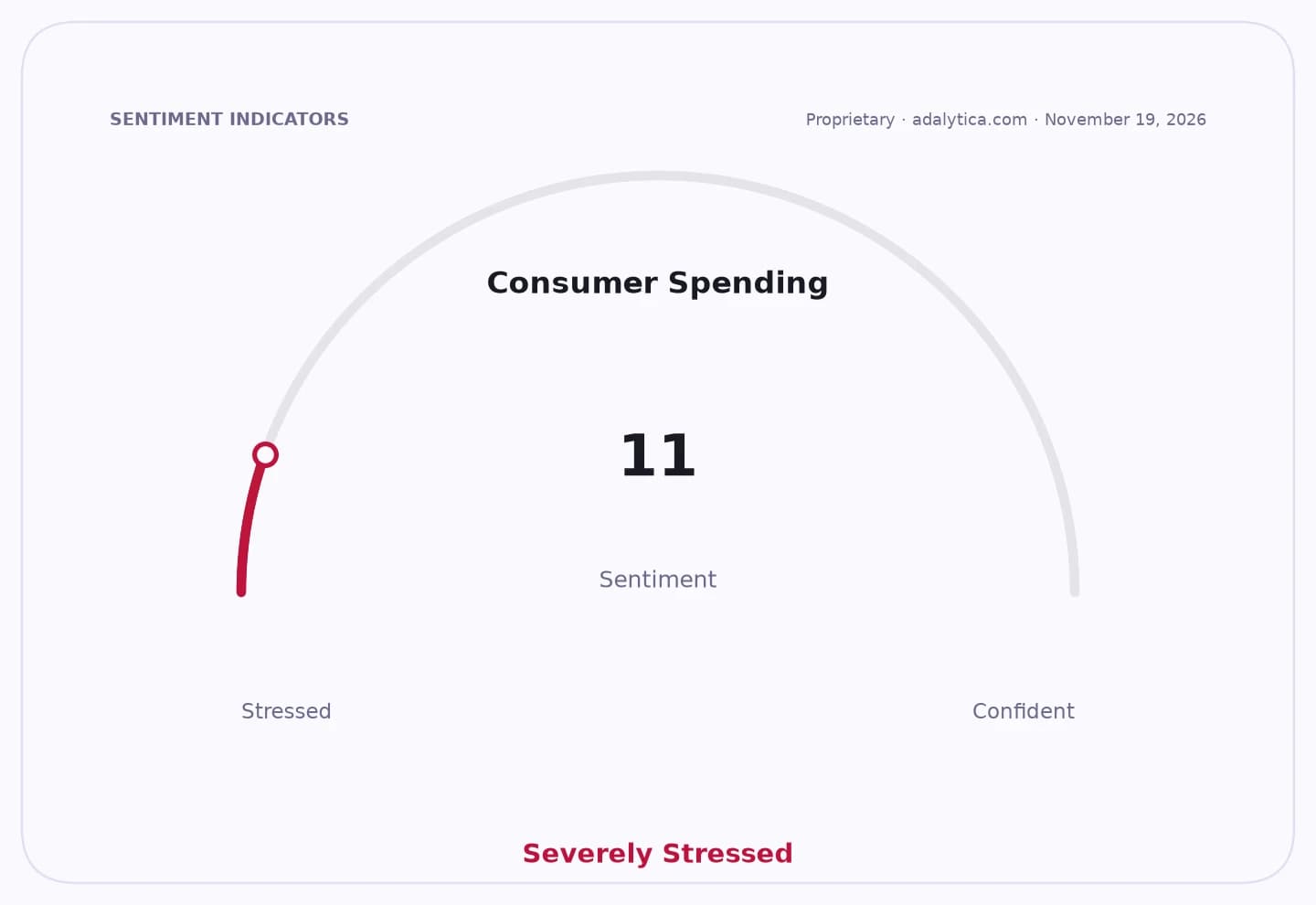
For consumers, the loss of purchasing power is immediate and highly visible at a time when households are already trading down on discretionary spending. For retailers and producers, the data suggests demand remains hostage to affordability: volumes may hold for lower-priced products such as Don Satur, which still offers the best value per peso, but premium brands face a more constrained market. For policymakers, it is another reminder that bringing inflation down in aggregate does not quickly restore living standards if wages are adjusted more slowly than staple food prices.
The timing is politically sensitive. With year-end holidays approaching, sweet bread is one of the most obvious consumer goods that exposes the gap between official wage policy and lived inflation. Unless wages start to recover in real terms, the holiday table will remain a reminder that Argentina’s stabilization effort has yet to fully reach household budgets.
| Entity | Gains | Losses |
|---|---|---|
| Minimum-wage workers | ▲Slight nominal wage gains | ▼Real purchasing power |
| Sweet-bread producers | ▲Higher peso revenues | ▼Volume demand from low-income buyers |
| Argentine government | ▲Progress on nominal pay resets | ▼Credibility on living standards |
| Premium brands | ▲Pricing power | ▼Mass-market affordability |