Japan’s supermarket industry is being squeezed by five straight years of food inflation and a pullback in middle-class spending, forcing a rapid rise in bankruptcies and store closures even as revenues at many chains still inch higher.
Japan supermarkets face bankruptcies and store closures
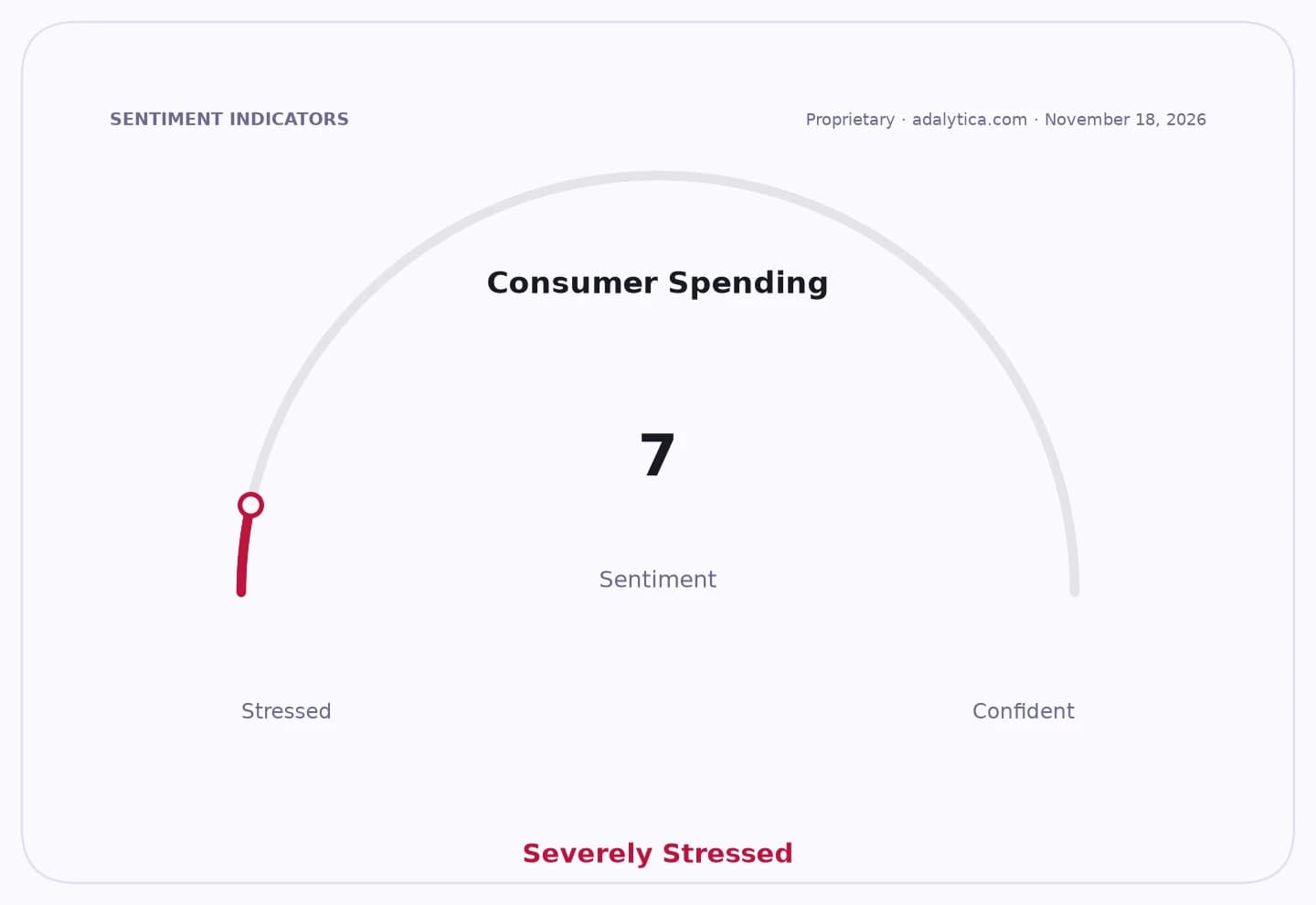
Consumer Spending
Tokyo Shoko Research counted 26 regional supermarket bankruptcies in the first 10 months of the year, up six from a year earlier and the fastest pace since 2018, according to Asahi Shimbun. The strain is showing up in earnings too: among 20 major supermarket operators that reported interim results through August, 15 posted higher sales, but 13 saw operating profit fall and three slipped into operating losses.
Sentiment Indicators
The problem is not demand collapse so much as margin compression. Since the middle of the year, grocers have faced higher crude, packaging and labor costs after the Middle East flare-up, but weak household spending has limited their ability to pass those costs on to shoppers. Japan’s Ministry of Internal Affairs and Communications said real consumption by two-person-or-more households fell 6.8% in September from a year earlier, extending a decline to 10 straight months.
That combination is now splitting the retail market. USMH, the United Super Markets Holdings unit of Aeon that runs more than 760 stores in the Tokyo area, reported a 3.2 billion yen operating loss in its August interim results and said it will close more than 100 stores by fiscal 2030. By contrast, discounter Don Quijote and premium grocer Seijo Ishii are still turning in strong results, underscoring how Japan’s inflation has widened the gap between price-sensitive shoppers and higher-income consumers.
The trend matters beyond supermarkets because food retail is a key gauge of household stress in Japan, where wages at smaller firms continue to lag those at large companies. Analysts say that is encouraging a more cautious middle class to trade down, trimming volumes and squeezing regional chains that cannot absorb higher costs for long.
Investors will watch whether the pressure spills further into broader consumer sectors and whether more grocers follow USMH in shuttering locations, especially if inflation stays sticky and real household spending remains weak.
| Entity | Gains | Losses |
|---|---|---|
| Discount chains | ▲More price-conscious traffic | ▼None from trading-down demand |
| Premium grocers | ▲Wealthier shoppers hold up | ▼Mass-market volumes |
| Regional supermarkets | ▲— | ▼Margin compression, closures |
| Consumers | ▲Some lower-price options | ▼Higher food bills, weaker purchasing power |