Argentina’s inflation picked up again in October, underscoring how services, housing and regulated prices are keeping the disinflation process stalled even as the government pushes ahead with tariff increases.
Argentina October Inflation Rises on Utilities and Rents
The consumer price index rose 2.2% in October and 26.3% so far this year, with annual inflation at 33.1%, according to the latest reading. The surprise was not just the headline pace, but the composition: housing, utilities and fuels led the monthly increase, while core prices were lifted by rents and restaurants. For policymakers, that is a warning that inflation is no longer being driven only by volatile food and seasonal items, but by sticky components that are harder to reverse.
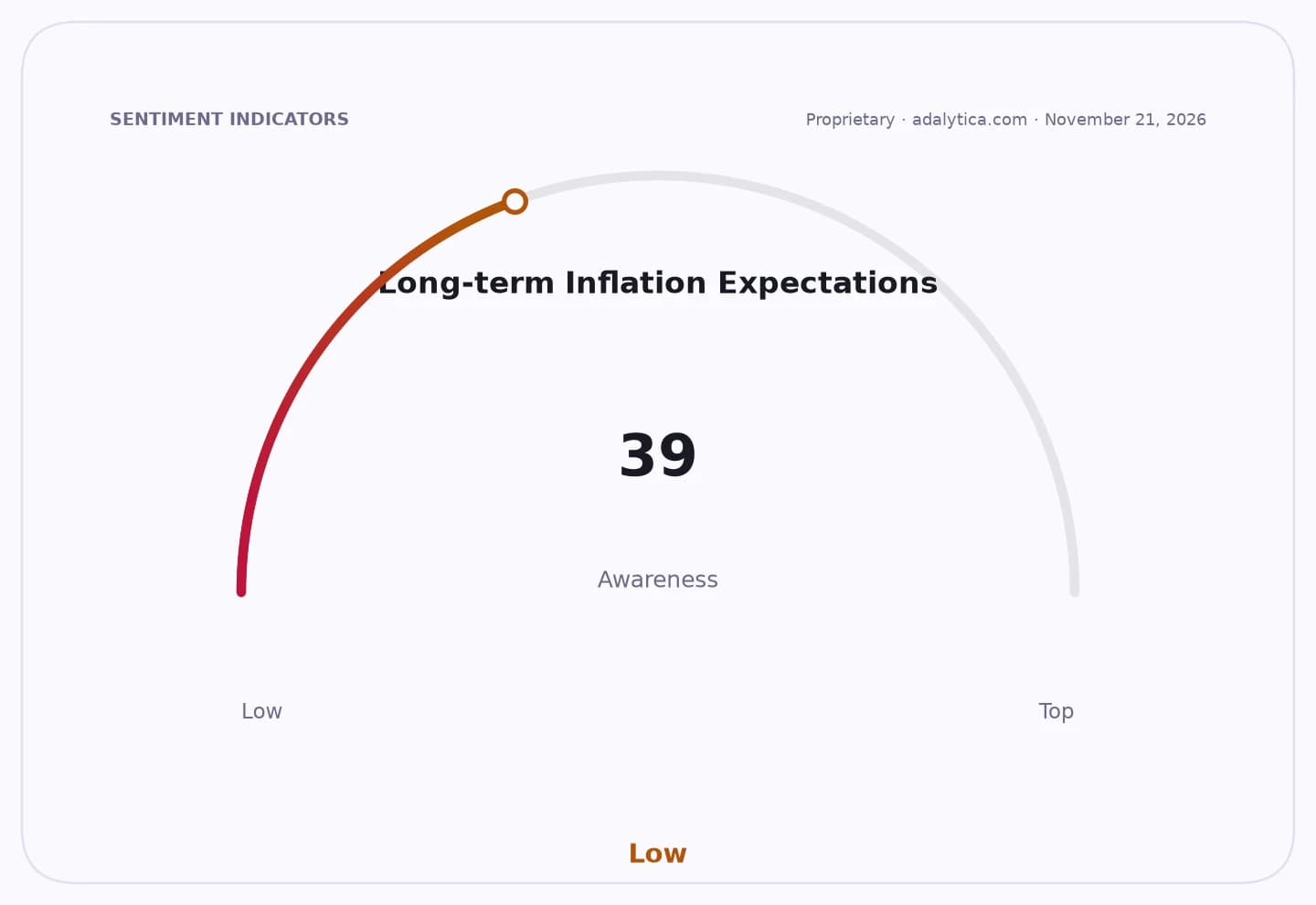
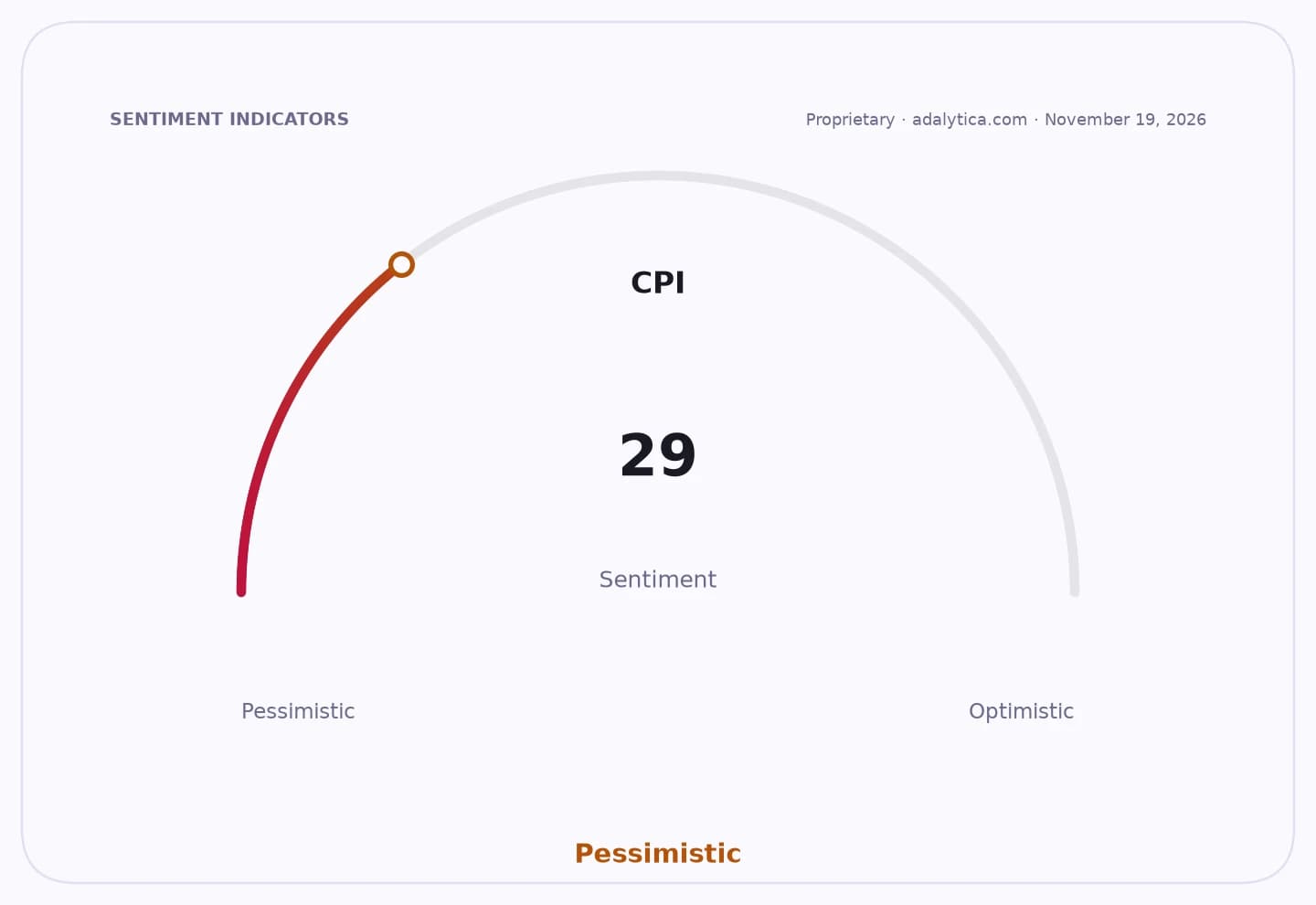
Sentiment Indicators
The number matters because it came in above the central bank’s market survey forecast of 1.8% and far above the 2026 budget’s 10.1% full-year target. It also reinforces the view that Argentina’s inflation slowdown, one of President Javier Milei’s flagship achievements, has stalled since midyear. With the economy still trying to normalize after aggressive fiscal and monetary tightening, persistent monthly gains in the low single digits leave little room for relief on real incomes or consumer spending.
The main driver was housing, water, electricity, gas and other fuels, which jumped 4.2% nationally and more sharply in colder regions. The INDEC statistical agency said the move reflected new gas tariff schedules, a change in the subsidized consumption block under targeted energy subsidies, and a revision to the “Zona Fría” heating discount regime. In practical terms, that means households in the colder parts of the country are seeing a smaller subsidy benefit, feeding directly into utility bills and making October’s inflation reading partly a policy-driven one.
That has broad investor implications. Regulated prices rose 2.9% in the month and are up 43.7% from a year earlier, well ahead of the overall index, while services prices climbed 42.2% year on year versus 28.7% for goods. The gap suggests the government is continuing to use administered prices to repair public finances, but at the cost of keeping service inflation elevated. For bondholders, that is a risk to the pace of disinflation and to the duration of high nominal rates. For equity investors, it means household demand may remain under pressure, even as utilities and transport companies benefit from higher tariffs.
Food inflation remained an important source of pain in the regions, particularly in vegetables. Seasonal prices surged 5.5% and food and non-alcoholic beverages were the largest contributor in five of six regions. The jump in produce prices, including sharp increases in potatoes, onions and squash, shows that even when headline inflation is being shaped by policy decisions, consumers are still facing broad-based price pressure in essentials.
The central question now is whether October marks a temporary tariff-driven spike or a reminder that Argentina’s inflation fight is incomplete. A sustained move lower would require services inflation to cool without a new round of regulated-price adjustments. Until then, markets are likely to keep pricing in a slower disinflation path, a higher-for-longer policy stance and continued stress on real wages.
| Entity | Gains | Losses |
|---|---|---|
| Argentine treasury | ▲Higher tariff revenue | ▼Public approval |
| Households in colder regions | ▲None | ▼Utility bills |
| Bondholders | ▲Policy credibility if disinflation resumes | ▼Higher-for-longer rates |
| Utility and transport providers | ▲Tariff pass-through | ▼Consumer demand |