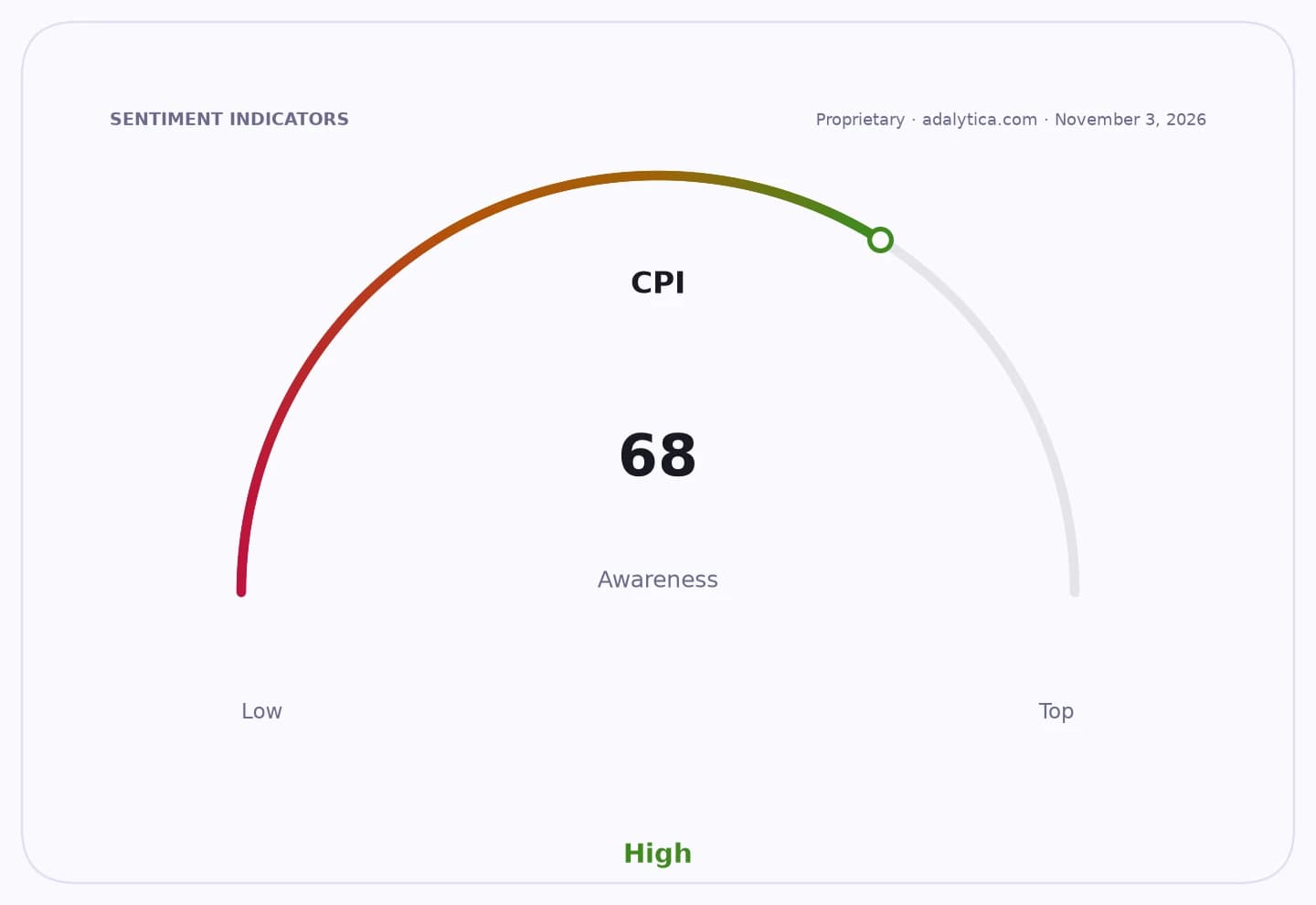
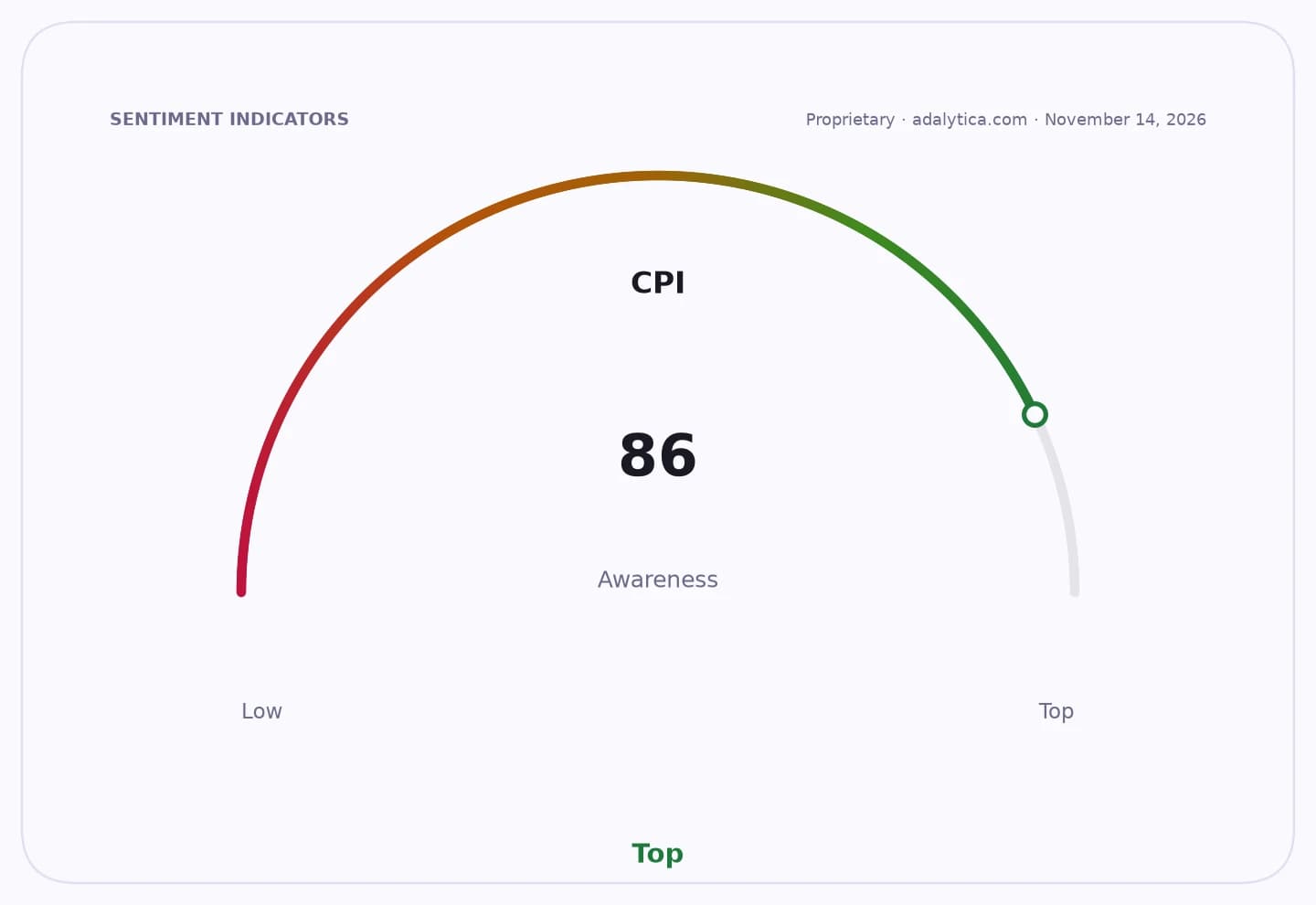
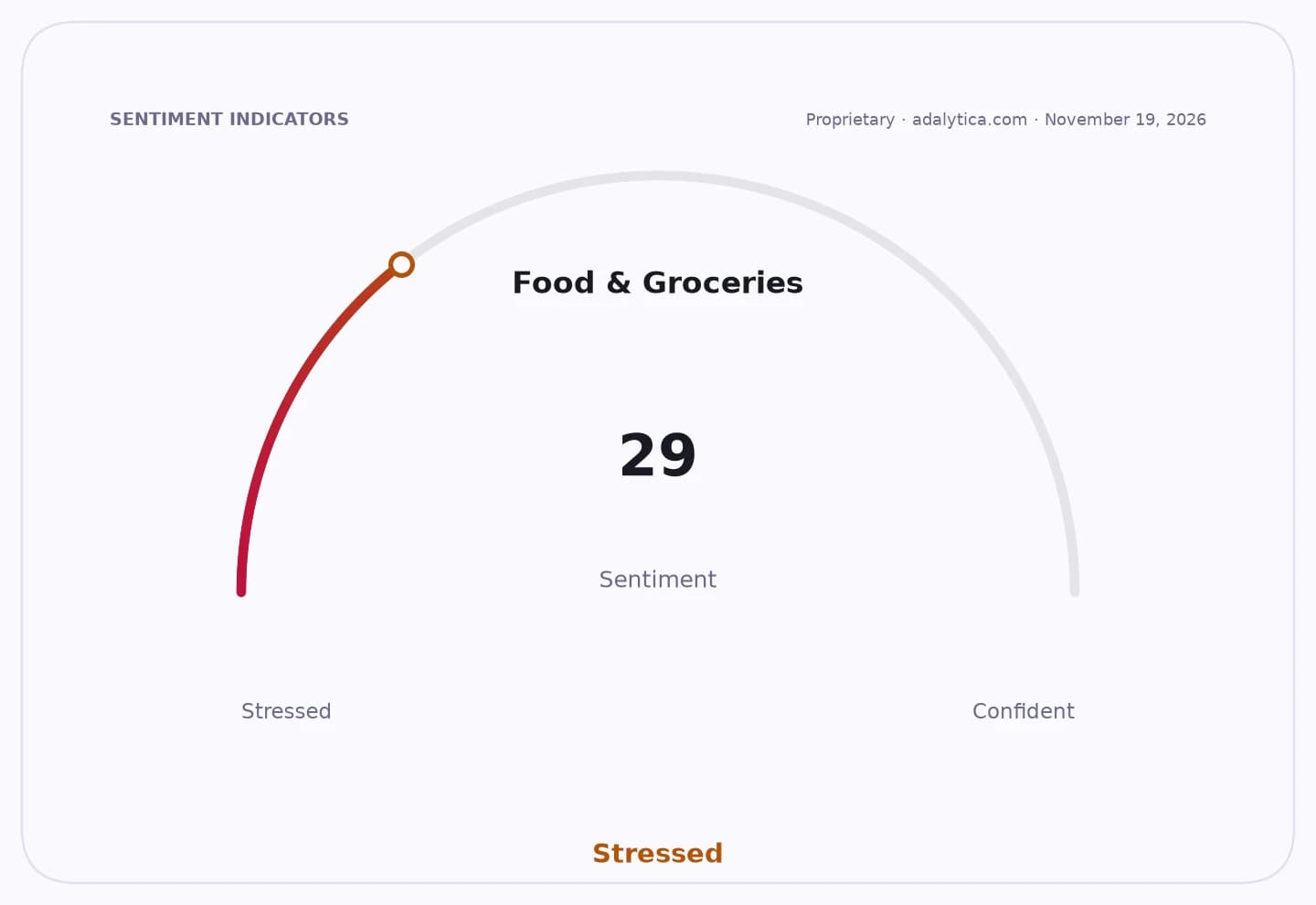
India’s inflation problem is proving harder to shake than policymakers hoped, and that matters because it threatens to keep borrowing costs elevated just as the economy is trying to preserve growth above 7.5%.
India inflation stays above RBI target in October
Retail inflation in India hit a two-year high of 6.1% in October, above the Reserve Bank of India’s 6% upper tolerance band, and Elara Securities economist Garima Kapoor says the headline consumer price index is likely to stay above 6% from November through March. Her call is anchored in the same forces that have tripped up inflation-fighting efforts everywhere: stubborn food prices, higher fuel costs, and a core inflation measure that is no longer behaving like a one-off blip.
Sentiment Indicators
CPI
That is a meaningful shift for investors because India’s growth story has rested on a delicate balance between strong domestic demand and relatively contained inflation. If food inflation stays hot, the central bank has less room to ease and more reason to keep policy restrictive. Kapoor expects the RBI to raise rates by 25 basis points in December and again by 25 basis points in February, a path that would reinforce the idea that India’s inflation cycle is not yet done.
The problem is not only the October print. Kapoor argues that food inflation is rising and may remain sticky even after the recent surge in fuel prices fades. She also pointed to core CPI rising to 4.76% year on year in October, suggesting price pressures are broadening beyond perishables. That matters economically because once inflation becomes persistent across food, energy and core categories, it starts to filter into wages, household budgets and corporate pricing power.
2% Target Confidence
For consumers, the immediate risk is obvious: higher grocery bills and a slower improvement in real purchasing power. For businesses, especially in consumer staples and food processing, the issue is margin pressure. Companies can pass through only so much cost inflation before volumes weaken. Recent filing disclosures from major food names show how closely this dynamic is being watched, with firms warning that raw materials, packaging, labor and distribution costs remain volatile.
Even so, the outlook is not uniformly bearish. Kapoor said high-frequency indicators still point to resilience in demand, with passenger vehicle and two-wheeler sales holding up during the festive season. That suggests India’s consumption engine has not stalled, helped by credit growth, household aspirations and government spending. She expects Q2FY27 GDP growth to come in above 7.5%, even if agricultural output stays soft because of El Niño and weaker reservoir levels.
That mix is what makes India interesting to investors right now. The economy can still grow quickly while inflation stays uncomfortable, but that combination usually favors select sectors rather than broad-based multiple expansion. Banks, exporters and large benchmark-weighted stocks may continue to attract capital if foreign inflows keep recovering, while rate-sensitive names could remain vulnerable if the RBI delivers the tightening Kapoor expects.
There is also a broader global angle. India is facing the same food-price pressures that are unsettling consumers and policymakers across markets, and the latest move in crude only adds another layer of uncertainty. If El Niño continues to disrupt crop prospects and food inflation stays elevated into the new year, investors should assume the RBI will stay cautious longer than the market might like. For long-term investors, that makes India’s growth case intact but more selective — worth watching, and worth owning with patience.
| Entity | Gains | Losses |
|---|---|---|
| RBI | ▲inflation-fighting credibility | ▼rate-cut flexibility |
| Banks | ▲higher lending spreads | ▼borrowers seeking cheaper credit |
| Food producers | ▲pricing power | ▼volume growth |
| Consumers | ▲resilient jobs and demand | ▼real purchasing power |