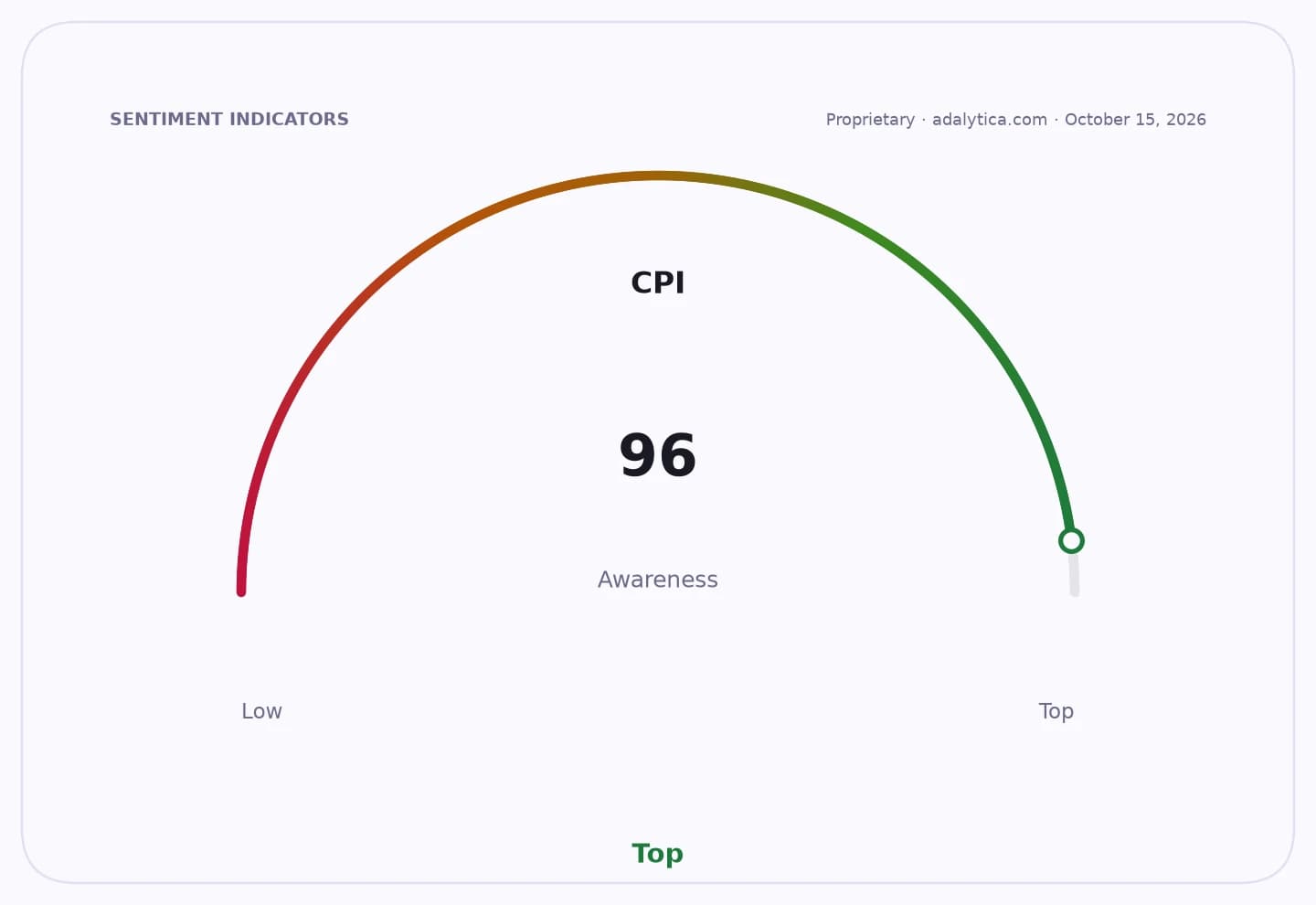
India’s inflation problem is moving back to center stage, with October consumer prices expected to climb close to the Reserve Bank of India’s upper tolerance band as food costs keep the headline rate elevated.
India inflation seen near RBI upper band in October

That matters because a faster-than-expected rise in retail inflation would narrow the RBI’s room to support growth, keep real rates pinned, and force markets to rethink the timing of any policy easing. In a country where household spending is highly sensitive to food and fuel prices, even a modest overshoot can ripple through consumption, credit demand and bond valuations.
Sentiment Indicators
CPI
The expected jump is being driven primarily by food, the most politically and economically sensitive component of India’s inflation basket. Vegetable, grain and dairy prices have been volatile, and supply-chain frictions continue to magnify the impact of weather and storage constraints. The result is a price shock that hurts consumers first, then works its way into broader demand as households cut back on discretionary purchases.
For investors, the significance is immediate. Higher inflation typically supports nominal yields and reduces the probability of near-term rate cuts, which is why bond traders have been cautious ahead of the release. It also sharpens the focus on sectors that can pass through costs, including banks, staples and selected consumer names, while leaving rate-sensitive corners of the market exposed if policy stays tighter for longer.
India’s equity market has held up on the back of earnings and global risk appetite, but the inflation backdrop is a reminder that the macro story is not one-way. The rupee and bonds can still react sharply to any upside surprise, especially if the reading reinforces the view that inflation is becoming sticky rather than temporary.
The market underestimates how much food inflation can shape the next policy debate in India. If October lands near the RBI’s ceiling, the central bank will have to balance growth support against credibility on its mandate — and that tension is exactly where the next major market move may come from. Investors should position for a world where inflation, not growth alone, sets the pace for Indian assets.
| Entity | Gains | Losses |
|---|---|---|
| Food producers | ▲Higher pricing power | ▼Consumer backlash |
| Indian banks | ▲Sticky lending margins | ▼Rate-cut hopes |
| Bond investors | ▲None | ▼Higher yields |
| Consumers | ▲None | ▼Lower real spending |