Rising price pressures across a broader swath of India’s consumer basket have pushed the Reserve Bank of India closer to another policy move, but the direction of that move is still not settled.
India RBI weighs another rate move on inflation
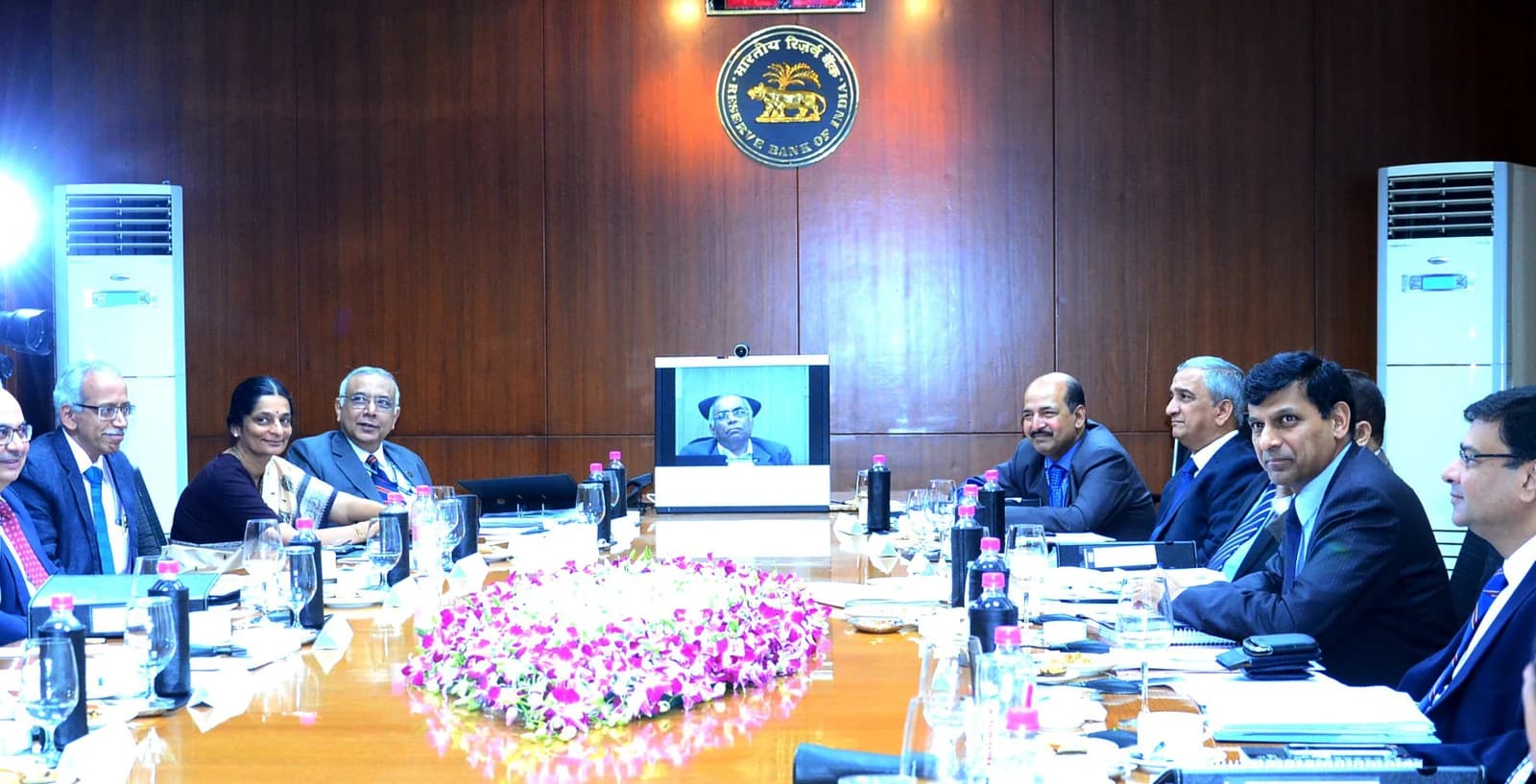
Governor Sanjay Malhotra said the central bank could either raise rates again or hold steady, with the spread of inflation and the growth outlook determining the next step after the RBI lifted its repo rate by 25 basis points to 5.50% earlier this month. The message matters because the RBI is no longer treating inflation as a narrow food-and-energy problem: it is assessing whether price gains are becoming persistent enough to justify further tightening even as the economy remains one of Asia’s fastest growing.
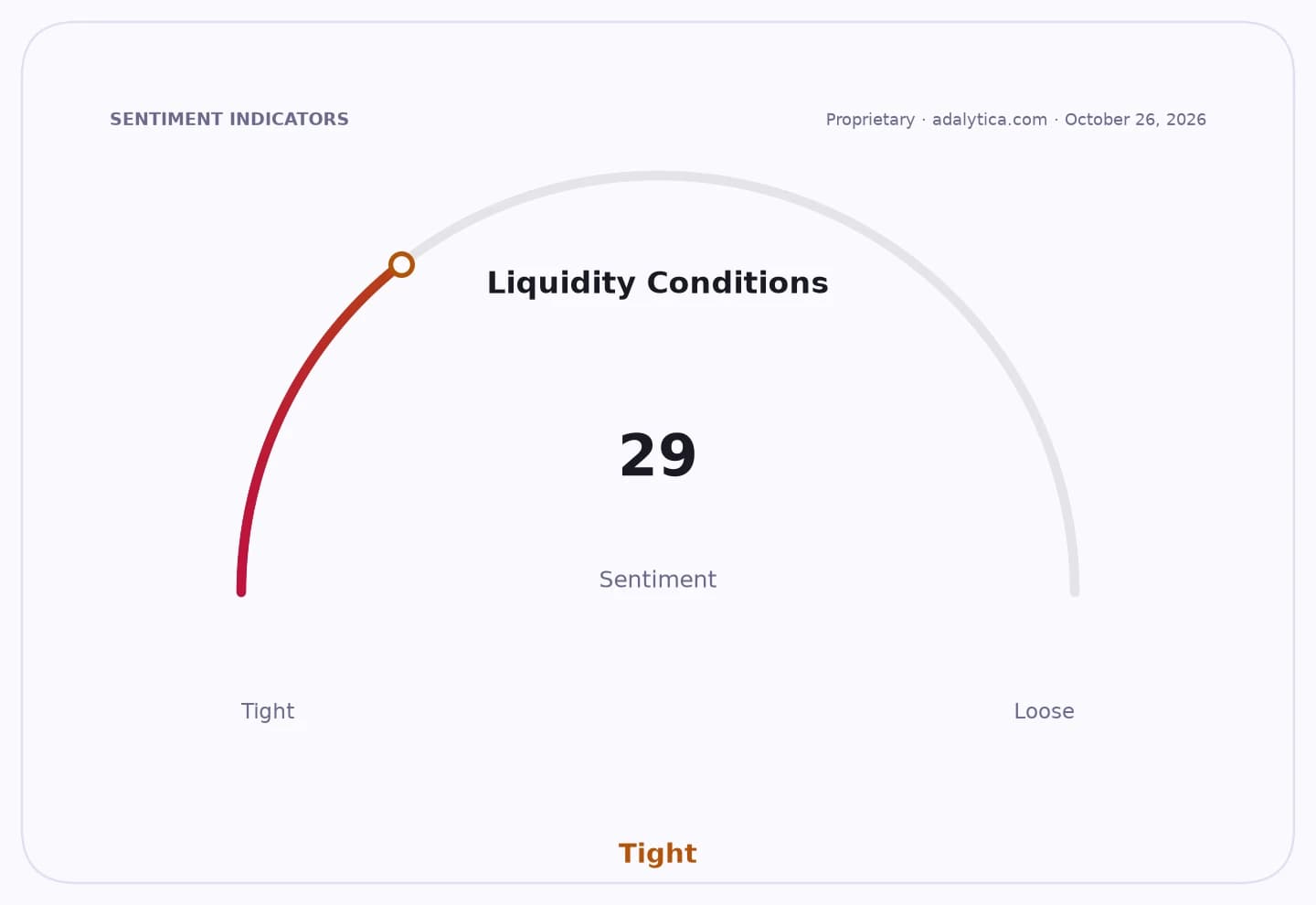
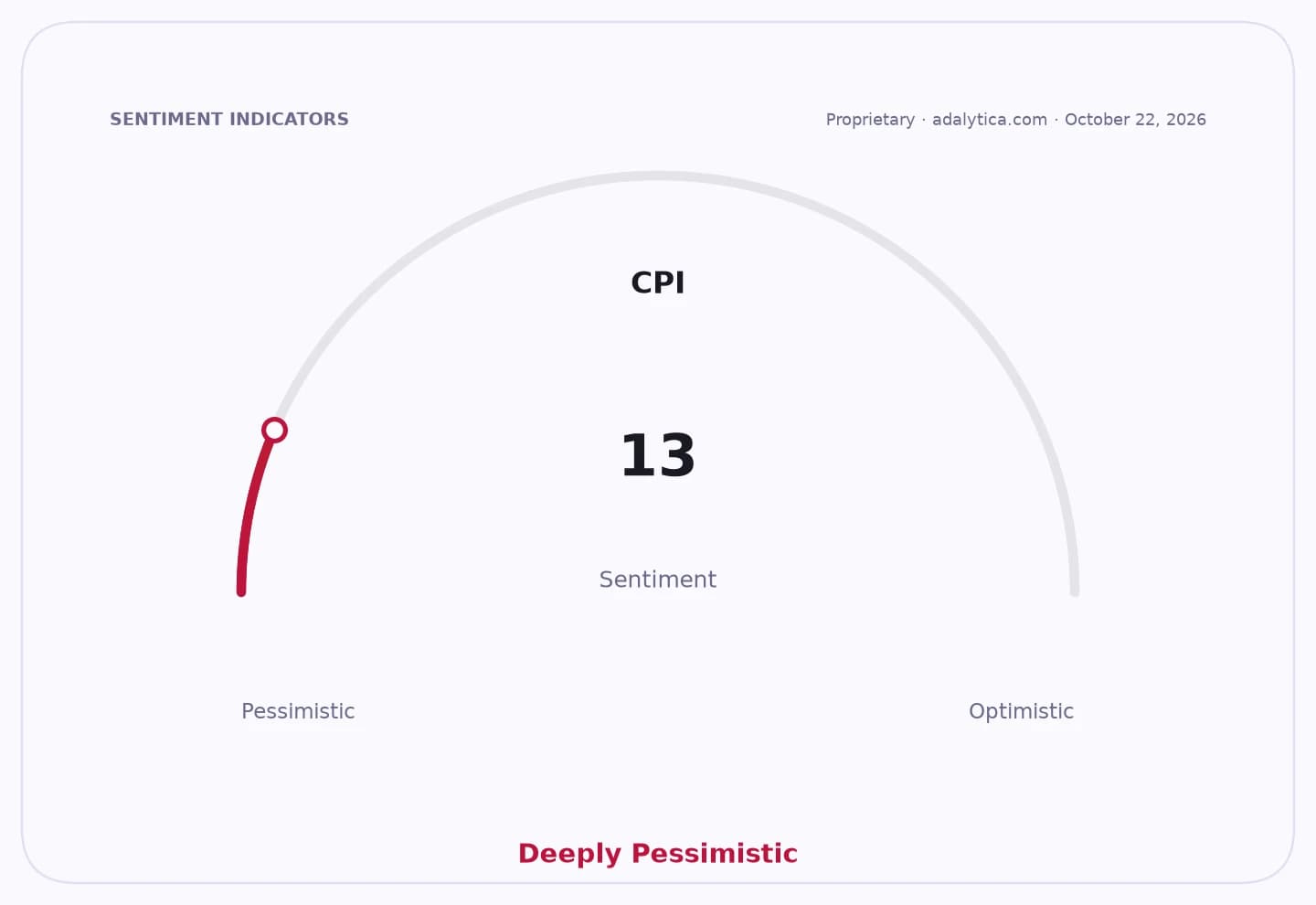
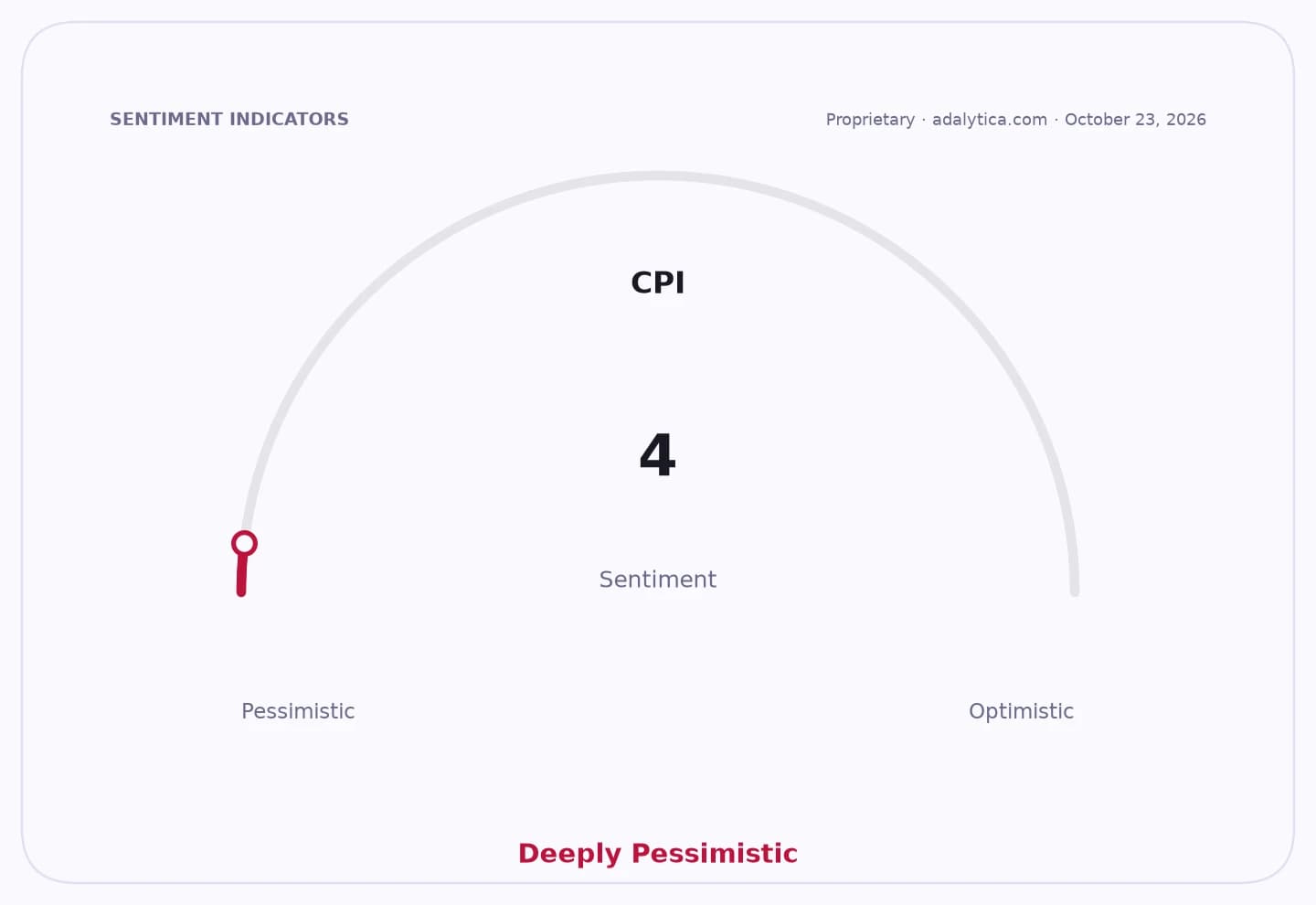
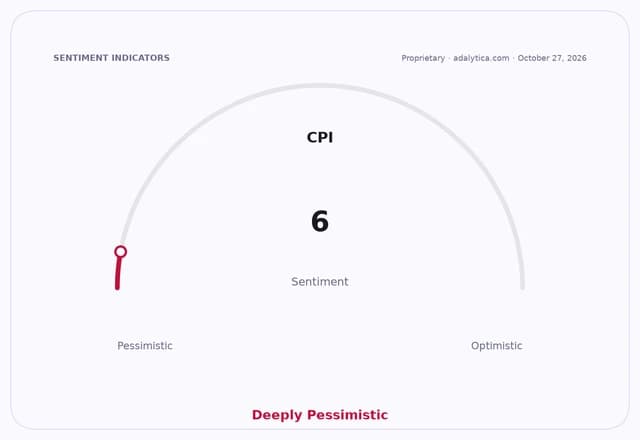
Sentiment IndicatorsⓘProprietary · adalytica.com · October 27, 2026
This is a snapshot — live sentiment, awareness and momentum for 130+ markets update continuously in the dashboard.Open AlphaPulse
Malhotra said about 37% of items in the consumer price index basket were running above the RBI’s 4% target in August, up from 20% in March, underscoring how inflation has broadened beyond a few volatile components. Headline consumer inflation accelerated to 4.8% in August from 4.5% in July, while the RBI sees price gains rising to 6.0% in the October-December quarter. That outlook leaves policymakers facing a harder trade-off: inflation is moving back toward the top end of the 2%-6% tolerance band just as growth remains strong enough to withstand some restraint.
The October 5-7 Monetary Policy Committee minutes show unanimity on the rate increase but not on how far the tightening cycle should extend. The RBI adopted a “calibrated tightening” stance, signaling that an additional increase or a pause are both live options before the Dec. 2-4 meeting. That ambiguity is important for markets because it suggests the central bank is trying to preserve flexibility while waiting to see whether weak monsoon conditions, El Niño and elevated commodity prices feed further into prices.
The committee’s internal debate highlights the policy risk. Dr. Nagesh Kumar and Prof. Ram Singh argued inflation was still being driven by supply factors and had not become broad-based enough to warrant a harder line, warning that aggressive tightening could hurt vehicle and home purchases, cool discretionary spending and squeeze corporate margins. Deputy Governor Poonam Gupta, by contrast, backed an earlier response, arguing rate moves take time to work through the economy and that past episodes showed the RBI tends to act when inflation approaches or breaches tolerance limits.
For investors, the stakes extend beyond the repo rate itself. A more entrenched inflation trend would keep borrowing costs elevated for longer, putting pressure on rate-sensitive sectors such as autos, property and discretionary consumption while supporting banks’ net interest margins in the near term. It also keeps pressure on the rupee, especially if higher energy prices and imported inflation worsen the external balance, and could limit the scope for foreign inflows into Indian assets if real yields fail to compensate for inflation risk.
That backdrop has already fed into market sentiment around India. Equity products tied to the country have been volatile, while the broader risk environment remains sensitive to oil prices and policy expectations. The next major test will come at the December RBI meeting, when policymakers will have more evidence on whether inflation’s spread is temporary or the start of a more durable upturn.
| Entity | Gains | Losses |
|---|---|---|
| Banks | ▲Higher lending margins | ▼Slower credit demand |
| Rate-sensitive sectors | ▲— | ▼Higher borrowing costs |
| RBI | ▲Policy flexibility | ▼Less room to ease |
| Indian consumers | ▲— | ▼Higher prices, weaker spending |