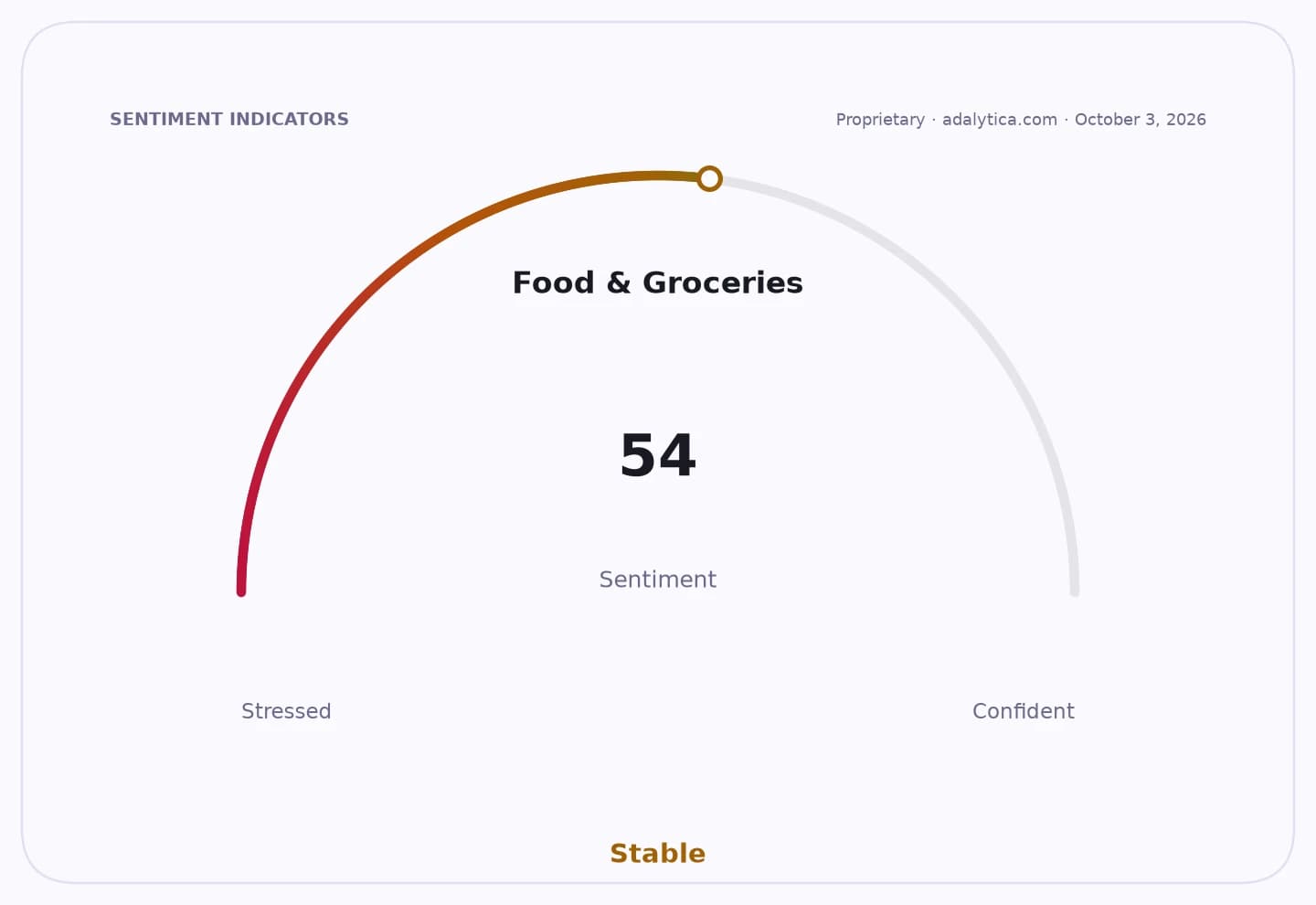
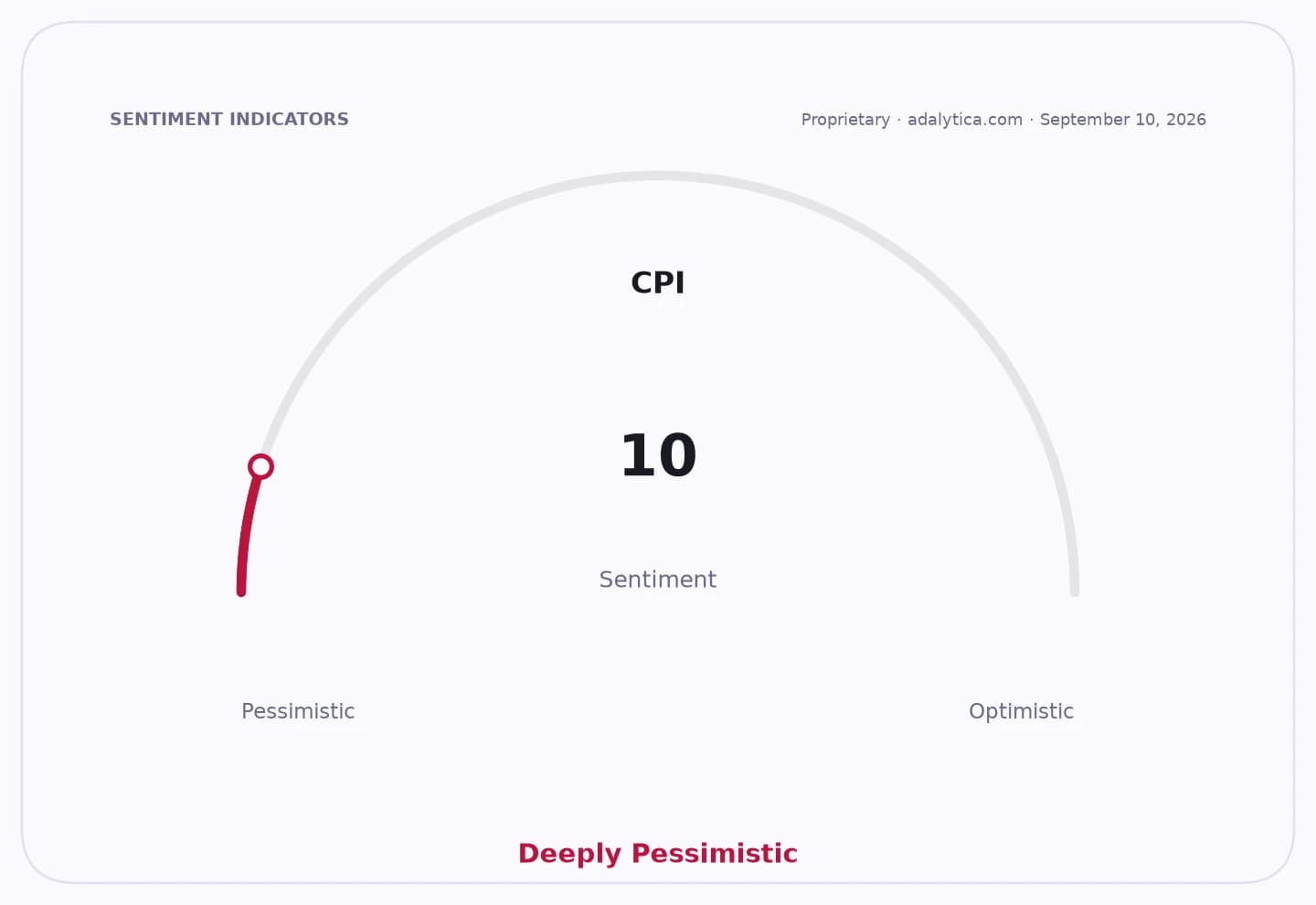
Annual inflation held at 3.2% in September, keeping price growth above 3% and underscoring that the disinflation trend remains fragile even as food prices continued to fall.
Inflation Holds at 3.2% in September
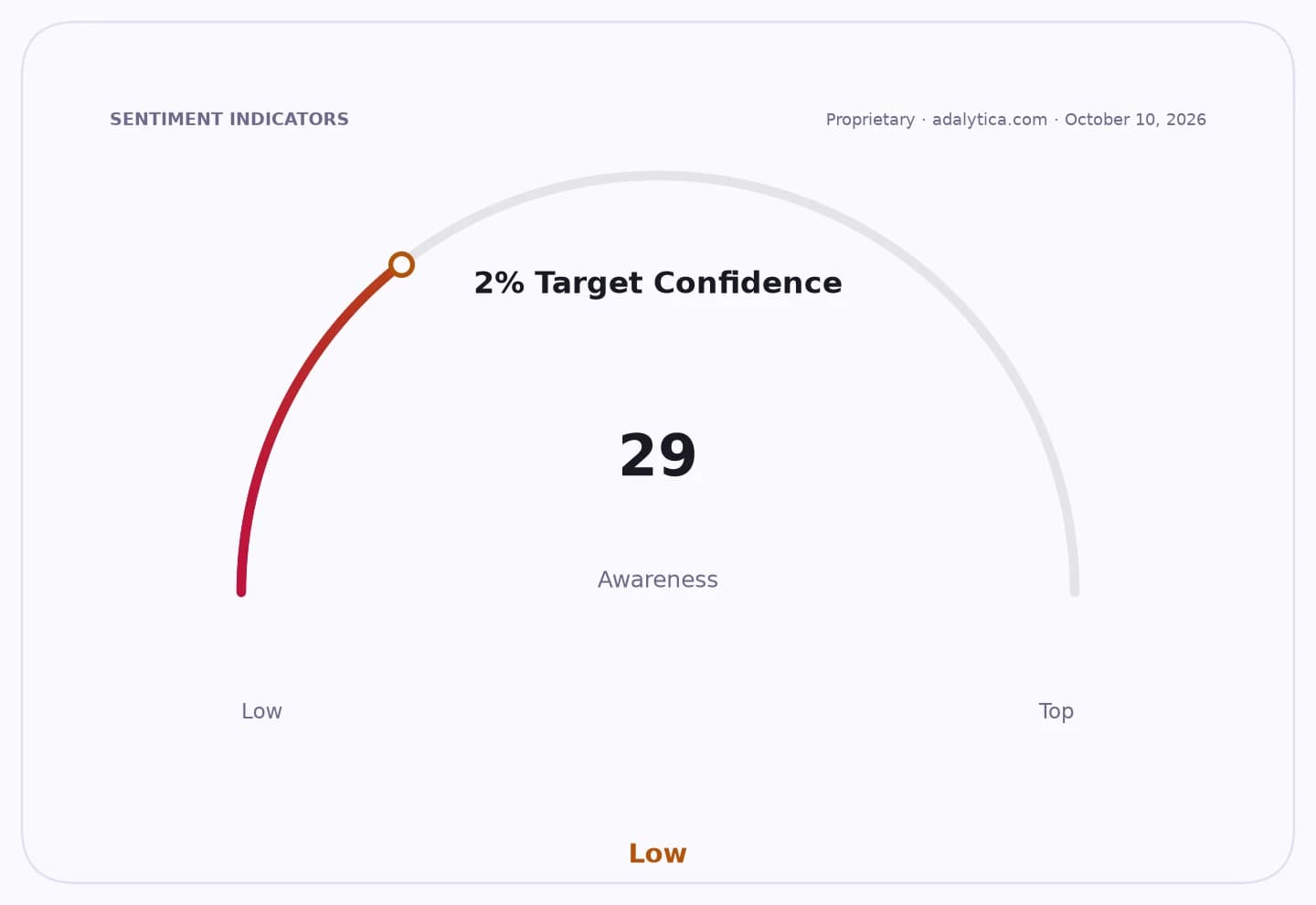
That matters because the inflation mix is still being driven by the parts of the consumer basket that are hardest to offset with cheaper groceries: transport, especially fuel, and housing-related costs. For households, that means relief at the checkout is being partly cancelled out by higher costs for getting around and keeping a home warm. For policymakers, it means the headline rate is not yet weak enough to suggest inflation risks have fully faded.
Sentiment IndicatorsⓘProprietary · adalytica.com · October 10, 2026
This is a snapshot — live sentiment, awareness and momentum for 130+ markets update continuously in the dashboard.Open AlphaPulse
The strongest upward pressure came from transport goods and services, which rose 12.6% over the year, led by a 35.3% jump in fuel. Diesel rose 39.1%, gasoline 29.5% and autogas 3.0%. Housing, water, electricity, gas and other fuels climbed 7.3%, with thermal energy up 9.1% and further increases across electricity, natural gas, housing maintenance and municipal services.
By contrast, food and non-alcoholic beverages fell 4.8% on average, cushioning the overall index and showing how uneven inflation remains. Butter was down 24.6% year on year, skim milk 17.2%, bread 5.7% and fresh, chilled or frozen poultry 7.4%. Meat products, vegetable oils, pork, coffee, cheese and eggs also declined, limiting the headline inflation rate from moving higher.
Core pressures are more mixed. Health care inflation was 2.9%, while leisure, sport and culture rose 5.6% and hospitality and food services 5.7%, suggesting that service-sector pricing remains sticky even as goods inflation eases. In other words, the inflation problem has narrowed, but not disappeared.
For investors, the key issue is whether persistent price pressure in energy and services keeps real incomes under strain and delays any broader easing in policy. Higher fuel and housing costs can weigh on consumer demand and corporate margins, especially in transport-heavy sectors, while also complicating central banks’ ability to argue that inflation is safely under control. Recent market positioning in rate-sensitive assets already reflects that tension, with long-duration bonds vulnerable whenever inflation proves harder to tame than expected.
The next focus will be whether energy costs cool and whether food disinflation persists into the fourth quarter. If they do, the headline rate may drift lower. If not, September’s reading suggests inflation will remain a live macro risk rather than a solved one.
| Entity | Gains | Losses |
|---|---|---|
| Households with food exposure | ▲Cheaper groceries | ▼Higher fuel and utility bills |
| Transport and fuel sellers | ▲Higher price realization | ▼Consumers facing cost pressure |
| Bond investors | ▲Evidence of cooling food inflation | ▼Sticky energy and services inflation |
| Policymakers | ▲Some relief from falling food prices | ▼Limited room to declare victory over inflation |