Argentina’s inflation cooled only briefly in August before reaccelerating in September, underscoring how fragile the disinflation process remains and why price stability is still distant for households, firms and policymakers.
Argentina September inflation rises to 1.9%
Consumer prices rose 1.9% in the month, up from 1.7% in August, according to the national statistics agency Indec, bringing the cumulative increase this year to 23.6% and the 12-month rate to 33.4%. The reading was close to private estimates and broadly in line with the 1.8% pace recorded in Buenos Aires, suggesting inflationary pressure is still running through the economy even as monthly gains remain far below the triple-digit rates seen in prior years.
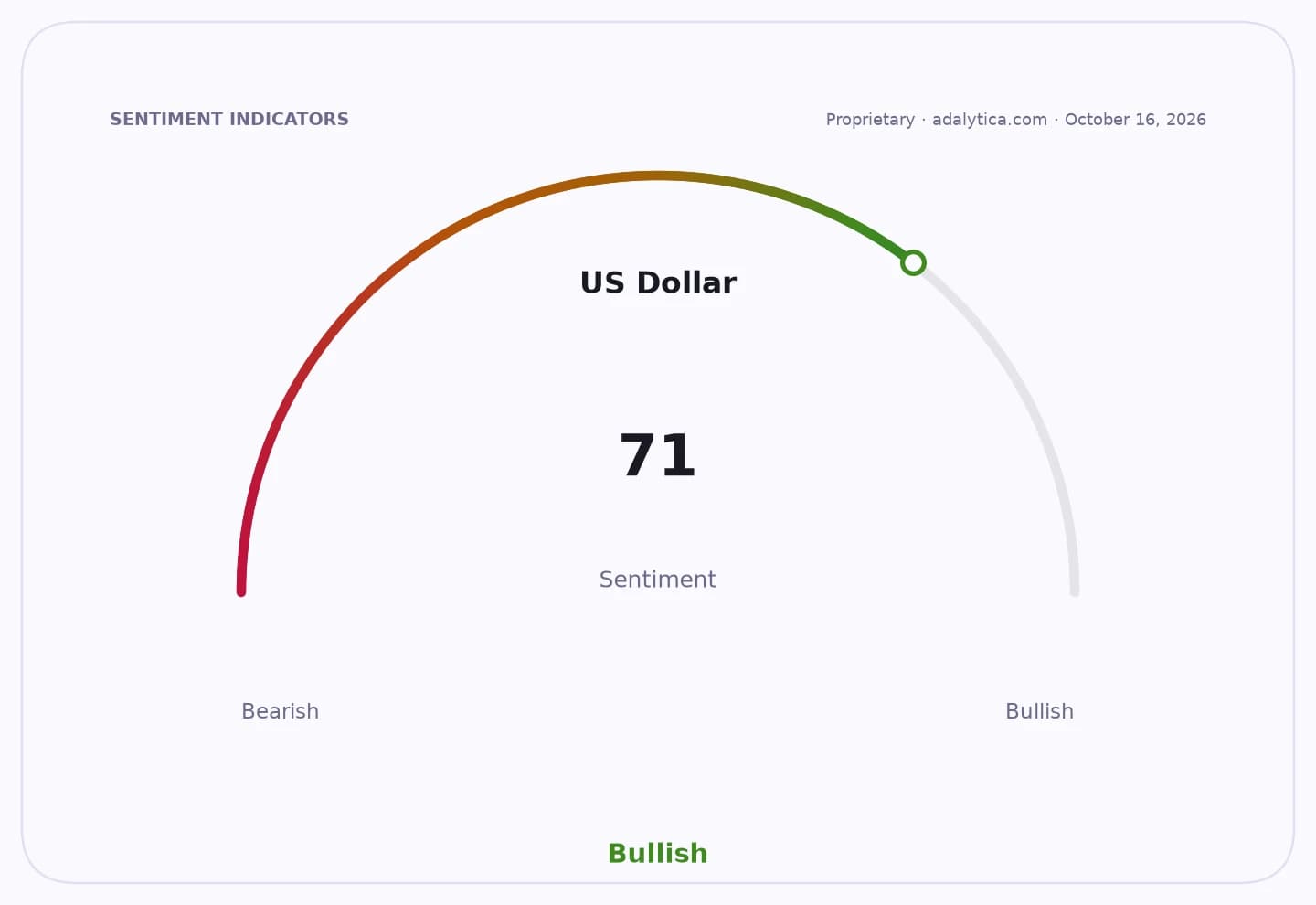
Sentiment IndicatorsⓘProprietary · adalytica.com · October 14, 2026
This is a snapshot — live sentiment, awareness and momentum for 130+ markets update continuously in the dashboard.Open AlphaPulse

The September report matters because Argentina’s macro story is now less about runaway inflation and more about whether the government can lock in a durable downshift without a fresh price spiral. Housing, water, electricity, gas and other fuels rose 3.1%, education increased 3% and food and beverages climbed 2%, all ahead of or in line with the headline pace. That mix points to sticky regulated and essential costs, which tend to filter quickly into wage demands, household spending and business pricing decisions.
Core inflation, at 1.7%, was lifted by meals away from home and pharmaceuticals, while seasonal prices rose 2.9% on vegetables, tubers and legumes. Regulated items climbed 2.3%, led by gas, power and private health-plan costs. In other words, the easing in Argentina’s price data is not yet broad-based: the goods and services most sensitive to policy-administered adjustments are still doing much of the work.
For investors, the implication is that the disinflation trade remains conditional. A monthly print below 2% is a step in the right direction, but not enough on its own to anchor confidence in a clean return to low inflation or to justify aggressive easing assumptions. That helps explain why local rates, the peso and domestic asset prices continue to trade on every monthly data release. The report also keeps pressure on the central bank and fiscal authorities to show that tighter monetary policy, slower money creation and fiscal restraint are feeding through to prices rather than merely delaying them.
The market read-through extends beyond Argentina. Persistent inflation in a large emerging market keeps risk premia elevated across local-currency assets and reinforces the appeal of hard-currency exposure for investors seeking protection from policy slippage. It also complicates the earnings outlook for retailers, utilities and consumer-facing companies, which face a tougher balance between passing through costs and preserving demand.
Regional details were mixed, with the Pampas and Greater Buenos Aires posting 2% monthly inflation, followed by the northwest and Cuyo at 1.9%, and the northeast and Patagonia at 1.7%. Buenos Aires city separately reported 1.8% inflation in September, with its annual rate at 32.9%.
The broader narrative is that Argentina is still moving in the right direction, but only in fits and starts. Unless monthly inflation can settle convincingly below 2% and broaden across categories, investors are likely to keep treating the country as a high-volatility macro market rather than a completed stabilization story.
| Entity | Gains | Losses |
|---|---|---|
| Consumers | ▲Slightly slower price growth | ▼Purchasing power erosion |
| Central bank and government | ▲Progress narrative on disinflation | ▼Pressure to sustain tight policy |
| Peso and local bonds | ▲Better inflation optics | ▼Risk from sticky core prices |
| Retailers and household-services firms | ▲More predictable pricing | ▼Demand strain and margin pressure |