Argentina is giving investors a broader menu of peso- and dollar-linked bonds next week as the Treasury tries to refinance 10.5 trillion pesos of debt and avoid a funding squeeze that could sharpen ahead of two much larger maturities.
Argentina Treasury to Offer Peso and Dollar Bonds

That matters because the government’s ability to keep rolling over debt at reasonable rates is one of the clearest gauges of financial stability in Argentina. If the Treasury cannot extend maturities, it risks having to pay up for short-term funding, lean harder on the central bank, or face renewed pressure on the peso and local yields.
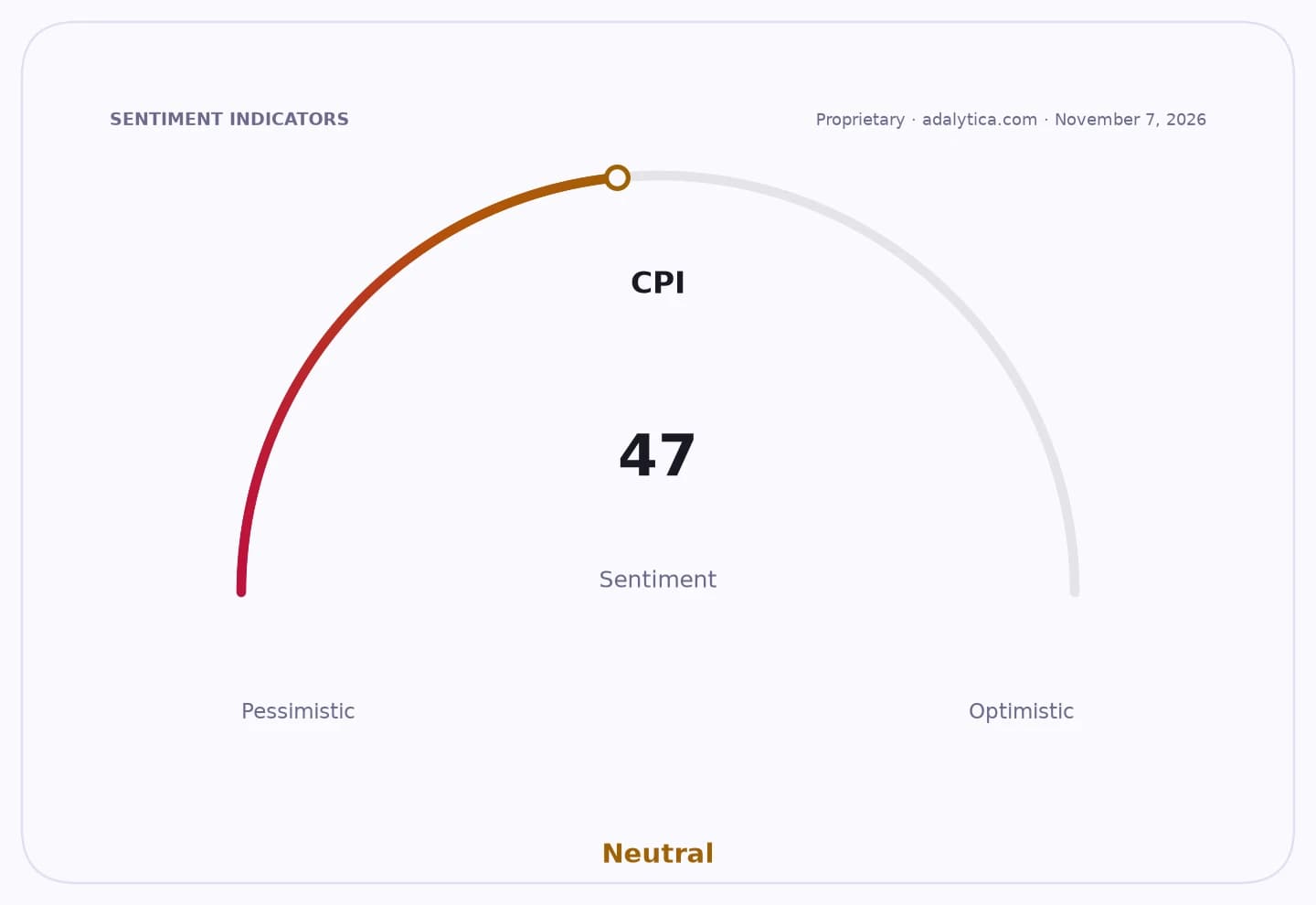
Sentiment Indicators
The auction, set for next Wednesday, comes after the Treasury said Thursday it will offer two Lecap notes, including one due Jan. 29, 2027 and another maturing in June next year. It will also sell a CER inflation-linked bond due June 30, 2028, a Tamar-linked instrument maturing in April 2027 and a dollar-linked security due Jan. 15, 2027.
The immediate refinancing need looks manageable, according to the source material, but the calendar worsens quickly. The next two auctions together cover about 66 trillion pesos of obligations, a reminder that extending maturities is getting harder as political uncertainty weighs on demand. The broader narrative is less about one auction than about whether the government can keep stitching together the financing required to get through an election season without a destabilizing miss.
For investors, the structure of the offer is telling. A wider selection of paper gives local funds, banks and insurers more ways to participate based on their inflation, rate and currency views. The inclusion of inflation-linked and dollar-linked bonds suggests the Treasury is still catering to demand for protection, which is often what happens when confidence in the currency is fragile and investors want hedges rather than outright duration risk.
That also helps explain why bond prices and refinancing conditions are being driven less by day-to-day economic data than by politics. The data context points to election uncertainty as the main force behind the move, which is consistent with Argentina’s long history of financing stress intensifying as voters approach the polls.
The long-term implication is straightforward: if the government can keep rolling debt while pushing maturities farther out, it buys time and lowers rollover risk. If it cannot, every auction becomes more expensive and the policy room for maneuver narrows. For long-term investors, the message is to watch whether next week’s tender is fully covered and, more importantly, whether the Treasury can keep clearing the far larger walls of debt coming after it. That will tell you more about Argentina’s financial trajectory than any single headline.
| Entity | Gains | Losses |
|---|---|---|
| Argentina Treasury | ▲Rolls over debt | ▼Faces fewer financing options |
| Local banks and funds | ▲More bond choices | ▼Take on policy risk |
| Peso debt holders | ▲Inflation and rate hedges | ▼Duration and rollover risk |
| Dollar-hedged investors | ▲Currency protection | ▼Lower local yield certainty |