Miguel Pichetto used a university honor in Río Negro to deliver a pointed rebuke of President Javier Milei’s handling of Argentina’s public universities, putting the fight over education funding back at the center of a broader debate about whether the government will obey laws passed by Congress.
Argentina universities funding dispute and Milei

That matters because the dispute is no longer just about campus budgets. It has become a test of institutional credibility in Argentina, where Pichetto warned that “the laws are not followed” and said the government’s refusal to implement the university funding law raises risks for democratic life. For investors watching Argentina, that kind of confrontation is important because policy unpredictability does not stop at higher education — it affects the country’s ability to build trust around spending, regulation and the rule of law.
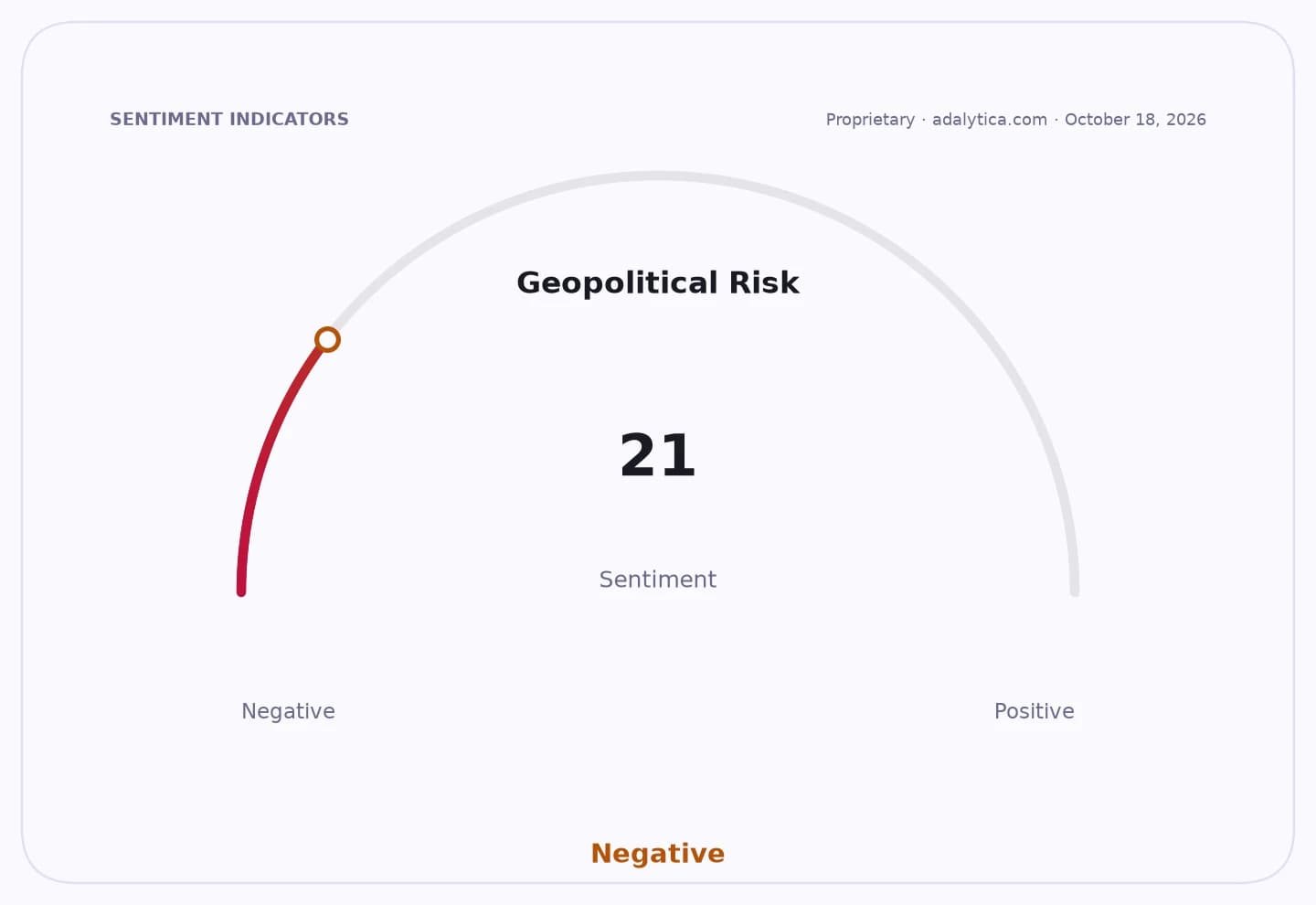
Sentiment Indicators
Pichetto’s remarks came in Viedma, where the National University of Río Negro awarded him an honorary doctorate for his role in helping create the institution through Law 26.330 in 2007. The ceremony was meant to recognize his political and institutional contribution to the university’s founding. Instead, it became a platform for a broader attack on Milei’s austerity agenda and the executive branch’s decision not to move ahead with the university financing measure approved by Congress.
For public universities, the stakes are practical and immediate. Pichetto argued the funding fight is about salaries for professors and staff, as well as infrastructure and day-to-day operations. In other words, this is not an abstract policy quarrel. It is a question of whether Argentina’s public education system can function normally, and whether Congress can translate legislation into actual spending.
The political resonance is broader still. Pichetto tied the issue to the health of democratic institutions, suggesting that ignoring enacted laws undermines the system itself. That is the kind of rhetoric that tends to harden political resistance, especially when it comes from a veteran lawmaker with deep ties to the legislative process and to one of the country’s regional universities.
For long-term investors, the more important takeaway is that Argentina’s reform story remains fragile. Milei has won support for market-friendly changes, but clashes like this show how contested the transition remains. If the government cannot reconcile fiscal restraint with institutional compliance, the result could be more political friction, more legal battles and a higher risk premium on Argentine assets.
The university issue may not move markets day to day, but it fits a familiar pattern: in Argentina, policy execution often matters as much as policy promises. Investors should keep watching whether the government finds a workable path on university financing or lets the dispute become another symbol of institutional strain.
| Entity | Gains | Losses |
|---|---|---|
| Public universities | ▲Funding certainty | ▼Budget pressure |
| Milei government | ▲Fiscal discipline narrative | ▼Political credibility |
| Congress | ▲Legislative relevance | ▼If laws are ignored |
| Students and staff | ▲Better services | ▼Delayed salaries and upkeep |