A federal judge in New York has formally wiped out the $16.1 billion damages award against Argentina over YPF’s 2012 nationalization, removing one of the country’s largest external legal liabilities and setting up a final Supreme Court fight over whether the case can be revived.
Argentina Judge Vacates $16.1 Billion YPF Award
The ruling by Judge Loretta Preska does not change the underlying appellate win Argentina secured in March, but it matters because it closes the first-instance case in practical terms and turns a massive judgment into a contingent risk instead of an active obligation. For Argentina, that is a meaningful repricing event: a liability that had hung over sovereign finances, market access and investor confidence is now formally annulled unless the U.S. Supreme Court agrees to hear the plaintiffs’ appeal.

That distinction is critical. The original award, issued in 2023, had exposed Argentina to a bill that kept growing with interest and threatened to complicate its already fragile fiscal and financing profile. Taking that number off the table eases pressure on the sovereign balance sheet and removes a headline risk that long weighed on anyone underwriting Argentine assets, from sovereign debt holders to equity investors in the country’s energy sector.
The case has been one of the most closely watched legal overhangs in emerging markets because it combined politics, property rights and capital-markets credibility. The dispute stems from the state’s seizure of 51% of YPF from Repsol in 2012, followed by minority shareholders Petersen Energía and Eton Park arguing Argentina should have launched a tender offer under YPF’s bylaws. Preska accepted that theory in 2023 and imposed the $16.1 billion award; the Second Circuit later reversed her ruling, finding the contractual claims were not legally sustainable under the applicable Argentine law.
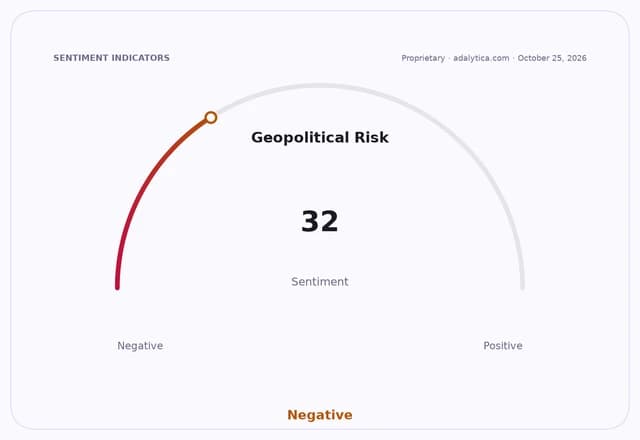
For investors, the immediate takeaway is straightforward: one of the biggest legal discounts attached to Argentina has narrowed sharply. That does not make the country low-risk, but it does improve the risk-reward equation for assets tied to a cleaner sovereign story, including hard-currency debt and Argentine equities. YPF itself was not left on the hook by the appeals court, which matters for the company’s valuation and for sentiment around the broader energy complex.
The plaintiffs, including the Petersen entities and Eton Park, are now asking the U.S. Supreme Court to take the case. That is the last meaningful obstacle, but it is also a high bar. If the court declines review, Argentina’s win stands and the market will treat the case as effectively over. If it accepts, the legal cloud returns, though even then the original damages award remains void unless the plaintiffs succeed again.
That is why this ruling matters beyond the courtroom. Argentina is still fighting to rebuild credibility with investors after years of defaults, restructurings and policy volatility. Removing a $16 billion judgment from the equation strengthens the argument that the sovereign risk premium should keep compressing, especially if policymakers continue to stabilize the macro backdrop. YPF shares and the broader Argentina trade already reflect some recovery in confidence, but this is the kind of legal resolution that can support a further rerating if the Supreme Court stays out.
For now, the message is clear: the market’s worst-case YPF liability has been formally annulled, and the burden of proof now shifts to the plaintiffs in Washington. If the Supreme Court declines to intervene, Argentina’s balance-sheet story gets materially cleaner — and investors who stayed sidelined on legal risk may have to reassess how much of that discount still deserves to remain.
| Entity | Gains | Losses |
|---|---|---|
| Argentina | ▲Lower legal liability | ▼Less leverage for plaintiffs |
| YPF | ▲Clears valuation overhang | ▼Residual legal noise |
| Petersen/Eton Park/Burford | ▲Option to seek Supreme Court review | ▼Damages award annulled |
| Argentina debt/equity investors | ▲Reduced sovereign risk premium | ▼Fewer distress-driven bargains |