Companies, especially small and midsize firms, are discovering that higher pay alone is no longer enough to keep employees, as workers increasingly leave for growth, stability and more flexible ways of working.
Argentina workers want growth, stability, flexibility

That is the central message from two recent surveys that expose a widening gap between what employers think drives resignations and what talent says it wants. In an IDEA and Seeds study of 1,907 professionals and 111 companies, 68% of firms said compensation is the main reason people quit, while only 40% pointed to lack of growth. Workers gave the opposite answer: 62% cited limited growth opportunities first, versus 58% for pay. Burnout was also underestimated, mentioned by 36% of talent but only 15% of companies.
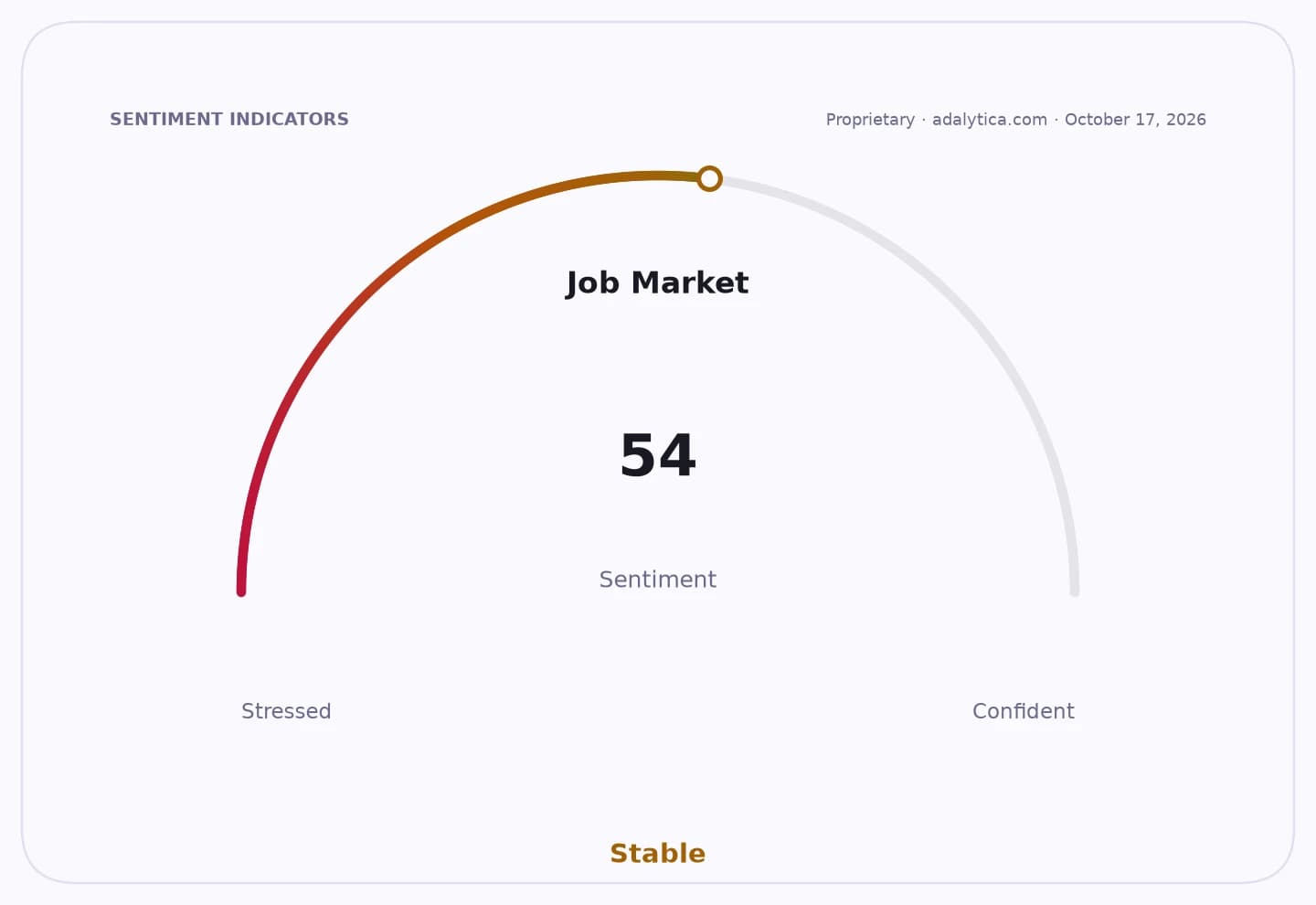
Sentiment Indicators
Job Market
The findings matter economically because labor retention has become a productivity issue, not just an HR problem. For SMEs, which typically have less room to offer large salary jumps or broad benefit packages, the cost of turnover can be especially damaging: lost experience, slower execution and higher recruitment and training expenses. The data suggest that even in a labor market where 91% of surveyed talent is open to changing jobs and 73% says finding work in Argentina is difficult, workers still have bargaining power when it comes to choosing employers that offer a credible path upward.
That shift is reinforced by a second survey, from Zentrix, which shows that if workers could choose freely, 67.2% would prefer formal salaried employment with payslips and contributions, while only 26.9% would opt for independent work under a monotributo arrangement. Stability ranked as the most valued work attribute for 43.8% of respondents, narrowly ahead of a stable salary at 42.3%, with professional growth third at 25.7%. In other words, pay remains important, but predictability and development have become part of the core offer.
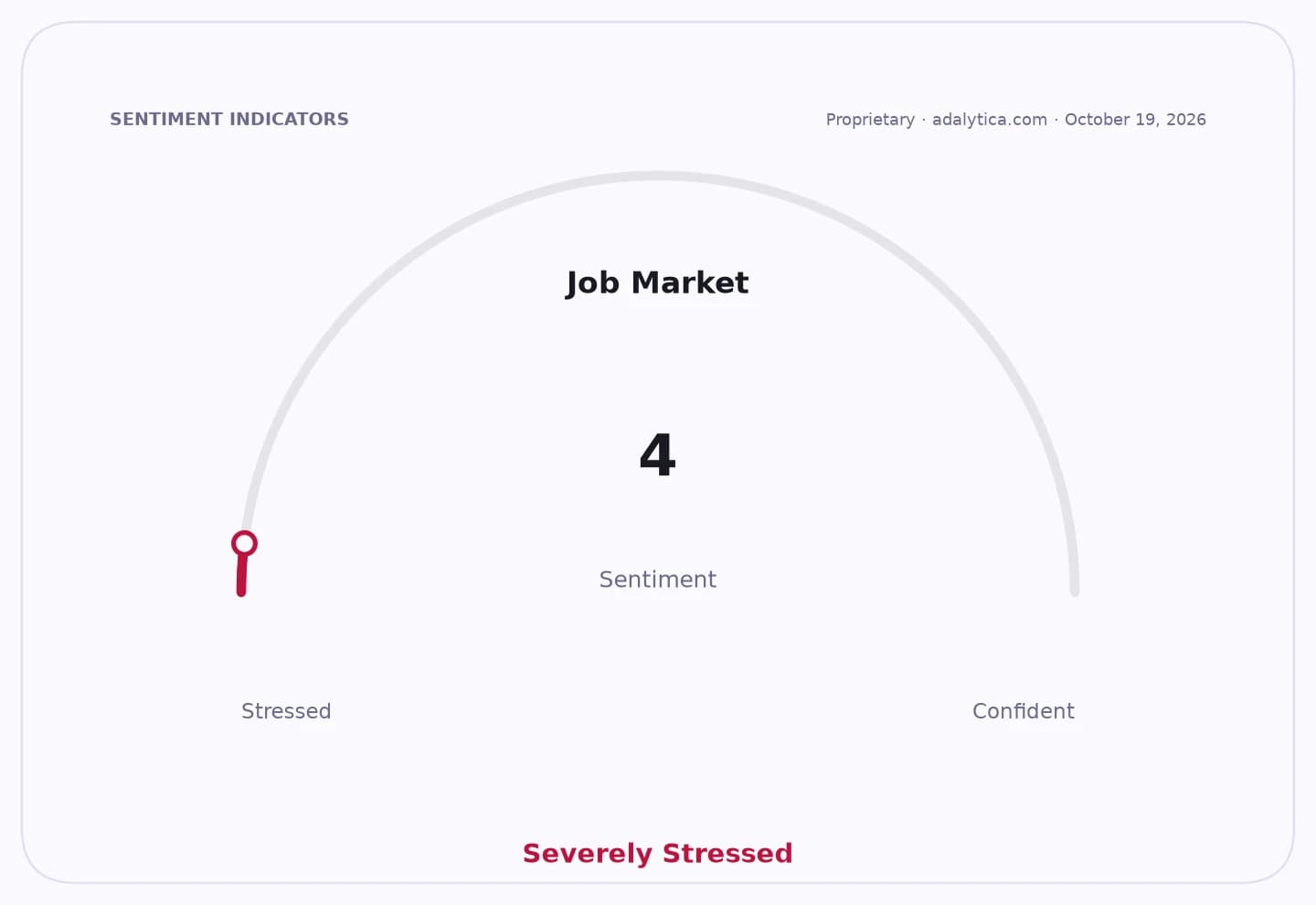
Job Market — 30-day sentimentadalytica.com
Explore this data interactively — full history, time series and cross-market comparisons.
Job Market
For investors and corporate decision-makers, the implication is that wage inflation may not solve retention pressure on its own. The companies best positioned to defend margins are likely to be those that redesign jobs around career progression, training and flexibility rather than simply bidding up salaries. That is particularly true in SMEs, where a modest pay raise without a visible career ladder can still leave employees dissatisfied and more likely to move.
The junior segment illustrates the problem most clearly. Nearly half of companies, 48%, said junior employees were the group that left most over the past year, yet only 3% said they had specific programs to recruit and train them. That mismatch suggests a structural weakness: firms rely on entry-level staff to fill operational roles, but often fail to turn those roles into a path for retention or internal mobility.
Business leaders in the report argue that the model needs to change. Renault CEO Pablo Sibilla said companies should stop treating young hires as purely transactional labor and give them a real role in value creation. Andreani’s Verónica Andreani said firms also need faster onboarding experiences as automation reduces the operational tasks that once served as a cultural entry point.
Flexibility is another pressure point. Both companies and workers placed it first when asked what an ideal employer should offer, but the preferred format diverges sharply: 56% of talent wants a flexible hybrid model in which each person can choose when to go to the office, while only 28% of companies currently use that approach. Nearly half, 47%, still prefer structured hybrid schedules with fixed in-office days.
| Entity | Gains | Losses |
|---|---|---|
| Workers | ▲Better growth, flexibility, stability | ▼Firms with weak career paths |
| SMEs | ▲Lower turnover if they adapt | ▼Talent retention if they rely on pay alone |
| Large employers | ▲Easier to offer broader packages | ▼Smaller firms in talent competition |
| Junior staff | ▲Training and advancement programs | ▼Transactional entry-level roles |