Hundreds of thousands of UK workers are set for a pay increase as the Real Living Wage climbs to £14.10 an hour, a move that reinforces how stubborn wage pressure remains in the economy and why investors should keep an eye on labour costs, consumer spending and margins.
UK Real Living Wage rises to £14.10 an hour
The voluntary rate, set by the Living Wage Foundation, will lift full-time earnings to £27,495 a year across the UK and £32,136 in London, with the capital rate rising to £15.45 an hour. That is more than £1,250 a year extra for a standard full-time worker, and more than £2,700 above the current government minimum in the UK outside London, according to the foundation.
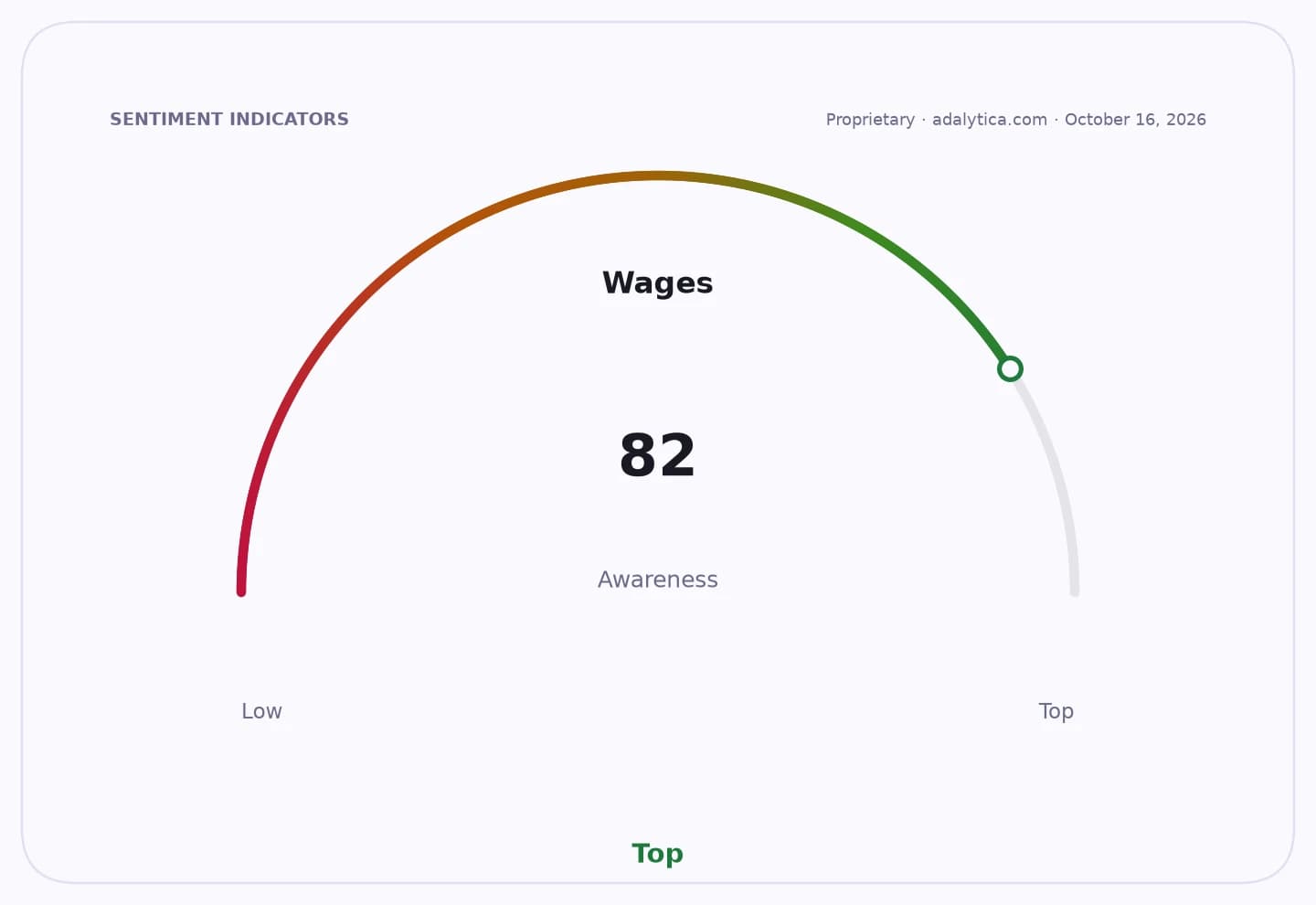
Sentiment IndicatorsⓘProprietary · adalytica.com · October 16, 2026
This is a snapshot — live sentiment, awareness and momentum for 130+ markets update continuously in the dashboard.Open AlphaPulse
Economically, the increase matters because it puts real money into the pockets of lower-paid workers at a time when households are still stretched by food, housing and energy bills. The Living Wage Foundation says almost 500,000 workers employed by accredited companies will benefit, and that nearly £700 million flowed back into workers’ pockets in the past year alone. For many families, that is not a rounding error — it is the difference between keeping up and falling behind.
For investors, the story is less about a single pay rise than about what it says on corporate resilience. Companies that can absorb higher wages without damaging hiring or profitability tend to be the ones with stronger pricing power, healthier productivity and better employee retention. That is one reason the campaign has won support from nearly 17,000 employers, including IKEA, Uniqlo and Everton FC. The foundation says staff retention at some firms improves after accreditation, which can cut turnover costs and make operations steadier over time.
There is also a broader policy and market backdrop here. The rise comes amid a wider debate over pay floors, inflation and the cost of doing business. Wages that climb faster than inflation can help consumption, but they can also squeeze smaller employers already dealing with tight labour markets and weak demand. That tension is why wage growth remains a key input for policymakers and a key watchpoint for equity investors, especially in labour-intensive sectors such as retail, cleaning, hospitality and security.
The underlying message for long-term investors is straightforward: companies that treat workers well often build more durable businesses. Higher wages can be a cost, but they can also be an investment in retention, service quality and brand strength. In a consumer economy, that matters. The firms that manage those trade-offs best are often the ones worth owning for years, not just quarters.
| Entity | Gains | Losses |
|---|---|---|
| Low-paid workers | ▲Higher take-home pay | ▼Financial strain eases less |
| Accredited employers | ▲Better retention, stronger goodwill | ▼Higher wage bill |
| Consumers/households | ▲More spending power | ▼Small firms face tighter budgets |
| Labour-intensive businesses | ▲More stable staffing | ▼Margin pressure from pay hikes |