Armenia’s push toward European Union membership is turning the country into a fresh fault line between Moscow and the West, with economic and security consequences that extend well beyond Yerevan.
Armenia EU Accession Bid Raises Russia Risk
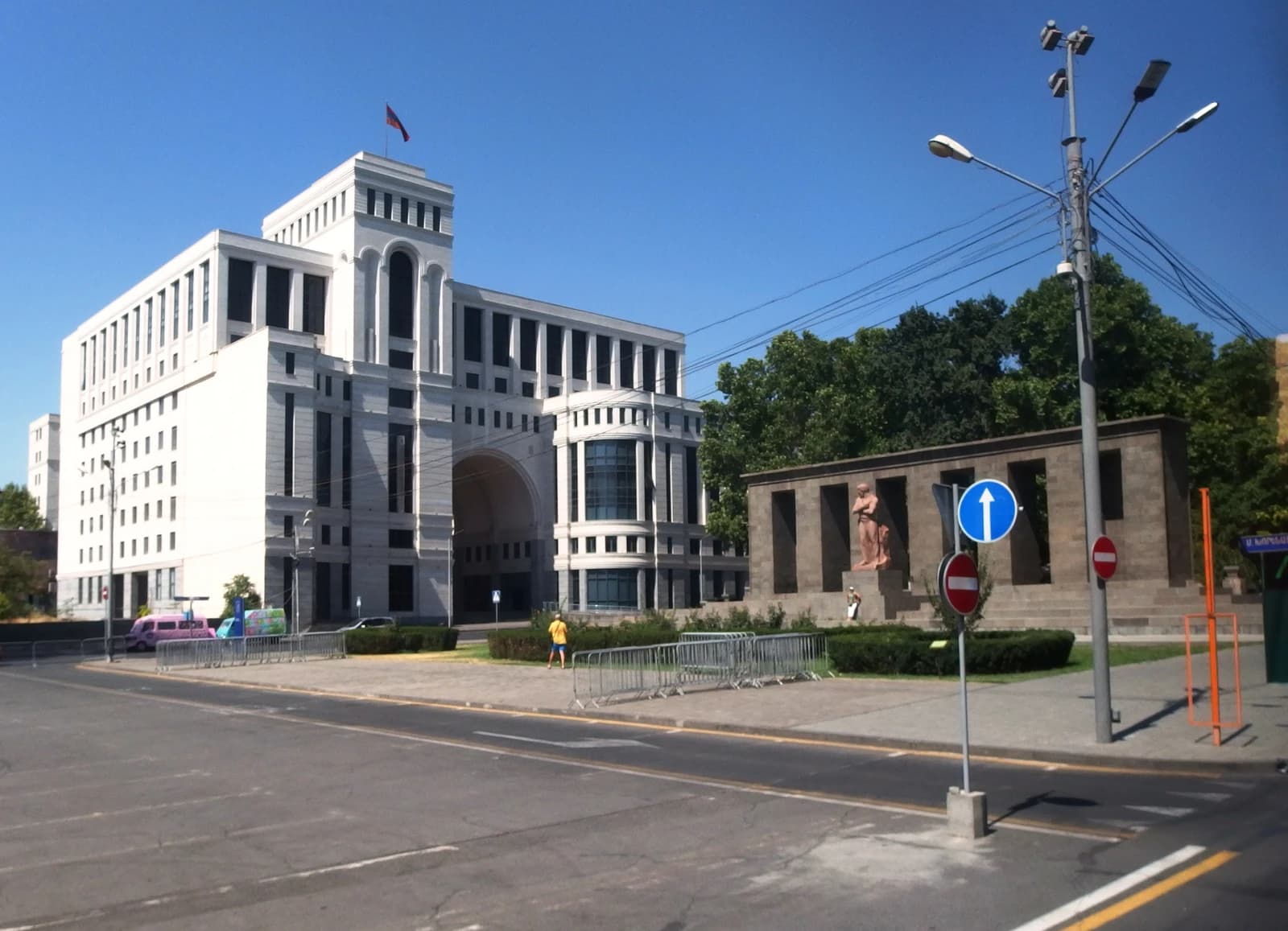
Prime Minister Nikol Pashinyan’s plan to seek EU accession and hold a referendum marks a deeper break from Russia’s long-standing role as Armenia’s security guarantor and economic anchor. For markets and policymakers, the shift matters because it increases the risk of retaliation from Moscow while opening the door to slower, more uncertain—but potentially more diversified—trade, investment and institutional ties with Europe.
Sentiment IndicatorsⓘProprietary · adalytica.com · August 31, 2026
This is a snapshot — live sentiment, awareness and momentum for 130+ markets update continuously in the dashboard.Open AlphaPulse
The Kremlin has already warned of a “Ukrainian scenario,” a sign that it views Armenia’s move as more than symbolic. Russian officials, including former president Dmitry Medvedev, have sharpened their criticism as Yerevan moves to reduce Russian business influence and cultivate closer links with Western partners, including the UK. That raises the odds of a prolonged diplomatic standoff at a time when the South Caucasus is already under pressure from unresolved regional security disputes.
Economically, Armenia sits in a vulnerable position. It is a small, open economy with limited strategic depth and heavy exposure to external shocks, so a deterioration in ties with Russia could hit remittances, trade flows and energy-related dependence. At the same time, deeper alignment with Europe could improve the investment climate over the medium term if it leads to stronger rule-of-law standards and broader market access. The near-term path, however, is more likely to be defined by policy uncertainty than by immediate capital inflows.
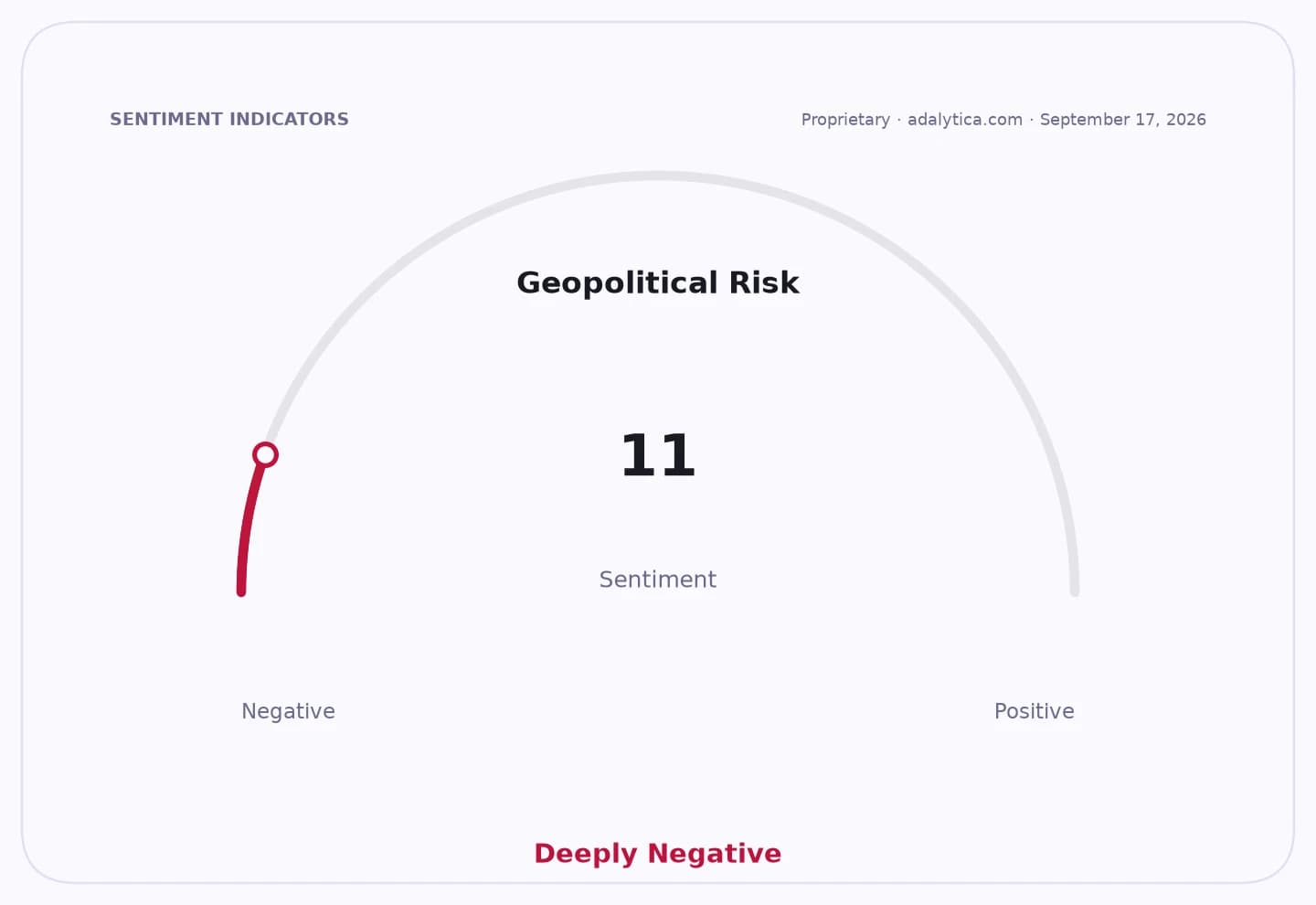
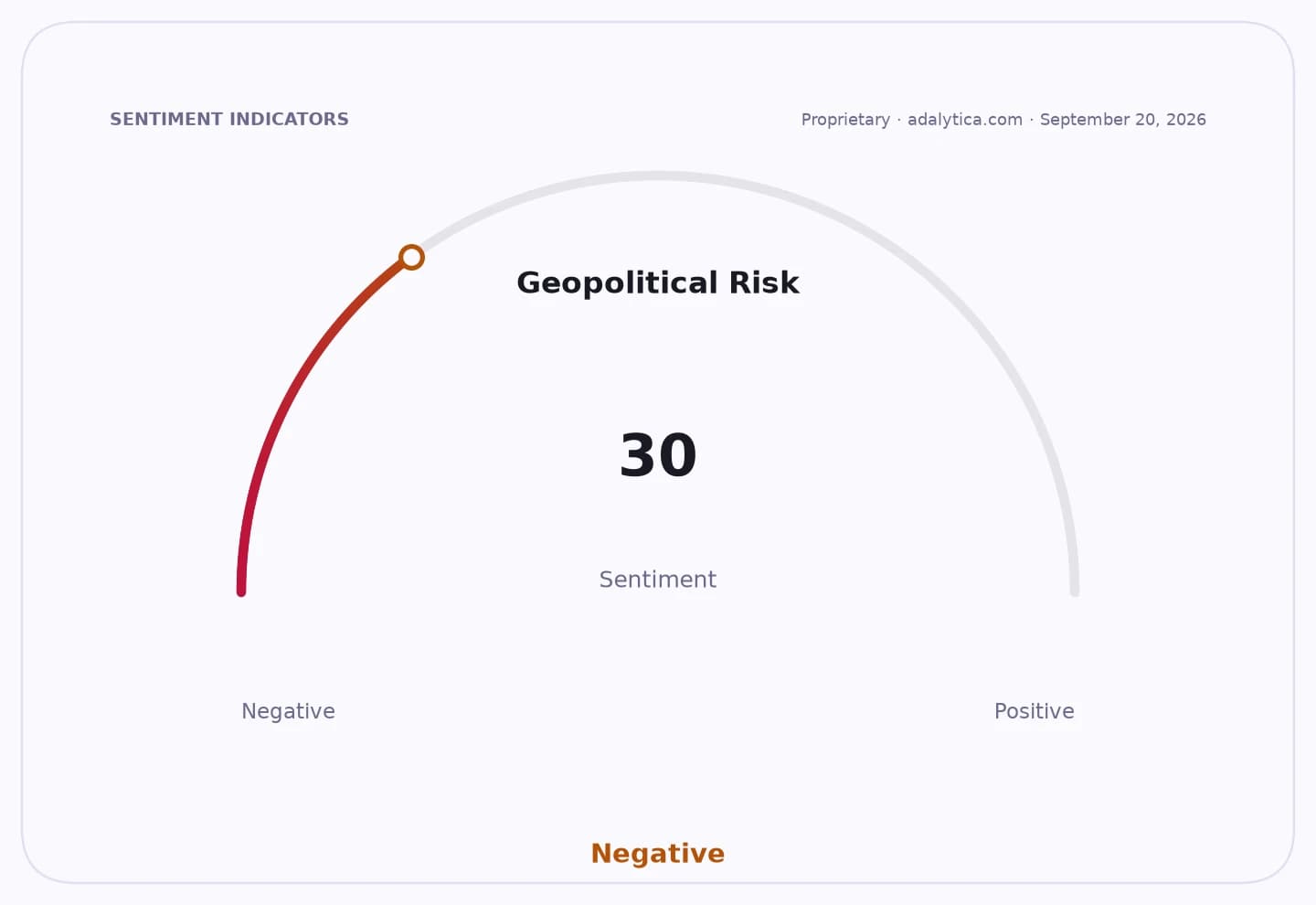
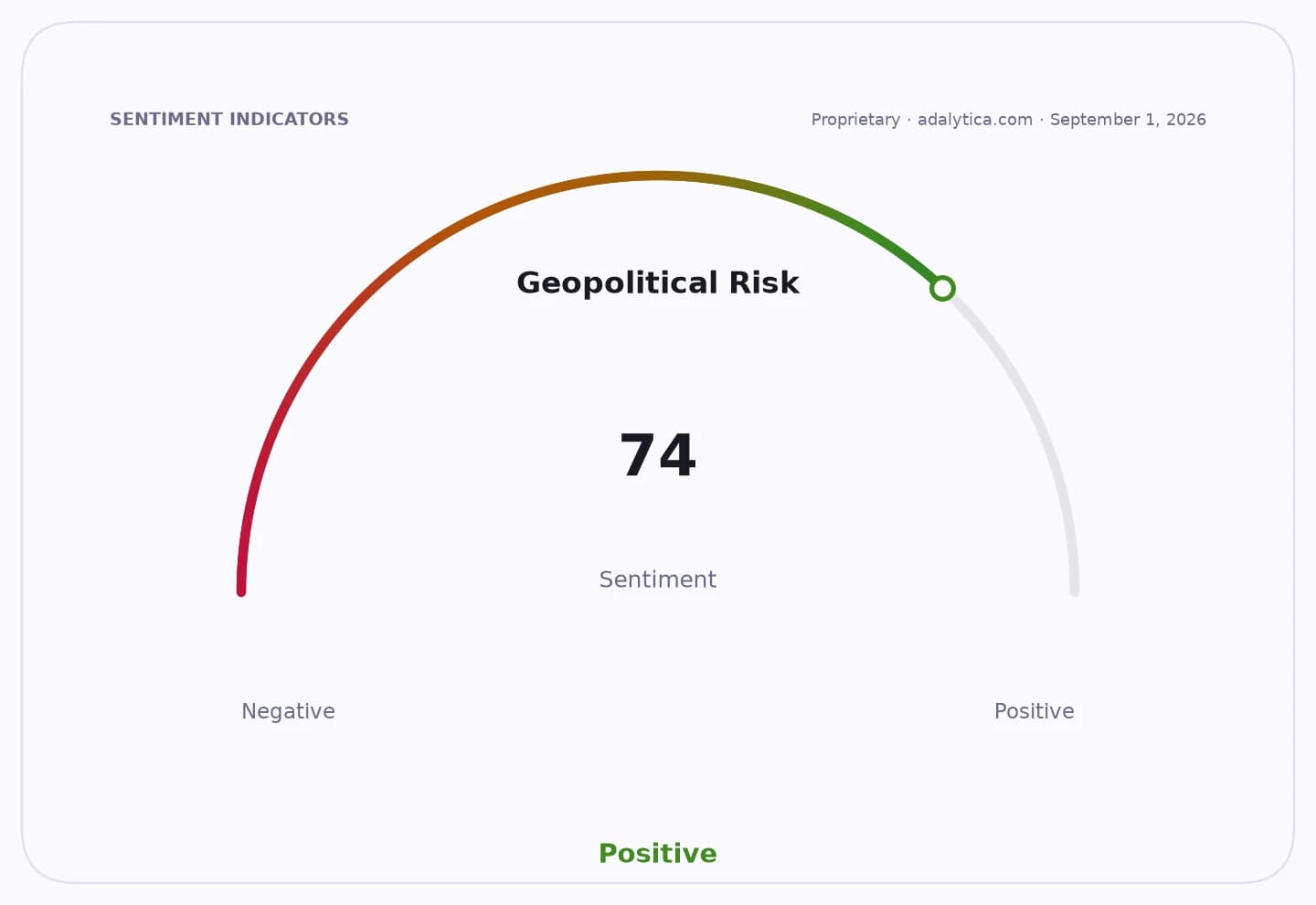
Geopolitical Risk — 30-day sentimentadalytica.com
Explore this data interactively — full history, time series and cross-market comparisons.Open AlphaPulse
For investors, the key question is whether the country’s geopolitical reorientation can be managed without triggering destabilizing spillovers. The risk is not only direct pressure from Moscow but also a widening of regional tensions at a moment when global geopolitics is already elevated. Adalytica’s Global Stability Sentiment gauge shows “Extreme Greed,” suggesting markets are still underpricing geopolitical fragility, even as awareness remains low. That disconnect matters because history shows low attention can turn quickly into volatility when a regional dispute hits energy, trade or currency channels.
The broader market backdrop also points to caution. The U.S. 10-year Treasury yield is hovering around 4.6%, while the dollar’s trade-signal reading points to weakness and higher foreign-exchange trading interest, a combination that can amplify moves in smaller emerging markets if risk appetite shifts. Gold has also been bid overall, with GLD still well above its 200-day moving average even after a volatile session, underscoring a market that remains alert to geopolitical shocks.
The bull case is that Armenia uses the EU bid to accelerate institutional reform, attract non-Russian capital and gradually reduce strategic dependence on Moscow. The bear case is that Russia responds with economic pressure, border or security complications, or informal trade constraints that weaken growth before any European upside arrives. For investors, Armenia is becoming less of a frontier-market footnote and more of a geopolitical stress test for Russia’s remaining influence in the post-Soviet space.
What happens next will depend on whether Yerevan can convert a political signal into a credible accession process without losing macro stability along the way. The referendum, Moscow’s response and any signs of pressure on trade or business activity will be the main catalysts to watch.
| Entity | Gains | Losses |
|---|---|---|
| Armenia / Pashinyan government | ▲EU support, sovereignty narrative | ▼Russian retaliation risk |
| European Union | ▲Strategic foothold in South Caucasus | ▼New accession burden |
| Russia | ▲Regional leverage if it responds firmly | ▼Influence in Armenia |
| Armenian businesses tied to Russia | ▲Short-term continuity | ▼Sanctions, trade friction |