ASEAN’s decision to welcome Sweden, Poland, Romania and Lithuania into the Treaty of Amity and Cooperation underscores how the bloc is trying to widen its diplomatic reach just as regional security risks intensify from Myanmar to the South China Sea and the fallout from the Iran war.
ASEAN Broadens Diplomatic Reach Amid Great-Power Rivalry
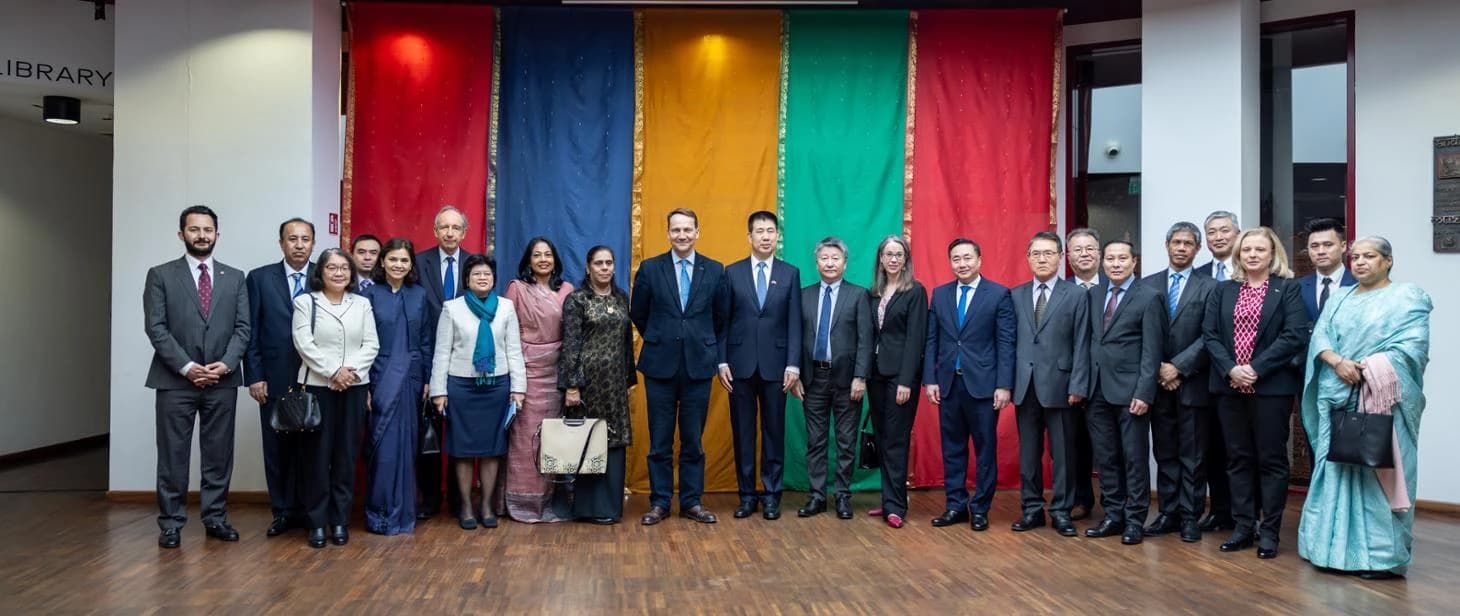
The treaty, long used as a diplomatic gateway into ASEAN’s rules-based order, matters because it gives the bloc a low-cost way to deepen ties with outside powers at a time when Southeast Asia is facing more geopolitical crosscurrents than at any point in years. For ASEAN members, expanding the circle of treaty signatories helps reinforce the organisation’s central role in regional diplomacy even as the US, China and the Quad all compete for influence.
That competition was visible at the latest ASEAN Foreign Ministers Meeting, where China said it was ready to deepen cooperation with ASEAN and cast itself as a pillar of regional stability, while the US reiterated its commitment to a free and open Indo-Pacific. The Quad also signalled support for ASEAN, highlighting how the bloc has become a venue for managing, rather than resolving, great-power rivalry. In that context, the addition of four European states is less about symbolism than about diversification: ASEAN is widening its network of external partners while trying not to be locked into any single strategic camp.
The move also comes as ASEAN struggles to make meaningful headway on Myanmar, where compliance with international peace agreements remains under review. That unresolved crisis, together with maritime tensions in the South China Sea, continues to test the bloc’s cohesion and its ability to project stability. Broader energy security cooperation discussed at the forum reflects a similar logic: ASEAN is seeking practical partnerships that can cushion the region against supply shocks, conflict spillovers and policy fragmentation.
For investors, the significance lies in what the treaty expansion says about the region’s operating environment. A more connected ASEAN can support trade, investment and supply-chain resilience by keeping channels open with Europe and other external partners, even if the geopolitical backdrop stays volatile. But the same backdrop also raises risks for companies exposed to shipping routes, energy markets and manufacturing hubs in Southeast Asia, where political uncertainty can quickly become economic friction.
The immediate market impact is likely to be limited, but the strategic message is clear: ASEAN is trying to preserve its relevance by broadening its diplomatic architecture while major powers jockey around it. The durability of that strategy will depend on whether the bloc can translate symbolic inclusiveness into stronger cooperation on security, energy and crisis management.
| Entity | Gains | Losses |
|---|---|---|
| ASEAN | ▲Broader diplomatic reach | ▼Pressure to balance rivals |
| Sweden, Poland, Romania, Lithuania | ▲Deeper ASEAN access | ▼Limited immediate leverage |
| China | ▲More channels for engagement | ▼Less room to dominate narrative |
| US/Quad | ▲ASEAN remains a partner hub | ▼Influence competes with others |