Asian businesses are being pushed to focus on productivity gains, reskilling and restructuring rather than headcount expansion as slower growth, ageing workforces and artificial intelligence squeeze the region’s labour market.
Asian Firms Shift to Productivity, AI and Reskilling
That shift matters because Asia’s growth engine is cooling even as companies face rising labour shortages, higher salary costs and more pressure to do more with fewer workers. Marsh said economic growth across Asia is projected to ease to 4.8% this year and 4.7% next year from about 5% in 2025, making efficiency a bigger driver of earnings than simple payroll growth.
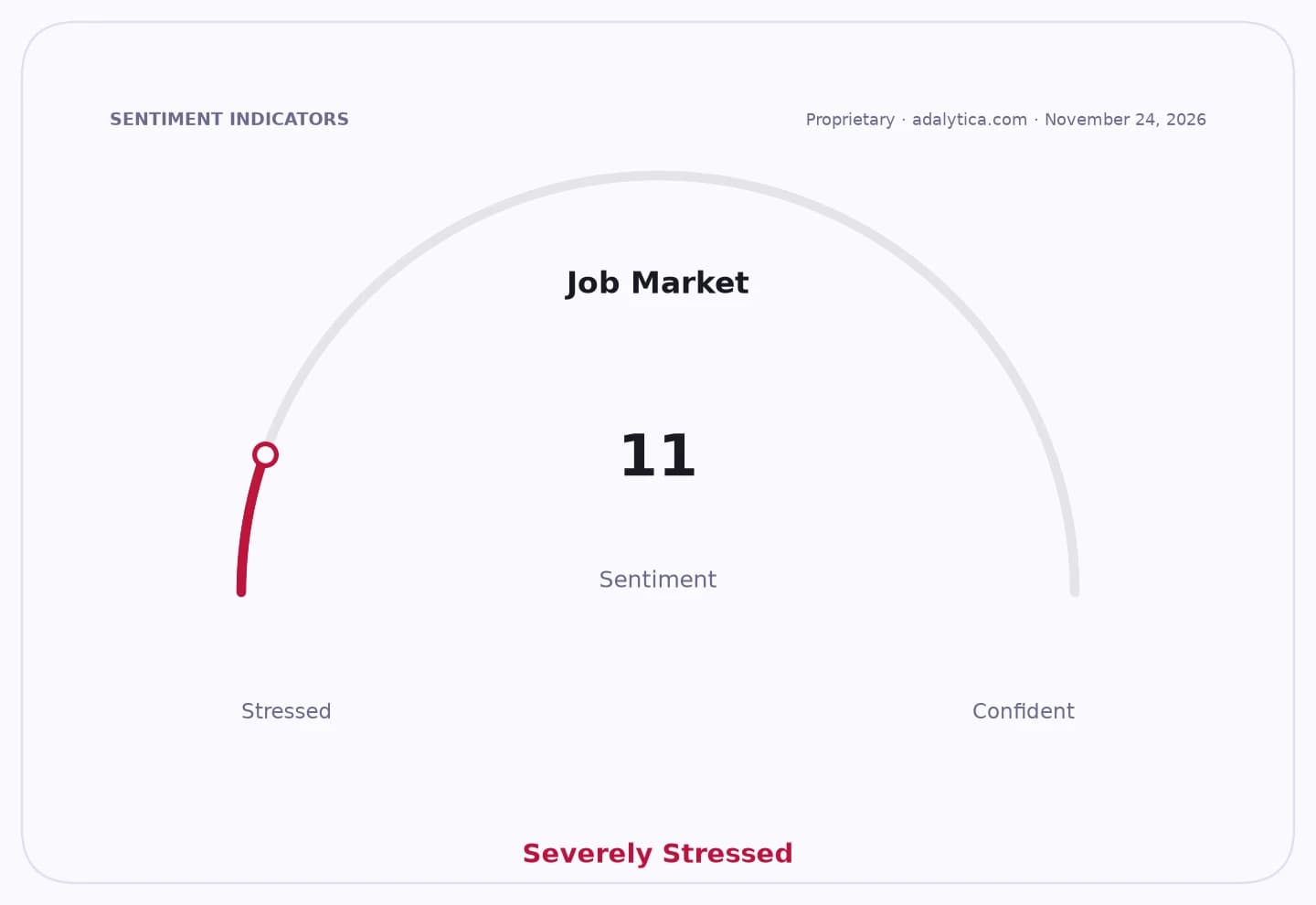
Sentiment Indicators
The warning lands at a sensitive moment for Asian corporates. Populations are ageing in China, Japan, South Korea, Singapore and Thailand, shrinking the available workforce and making recruitment harder. At the same time, the share of workers in Asia worried about AI’s effect on jobs has climbed to 40% in 2026 from 29% in 2024, underscoring the challenge for employers trying to preserve productivity while adopting new technology.
Businesses are already responding by redesigning jobs, retaining existing employees and investing more in digital skills. Marsh said 89% of executives plan to restructure operating processes and business models over 2026-2027 to improve efficiency and prepare for AI adoption, while 63% of employees would accept a 10% salary cut in exchange for company-funded training in AI and digital skills.
Compensation pressures are still rising. Marsh’s 2026 Thailand total remuneration survey, covering 1,065 companies employing more than 900,000 people, found salary budgets are expected to increase 5% in 2027, up from 4.7% in 2026 and matching the 2025 level. Energy companies are expected to lead with 5.5% pay growth, followed by life insurance at 5.3%.
The labour squeeze is also changing employment patterns. More than half of organisations expect to keep headcount flat, while 21% have yet to decide. About 56.6% expect no change in staffing, 12% plan to hire and 11.5% anticipate workforce reductions, showing how cautious employers remain despite the need for skills upgrades.
Investor relevance is straightforward: companies that can lift output without adding payroll are better placed to protect margins in a slower-growth Asia. That is especially important as geopolitical uncertainty is pushing regional firms to diversify operations into markets such as Thailand, Latin America and Africa, while the weaker productivity backdrop makes automation, AI spending and training programs more central to capital allocation.
For markets, the message points to a wider split between firms that can convert AI and digital investment into earnings leverage and those that remain trapped by wage inflation and labour scarcity. The next catalysts are likely to be corporate guidance on headcount, capital spending and AI adoption as 2027 pay budgets and restructuring plans take shape.
| Entity | Gains | Losses |
|---|---|---|
| Productivity-focused Asian firms | ▲Wider margins | ▼Hiring-led growth |
| AI and digital skills providers | ▲Higher demand | ▼Legacy labor models |
| Workers with retraining access | ▲Better pay leverage | ▼Routine roles |
| Investors in efficient operators | ▲Earnings resilience | ▼Margin pressure |