Companies are narrowing home-office flexibility and tying attendance more tightly to output as employers face pressure to cut costs, raise efficiency and show investors they can do more with fewer people.
European Employers Tighten Remote Work Policies
Job Market
The shift is showing up at major European employers, with UniCredit in Italy and Mercedes-Benz in Germany both tightening remote-work arrangements. But economists say the move reflects managerial anxiety as much as hard evidence, and that visibility in the office is not a reliable proxy for performance.
Sentiment Indicators
That matters because the labor market is still stable enough for companies to manage staffing without immediate hiring panic. U.S. nonfarm payrolls are forecast to rise by 74,000 in November after gains of 165,000 in October, while the unemployment rate is seen at 4.1%, suggesting employers remain selective rather than desperate.
At the same time, companies across sectors are using restructuring to lift productivity. Bunnings has cut 350 technology jobs and moved many positions offshore in an AI-driven overhaul, while Seatrium plans to reduce its Singapore workforce by 2% and Enphase Energy is cutting 12% of its staff.
For investors, the pattern points to a familiar market trade-off: cost discipline can support margins in the near term, but aggressive office mandates and headcount reductions can also hurt retention, morale and execution if they are used as a blunt substitute for real productivity gains. That is particularly relevant for staffing and payroll firms that depend on labor demand, including ManpowerGroup, ADP and Paychex.
ManpowerGroup shares have rebounded sharply from earlier lows and were last at $47.08, above both its 50-day moving average of $49.50 and its 200-day moving average of $40.71, even as momentum indicators cooled from earlier highs. ADP closed at $310.13 after a powerful run this year, while Paychex ended at $115.44, both reflecting ongoing demand for payroll and HR services as employers keep reorganizing their workforces.
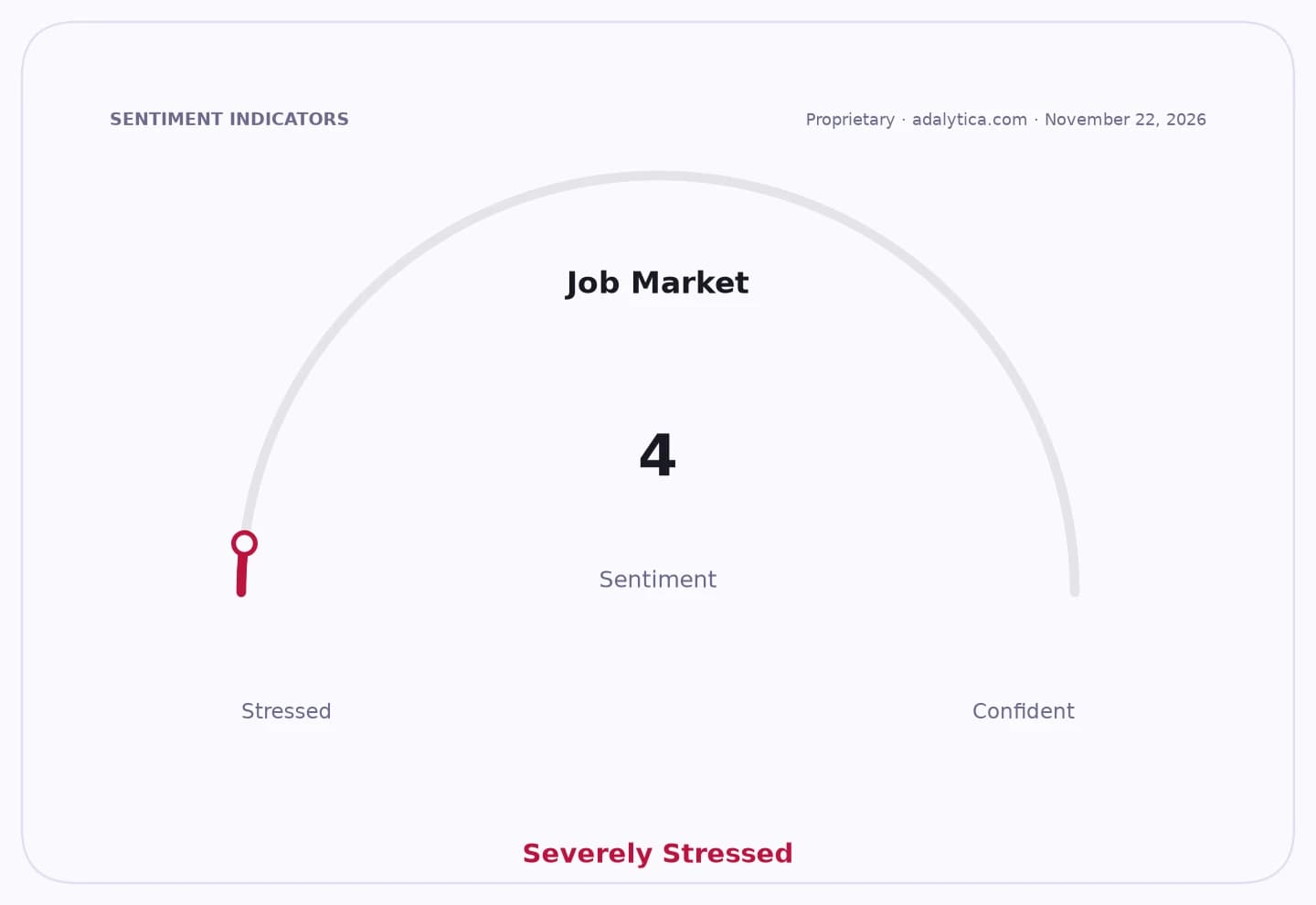
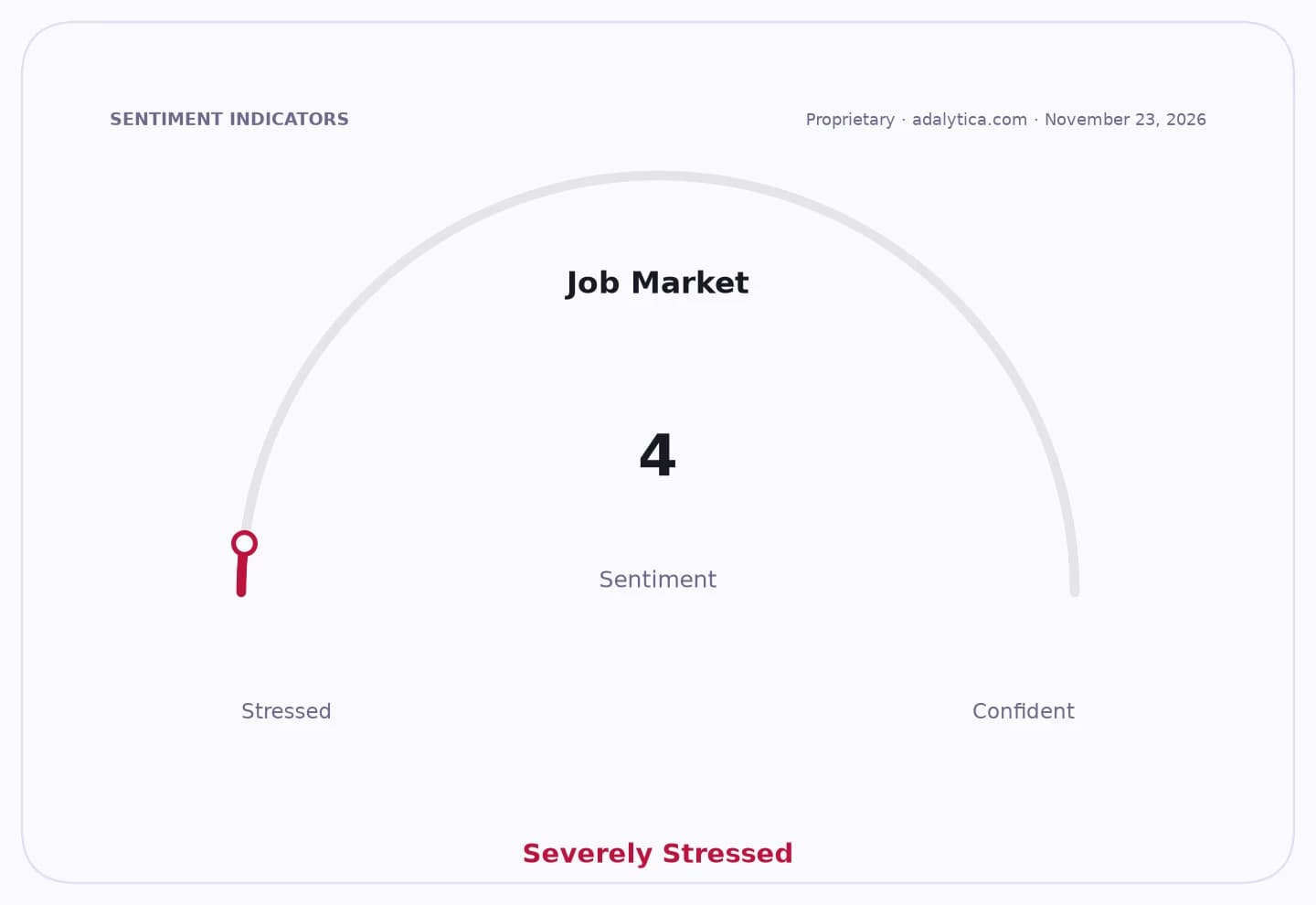
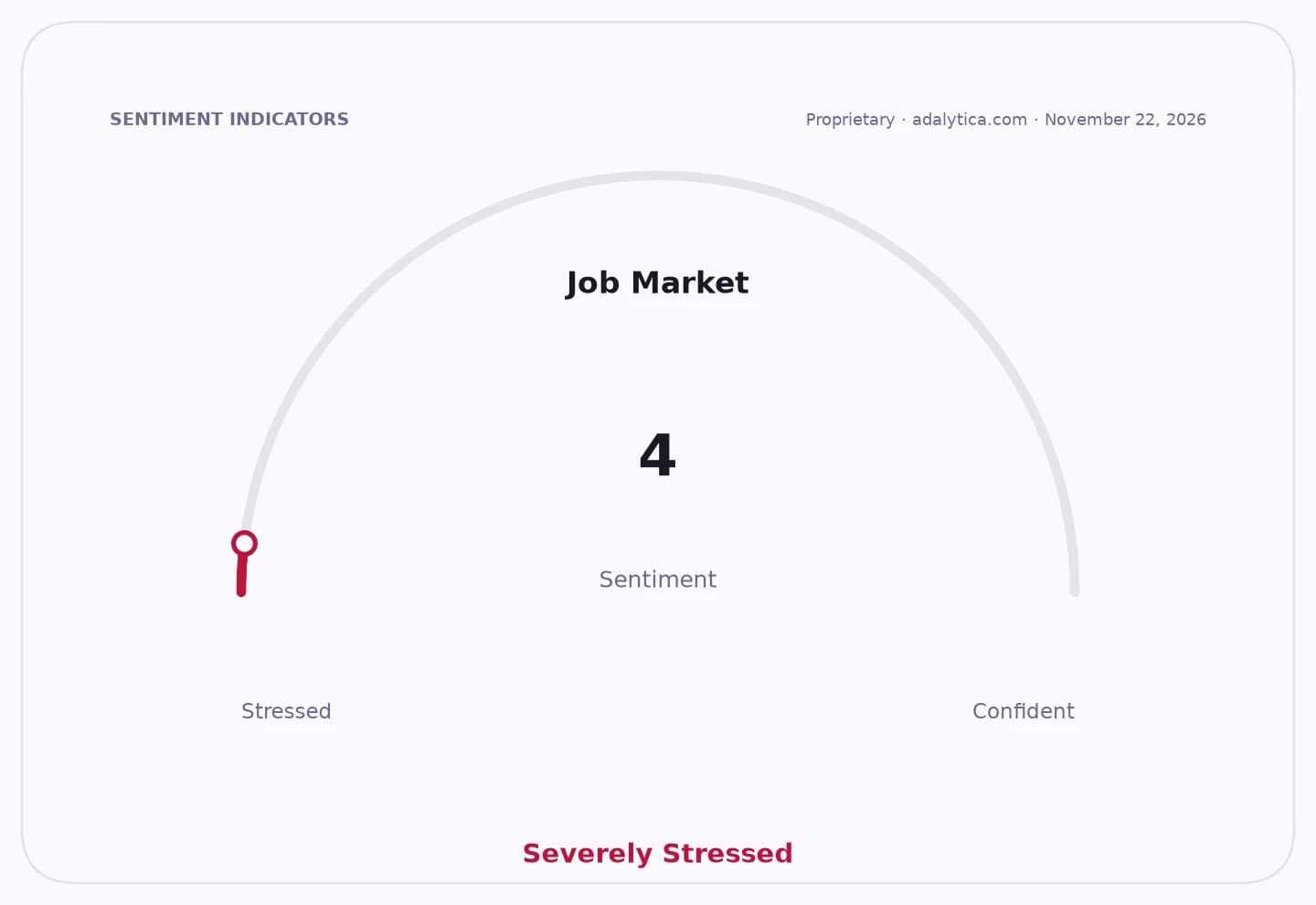
Adalytica’s Job Market Sentiment gauge is in “Extreme Fear” at 11, after falling 39 points in seven days and 51 points over the past month, underscoring how quickly sentiment has soured around hiring and labor-market durability. Payroll sentiment is more stable at 36, but still neutral, suggesting investors are watching for signs that firms are prioritizing efficiency over expansion.
The next catalyst is whether this office-backlash-and-automation push shows up in upcoming earnings calls and labor data as stronger margins, slower hiring or more workforce cuts. If productivity improves without damaging growth, investors will reward it; if attendance mandates become a substitute for strategy, the cost savings may prove temporary.
| Entity | Gains | Losses |
|---|---|---|
| Employers | ▲Tighter control, lower costs | ▼Talent retention risk |
| Office-first managers | ▲More visibility | ▼Weaker flexibility culture |
| Staffing firms | ▲Restructuring demand | ▼Slower hiring volumes |
| Workers | ▲Fewer if productivity rises | ▼Remote-work flexibility |