Thailand is pressing Japan to modernise their trade and tax framework as Bangkok looks to turn its long-running industrial ties with Tokyo into a new growth engine built around semiconductors, electric vehicles, AI supply chains and carbon markets.
Thailand and Japan discuss trade and tax updates

Deputy Prime Minister and Finance Minister Ekkanit Nithithanpraphat met Japanese Finance Minister Satsuki Katayama in Tokyo to discuss upgrading the Thailand-Japan Economic Partnership Agreement, reviewing the bilateral tax treaty and widening cooperation in sectors that could anchor what Thai officials are calling a second wave of industrial upgrading.
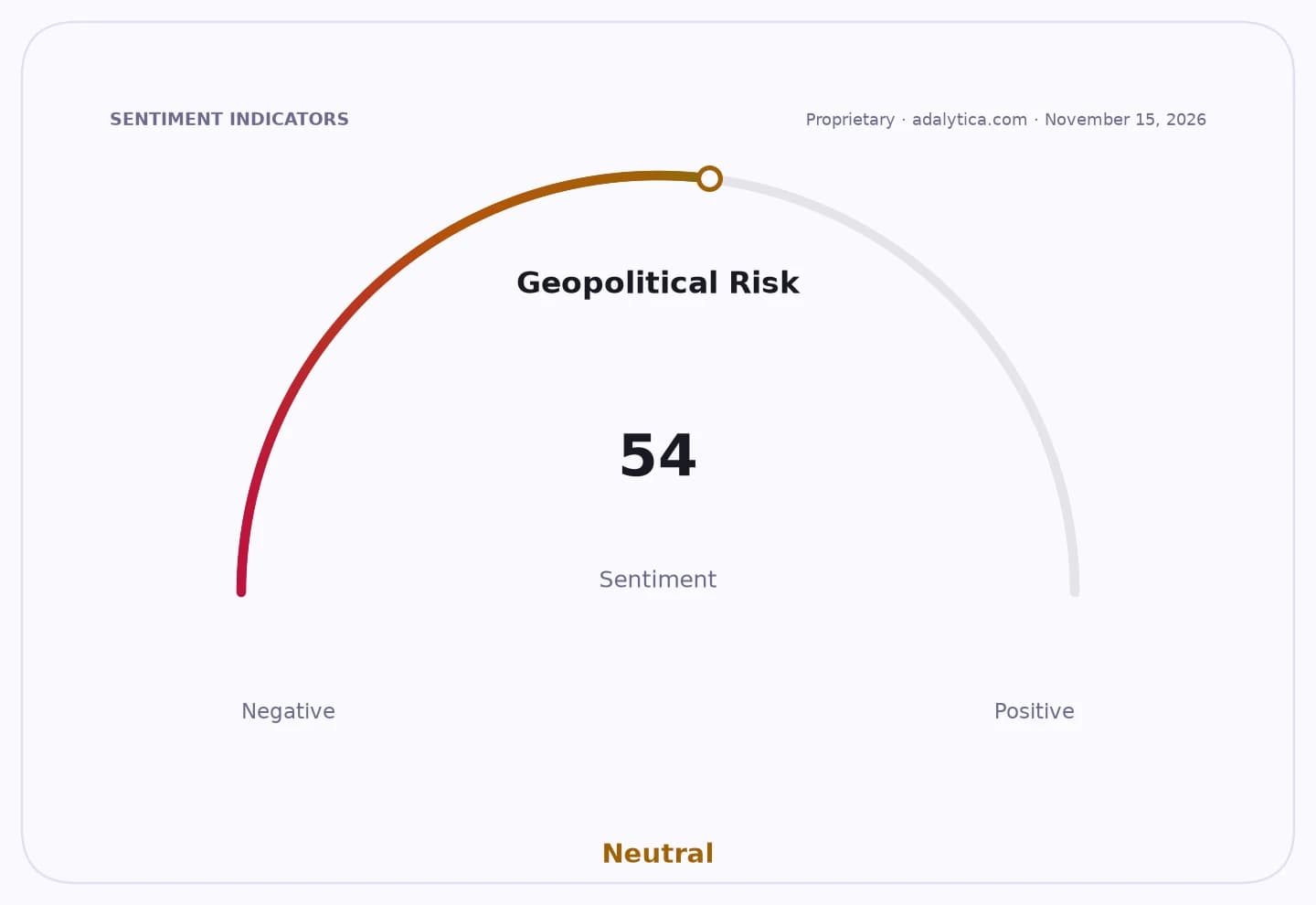
Sentiment Indicators
The stakes are bigger than diplomacy. Japan has been one of Thailand’s most important investors since the 1980s, helping shift the economy from agriculture toward manufacturing. Bangkok now wants to use that relationship to keep factories competitive as global supply chains fragment, AI reshapes production and climate policy creates new trading opportunities. For an economy still dependent on exports, foreign direct investment and technology transfer, a deeper Japan tie could help protect existing manufacturing jobs while drawing in capital for higher-value industries.
Thailand is particularly focused on autos, semiconductors, AI-related supply chains, space technology and smart agriculture, reflecting an effort to move beyond traditional assembly work. The government also wants Japanese support for turning Thailand into a regional carbon-credit trading hub under the Asia Zero Emission Community framework, which would give Thai firms another channel to monetise emissions reductions as global decarbonisation rules tighten.
The proposed treaty and tax updates matter because they could lower friction for Japanese investors and make Thailand more attractive relative to other Southeast Asian production bases. That would be especially important for the auto industry, where Thailand is trying to defend its role as a regional manufacturing hub while accelerating the shift to new energy vehicles and more advanced components. Any progress on semiconductor-related investment would also help Thailand plug into one of the few global industries still benefiting from structural demand growth.
For Japan, the pitch offers a way to reinforce supply chains in a politically stable partner close to major Asian markets. For Thailand, it is a bid to secure the next round of industrial investment at a time when growth prospects depend heavily on whether the country can capture more of the value chain, rather than remain a low-cost manufacturing base.
The talks also underscore a broader economic theme: Thailand is seeking to diversify its growth model at a moment when trade policy, cybersecurity and climate policy are increasingly intertwined. Bangkok and Tokyo both said they viewed cyber risks, including AI-driven threats to financial systems, as part of the same strategic agenda.
Investors will watch whether the rhetoric turns into concrete dealmaking before the 140th anniversary of diplomatic ties in 2027. If the agreement review advances and Japanese capital follows, the beneficiaries would likely include Thai industrials, logistics, EV-related suppliers and firms positioned for carbon trading. A slower rollout, by contrast, would leave Thailand still relying on familiar manufacturing lines just as regional rivals compete for the same investment.
| Entity | Gains | Losses |
|---|---|---|
| Thailand | ▲More FDI and technology transfer | ▼Dependence on legacy manufacturing |
| Japan | ▲Deeper supply-chain access | ▼Higher upfront investment risk |
| Thai industrials | ▲Export and upgrade opportunities | ▼Margin pressure if reforms stall |
| Regional rivals | ▲— | ▼Loss of investment share to Thailand |