Thailand’s bid to position itself as a trusted regional bridge is becoming more than a diplomatic slogan as global trade and technology blocs harden, and investors are increasingly rewarding countries that can offer stability, policy predictability and cross-border connectivity.
Thailand Trust, FDI, and ASEAN Digital Integration
Geopolitical Risk
That was the central message at the FCCT’s Thailand’s Momentum 2026 forum in Bangkok, where Top Jirayut, founder of Bitkub Capital Group Holdings, joined former prime minister Abhisit Vejjajiva and Fouadi Pitsuwan to discuss how ASEAN can respond to a more fragmented world. The panel framed trust and security as the currency of the next phase of globalization, with Jirayut arguing that countries will increasingly choose partners they can rely on as supply chains, capital flows and technology standards are pulled into competing geopolitical camps.
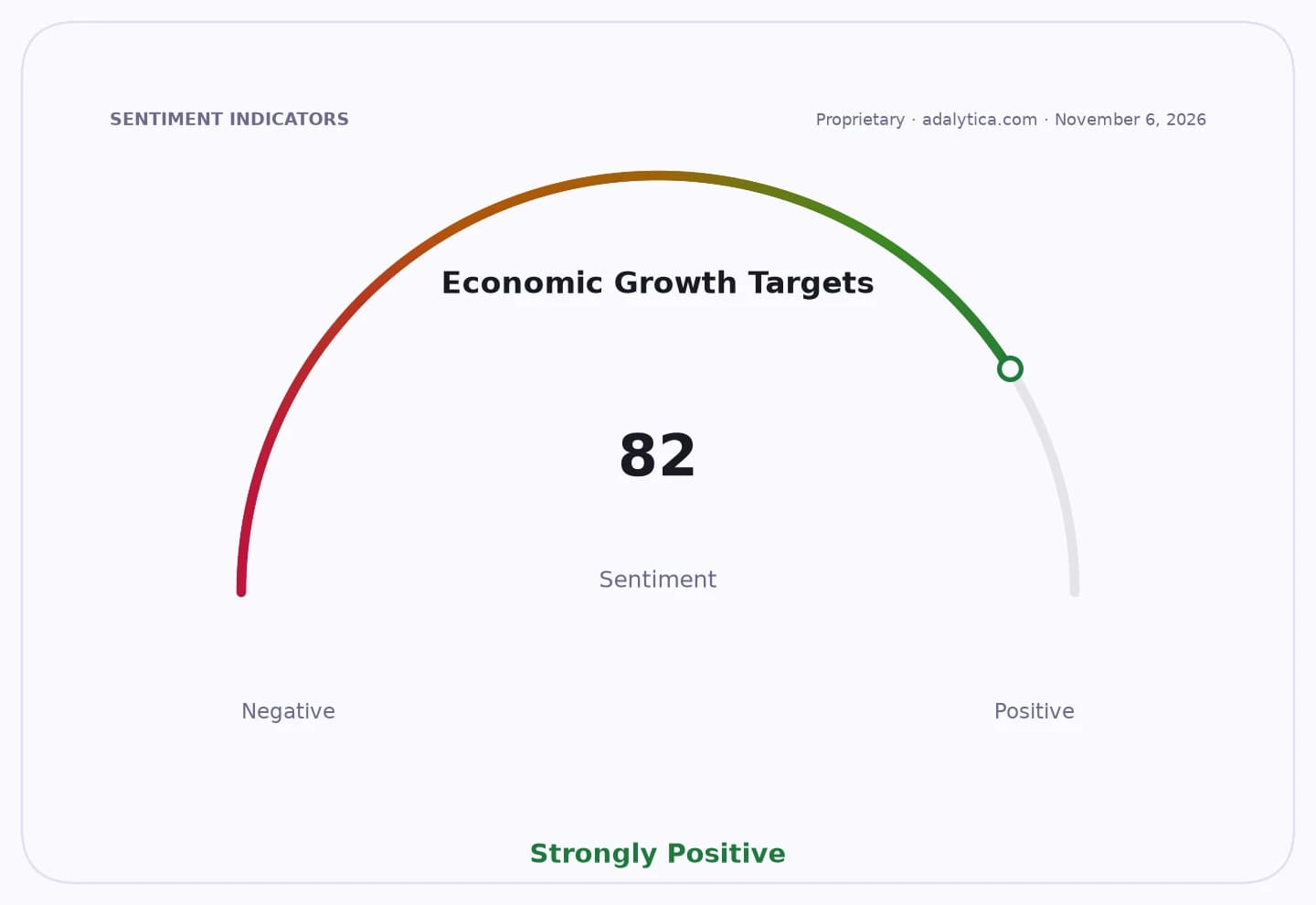
Sentiment Indicators
The economic relevance is immediate for Thailand, which has struggled to convert its geography into a larger share of foreign direct investment and regional decision-making. If trade flows increasingly favor trusted jurisdictions, then the countries that can demonstrate legal certainty, data security and diplomatic balance stand to attract more manufacturing, digital infrastructure and AI-related investment. That matters for Thailand’s growth model, which still depends heavily on exports, tourism and imported capital.
Jirayut’s argument also reflects a broader shift in how investors assess emerging markets. In a world where geopolitical shocks can reroute production, payment rails and software supply chains, “trust” becomes a measurable input into valuations and capital allocation. That helps explain why regional policymakers are leaning harder on deeper ASEAN integration, including the proposed Digital Economy Framework Agreement, to make Southeast Asia more investable as a bloc rather than as a collection of small markets.
The technology angle is just as significant. Rather than compete head-on with the US and China on expensive foundational infrastructure, Jirayut said Thailand should focus on AI models and applications adapted to local use cases, especially for agriculture and small and medium-sized enterprises. That is a more capital-efficient strategy and one that could lift productivity without forcing Thailand into a subsidy race it is unlikely to win. For investors, it points to a potential pipeline in software, cloud services, agri-tech and local AI deployment rather than only in large-scale hardware spending.
The forum came against a backdrop of markets that remain highly sensitive to geopolitical risk, even when headline sentiment improves. Adalytica’s Global Stability Sentiment gauge was neutral at 54, but awareness was still flagged at “Extreme Fear,” underscoring how fragile the macro environment remains. In equity markets, the S&P 500 has been marked by “Extreme Greed” in Adalytica’s trade signals, while the US dollar remains neutral, a mix that suggests investors are still balancing risk appetite with caution over policy and geopolitics. Conventional technical indicators on GLD, meanwhile, show the gold ETF trading below its 50-day and 200-day moving averages after a volatile year, consistent with a market that has not fully abandoned safe-haven demand.
For Thailand, the message from the stage is that regional relevance will not come from size alone. It will come from whether policymakers can turn ASEAN cooperation, digital trust and regulatory credibility into a competitive advantage. If they can, the payoff could be stronger investment inflows and a more durable role in global supply chains. If not, Thailand risks remaining a transit point in an increasingly gated global economy rather than a bridge between blocs.
| Entity | Gains | Losses |
|---|---|---|
| Thailand | ▲Higher FDI appeal | ▼Policy inertia |
| ASEAN | ▲Stronger bloc integration | ▼Fragmented digital rules |
| Investors in Thai tech/AI | ▲New local-use applications | ▼Infrastructure-heavy rivals |
| Competing low-trust jurisdictions | ▲ | ▼Capital diversion to trusted hubs |