The Democratic sweep in the US midterm elections is giving emerging-market investors a clearer playbook: lower oil, slower trade escalation and more room for capital to rotate away from expensive US growth stocks.
Thailand equities, oil and AI investment
For long-term investors, that matters because it changes the backdrop for the two biggest forces shaping global portfolios right now — inflation and valuations. When crude eases, importing economies get relief on costs, margins and consumer demand. When Washington looks less likely to push broad-based tariffs, exporters and manufacturers outside the US face less policy risk. And when AI investment keeps expanding but faces tighter rules and higher power costs in the US, some of that buildout can migrate to lower-cost markets.
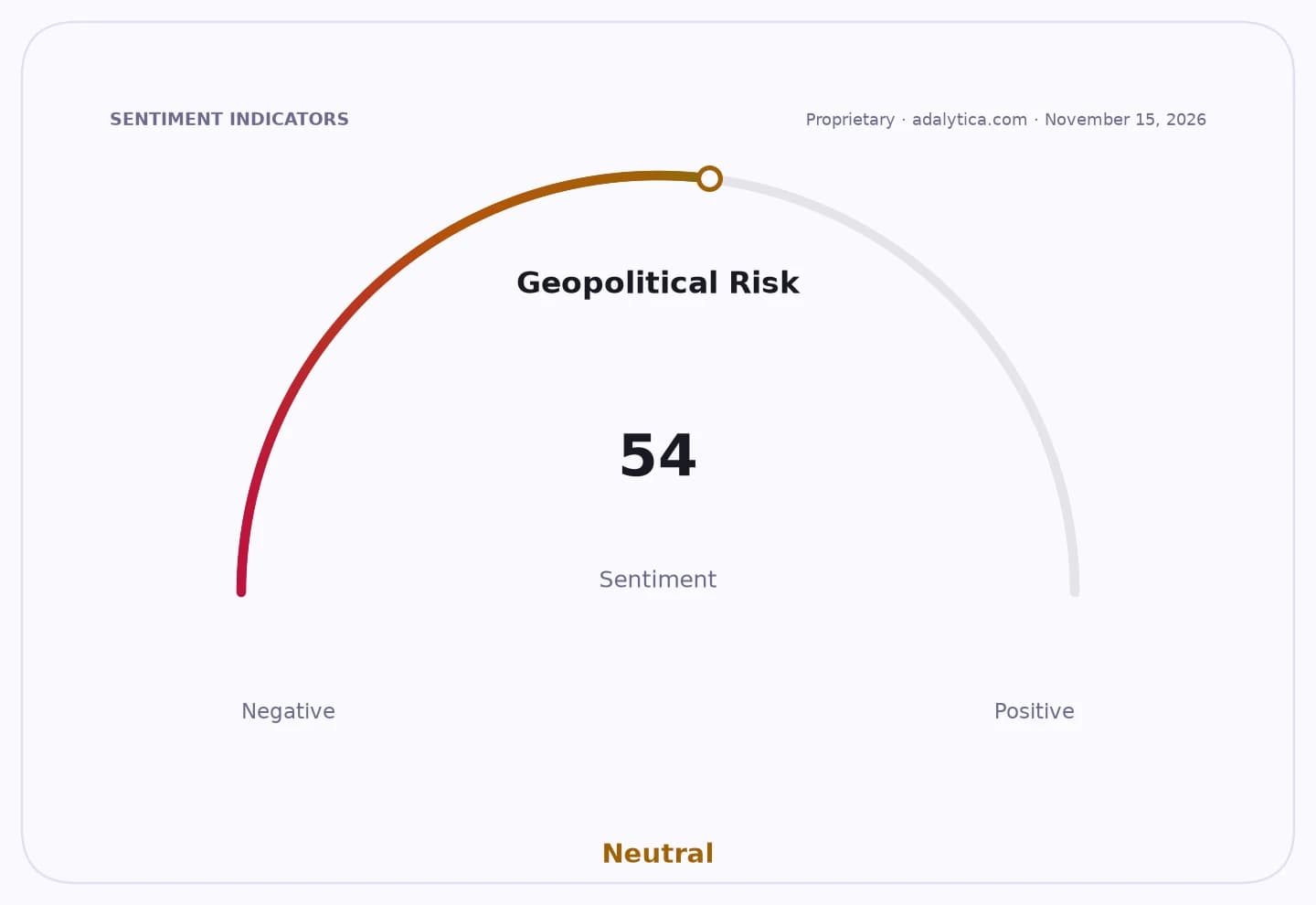
Sentiment Indicators
That is the narrative BLS Wealth Research is leaning into, calling the election result an opportunity to selectively accumulate emerging markets, including Thailand. The firm argues that war risk may still linger, but the market is starting to price a faster de-escalation than before, which supports the idea that oil has already passed its peak. Brent-type price swings have been punishing for global inflation expectations, but the recent move lower in crude is the kind of change that can quietly improve earnings across import-dependent economies.
The benefit is especially obvious in energy-heavy sectors that are not upstream producers. In Thailand, lower fuel and input costs can help beverages, retailers, small power producers and tourism, while pressure builds on energy upstream names. That is exactly the kind of rotation value investors should pay attention to: some sectors gain from a softer oil regime while others lose, and the winners can keep compounding even if the broader index stays choppy.
The AI angle is just as important. Artificial intelligence and cloud spending are still growing, but tighter US regulation and high domestic power costs could encourage more data-center investment abroad. That opens a lane for countries with available land, grid capacity and lower operating costs. In Thailand, BLS highlights Gulf Energy Development, GPSC and B.Grimm Power as potential beneficiaries if foreign direct investment follows the digital infrastructure buildout. Over a multiyear horizon, this is the kind of theme that can turn a regional utility or power company into a secular growth story.
There is also a valuation story here, and it may be the most investor-friendly part of the setup. BLS says the SET trades at about 13.2 times forward earnings, with a forward earnings yield gap of 5.5% and a forward dividend yield of 4.1%. Forward EPS revisions are still positive. In plain English, that means Thai equities are not being asked to grow into impossible expectations, while investors can still collect income as they wait for the cycle to improve.
That is why this is not a call to buy everything. It is a call for selective accumulation. The broker’s favored names — from consumer plays like CPALL and BDMS to infrastructure and energy beneficiaries such as GULF, GPSC and BGRIM — fit a quality-value framework rather than a speculative growth trade. Even within the broader emerging-market basket, the ETF EEM has been trying to recover after a weak spell, with its RSI moving back toward neutral territory, while US growth proxy QQQ remains under pressure below its 50-day moving average. That relative setup matters: investors do not need emerging markets to become euphoric, only less unfriendly.
Oil remains the biggest swing factor. If crude keeps drifting lower, inflation pressure should ease and fund flows may rotate farther out of the US. But if higher-for-longer rates persist, that could still cap the pace of any rerating. The most disciplined approach is to lean into countries and companies with real earnings visibility, dividends and structural demand, not just headline momentum.
For investors thinking in years rather than weeks, the message is straightforward: the election outcome has improved the odds for selective EM exposure, but the best opportunities are likely to be in quality-value names tied to lower oil, AI infrastructure and resilient domestic demand. That is worth watching, and for patient investors, worth accumulating.
| Entity | Gains | Losses |
|---|---|---|
| Emerging markets | ▲Lower oil, softer policy risk | ▼US policy uncertainty easing lessens urgency |
| Thai quality-value stocks | ▲Selective foreign inflows, cheaper inputs | ▼Broad-market beta and high-valuation growth |
| Power and data-center beneficiaries | ▲AI buildout and FDI spillover | ▼US-based infrastructure concentration |
| Oil upstream producers | ▲— | ▼Peak-oil narrative and margin pressure |