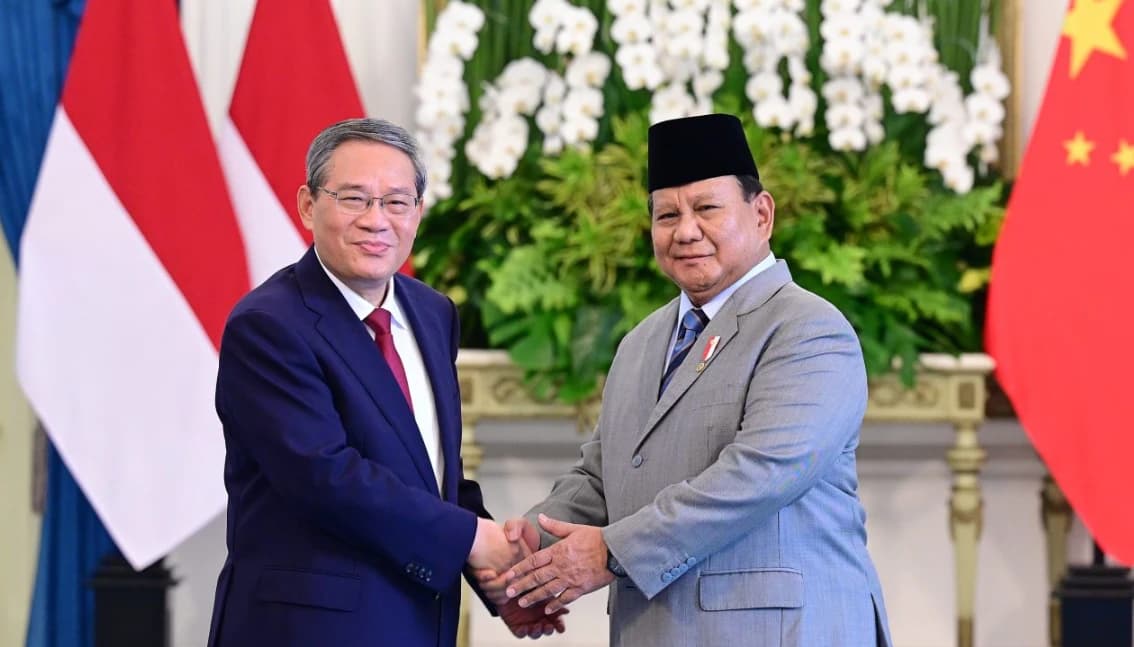
Anies Baswedan’s call for Indonesia to anchor foreign policy in principles rather than transactional deals lands at a sensitive moment for Southeast Asia, where Jakarta is trying to preserve regional stability while deepening economic ties with China and holding ASEAN together.
Indonesia foreign policy and investor risk
The message matters because Indonesia is not just speaking to diplomats. It is trying to shape the operating environment for trade, investment and supply chains in a region that has become more exposed to great-power rivalry. For investors, the question is whether Indonesia can keep ASEAN central to that balancing act — and whether a more predictable, rules-based posture can reduce political risk for cross-border capital.
That backdrop helps explain why Jakarta has been emphasizing peace and dialogue in its outreach to ASEAN and China. Indonesia has argued for a stronger regional commitment to stability, while also backing practical cooperation such as the ASEAN power grid and broader integration efforts. The pitch is straightforward: regional cooperation only works if it is durable, not opportunistic.
That is economically significant because Indonesia’s growth model depends on external confidence. A foreign policy seen as principled and consistent can support trade flows, infrastructure financing and long-horizon industrial investment, especially as ASEAN economies compete for supply-chain relocation and energy-transition capital. It also reinforces Indonesia’s bid to remain a convening power inside ASEAN, rather than a country forced to choose between blocs.
Markets typically reward that kind of predictability with a lower risk premium, even if the effect is gradual rather than immediate. A more coherent regional line can help support sentiment toward Indonesian assets by lowering the odds of policy surprises or diplomatic flare-ups that disrupt commerce. It also strengthens Jakarta’s hand in dealing with China, ASEAN partners and outside powers from a position of institutional legitimacy rather than ad hoc bargaining.
The trade-off is that principle-heavy diplomacy can be harder to execute when economic pressure rises. Critics would argue that Indonesia, like much of Southeast Asia, still needs transactional flexibility to secure investment, markets and energy supply. Supporters counter that short-term deals become expensive if they weaken ASEAN unity or leave smaller economies exposed to strategic dependence.
Recent market moves show how sensitive investors remain to Indonesia-specific risk. The EIDO exchange-traded fund tracking Indonesian equities has fallen to around 10.11 from 17.88 in late February, while the Indonesia-focused IDN fund has dropped to 1.63 from 8.99 in April, with both sitting below their 50-day and 200-day moving averages. Those moves reflect a broader risk-off tone, but they also underscore how quickly policy credibility and external stability can affect investor appetite.
For now, Indonesia’s foreign-policy argument is about more than rhetoric. It is an attempt to preserve ASEAN’s relevance, protect trade and investment links, and convince markets that Southeast Asia’s largest economy will remain a predictable partner even as strategic competition intensifies.
| Entity | Gains | Losses |
|---|---|---|
| Indonesia | ▲Policy credibility | ▼Short-term bargaining flexibility |
| ASEAN | ▲Regional unity | ▼Fragmented diplomacy |
| Investors | ▲Lower policy risk | ▼Quick transactional upside |
| China | ▲Stable engagement channel | ▼Greater scrutiny on conduct |