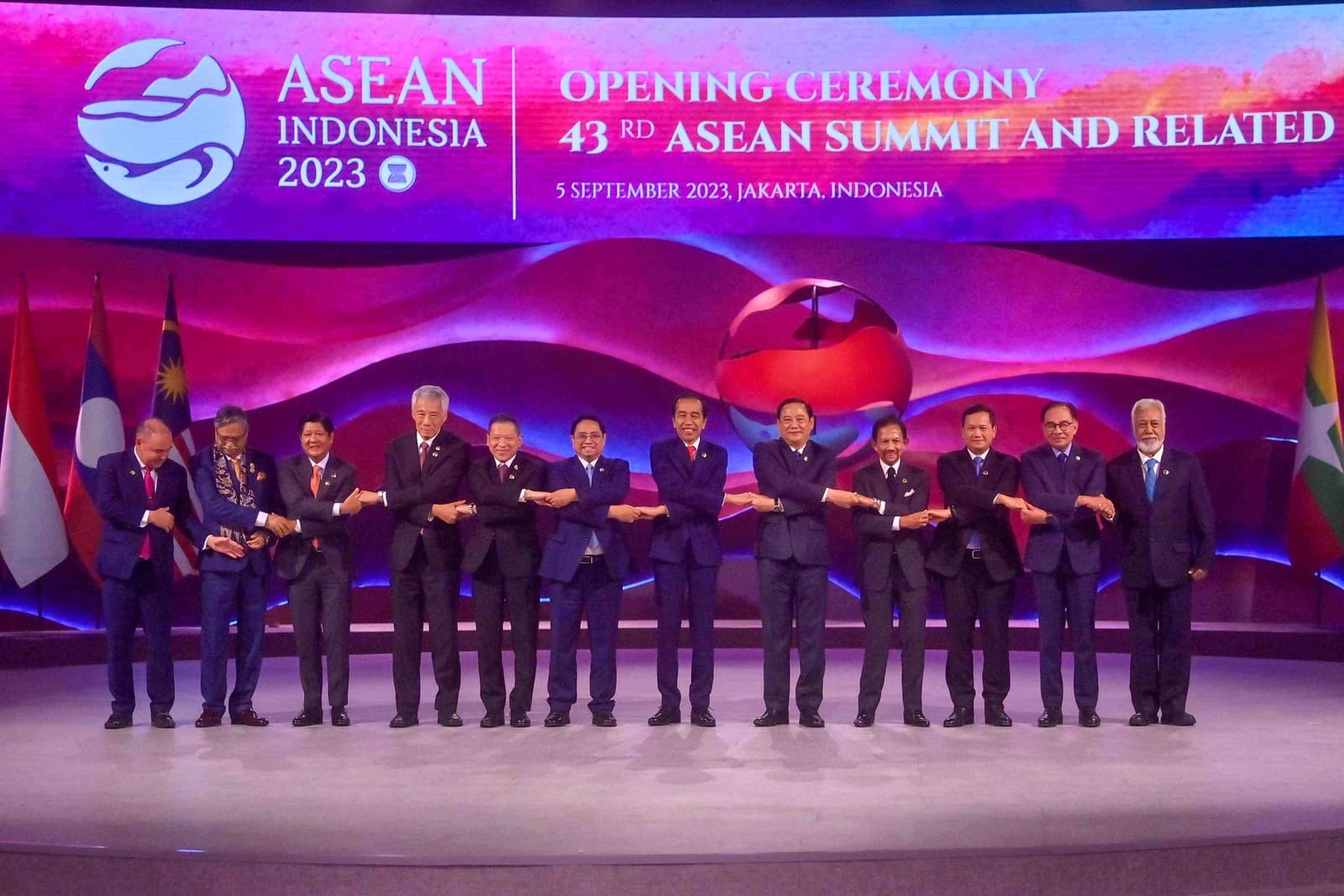
President Xi Jinping’s meeting with Indonesia’s Prabowo Subianto points to a push by the region’s two biggest powers to preserve economic cooperation while preventing the South China Sea from turning into a wider market risk.
China Indonesia Meeting on South China Sea Trade

That matters because the South China Sea is not just a territorial dispute: it is a critical shipping lane for energy, commodities and manufactured goods, and any deterioration in ties between Beijing and Jakarta would reverberate through trade, investment and regional security planning. A more cooperative tone between China and Indonesia helps reduce the odds of a fresh geopolitical shock at a time when global stability is already fragile.
Sentiment Indicators
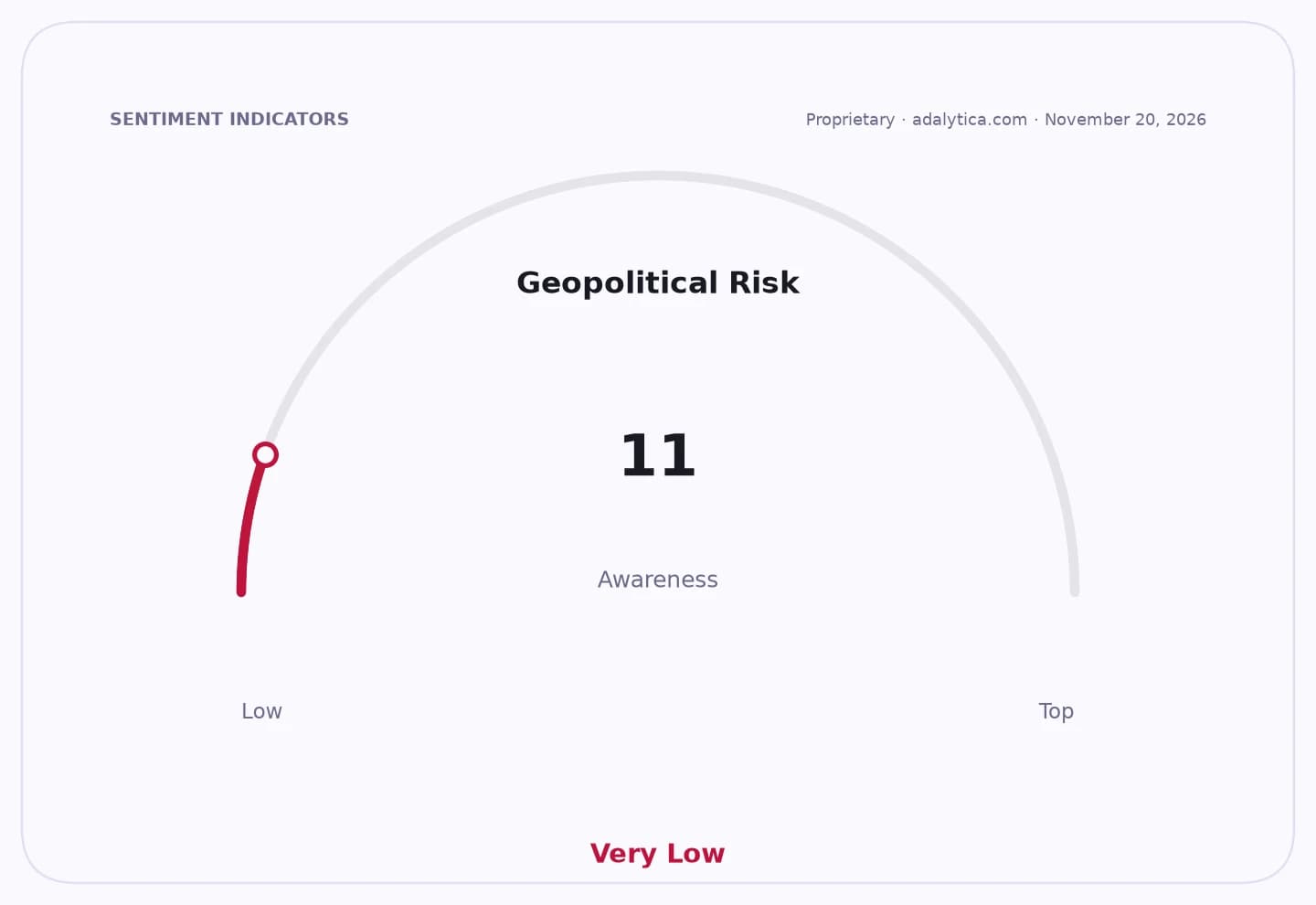
Geopolitical Risk
The market backdrop underscores that sensitivity. Adalytica’s Global Stability Sentiment is at 11, or “Extreme Fear,” after a steep deterioration over the past month, while its US–China Relations Sentiment remains neutral at 32 but with awareness at an “Extreme Greed” reading, suggesting investors are closely tracking any sign of diplomatic or military friction. In that environment, even modest signs of dialogue carry weight for risk assets tied to Asia.
For investors, the immediate implication is not a dramatic rerating but a lower probability of tail-risk escalation. Indonesia is a major emerging-market destination, a key source of commodities and a central node in regional supply chains. If Jakarta can keep its relationship with Beijing constructive, that supports trade stability, investment flows and the broader ASEAN policy posture. It also reduces pressure on Chinese equities and exchange-traded funds that are often hit first when geopolitical headlines intensify.
That is visible in market behavior. The iShares FTSE China ETF, FXI, fell to $31.79 on Thursday from $32.88 on Tuesday, while the Direxion Daily FTSE China Bull 3X Shares, YINN, dropped to $19.73 from $21.89 over the same period, with both funds now trading below their 50-day and 200-day moving averages. YINN’s RSI at 36.5 and FXI’s at 37.3 show both have moved into technically weakened territory, consistent with investor caution rather than outright capitulation. Hong Kong-linked exposure, via EWH, was more resilient at $22.47, but still softened as the session progressed.
The yield backdrop also reinforces why diplomacy matters. The 10-year US Treasury yield was around 5.075% in the latest forecast, near its recent highs, leaving global risk assets little room for geopolitical surprises. In that setting, a more predictable China-Indonesia relationship can act as a modest stabilizer for Asian currencies, shipping-related sectors and emerging-market portfolios.
The bullish case is that both sides have incentives to contain friction: China needs stable regional trade routes and political room to manage its economy, while Indonesia wants to balance sovereignty concerns with access to Chinese capital, markets and industrial supply chains. The bear case is that any practical gains from the meeting could be limited if maritime incidents or nationalist politics in either country flare again.
For now, the meeting suggests both governments are still trying to separate strategic competition from economic necessity. Investors will be watching whether the rhetoric turns into follow-up commitments on maritime coordination, trade and infrastructure, or whether the South China Sea remains a recurring source of headline risk for Asia-focused assets.
| Entity | Gains | Losses |
|---|---|---|
| China | ▲Regional stability | ▼Escalation risk |
| Indonesia | ▲Trade and investment | ▼Maritime tension |
| FXI / YINN holders | ▲Lower geopolitical premium | ▼Risk-off selling |
| ASEAN exporters | ▲Smoother shipping flows | ▼Disruption risk |