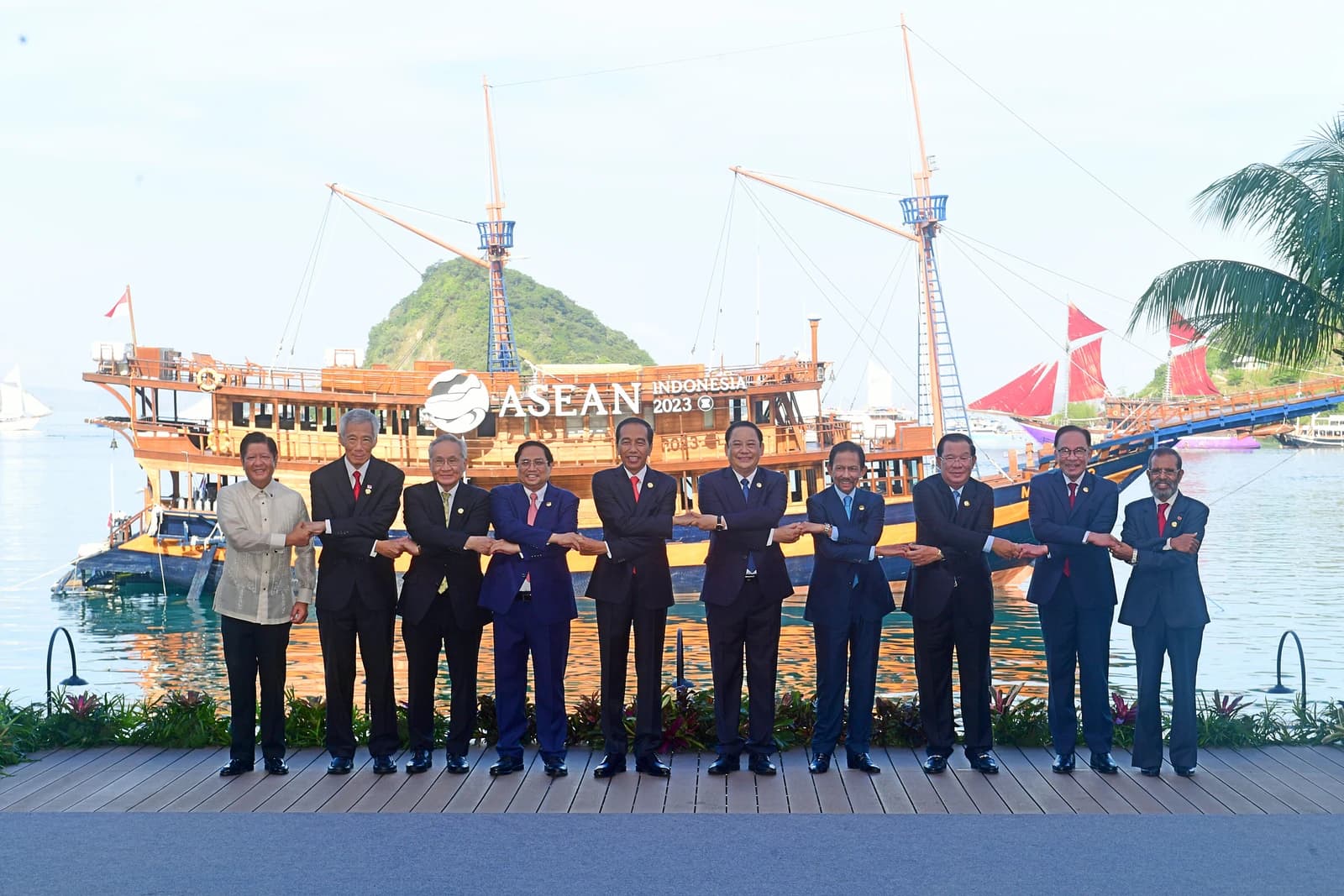
Negotiations over a South China Sea code of conduct have emerged as one of the most economically significant outcomes of the 49th ASEAN Summit, because even partial progress toward a maritime rules framework could help reduce a recurring source of geopolitical risk for trade, shipping and regional investment.
ASEAN China South China Sea Code Talks Advance
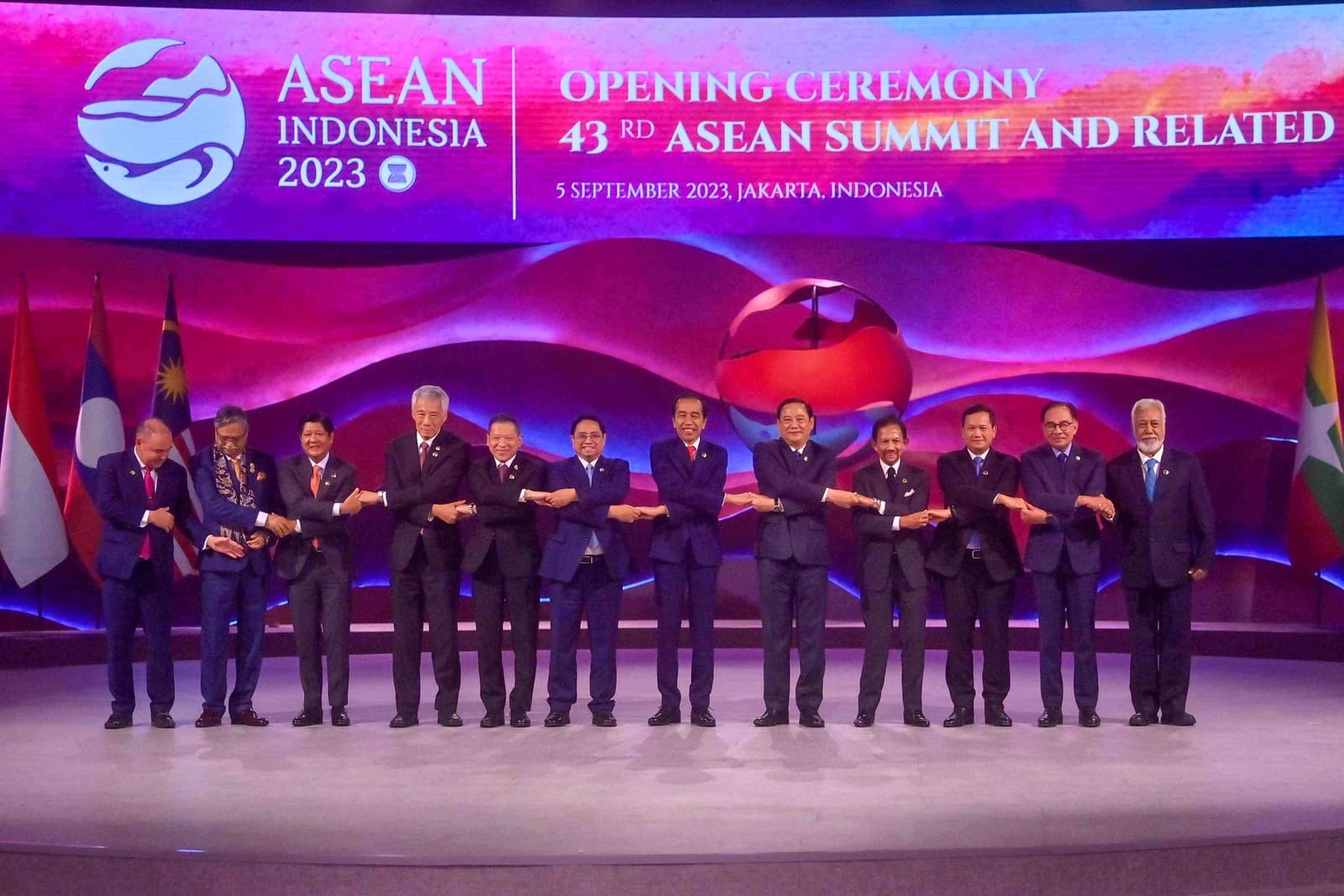
Progress on the code is reported to be about 80%, underscoring how far ASEAN and China have advanced despite a year’s delay in finalizing the pact. For investors, that matters less as a diplomatic milestone than as a potential risk dampener: the South China Sea sits on one of the world’s busiest trade arteries, and any reduction in the odds of maritime incidents can support supply-chain confidence, insurance pricing and cross-border capital flows across Southeast Asia.
Sentiment Indicators
The code remains incomplete, however, and that is the key economic point. The remaining gaps suggest the region is not yet moving from tension management to a durable settlement. The Philippines has kept U.S. backing in view if confrontation escalates, while China has continued to press for an early conclusion and to reinforce its position over disputed reefs. That combination leaves the area strategically sensitive, with the potential for episodic friction to reprice geopolitical risk quickly.
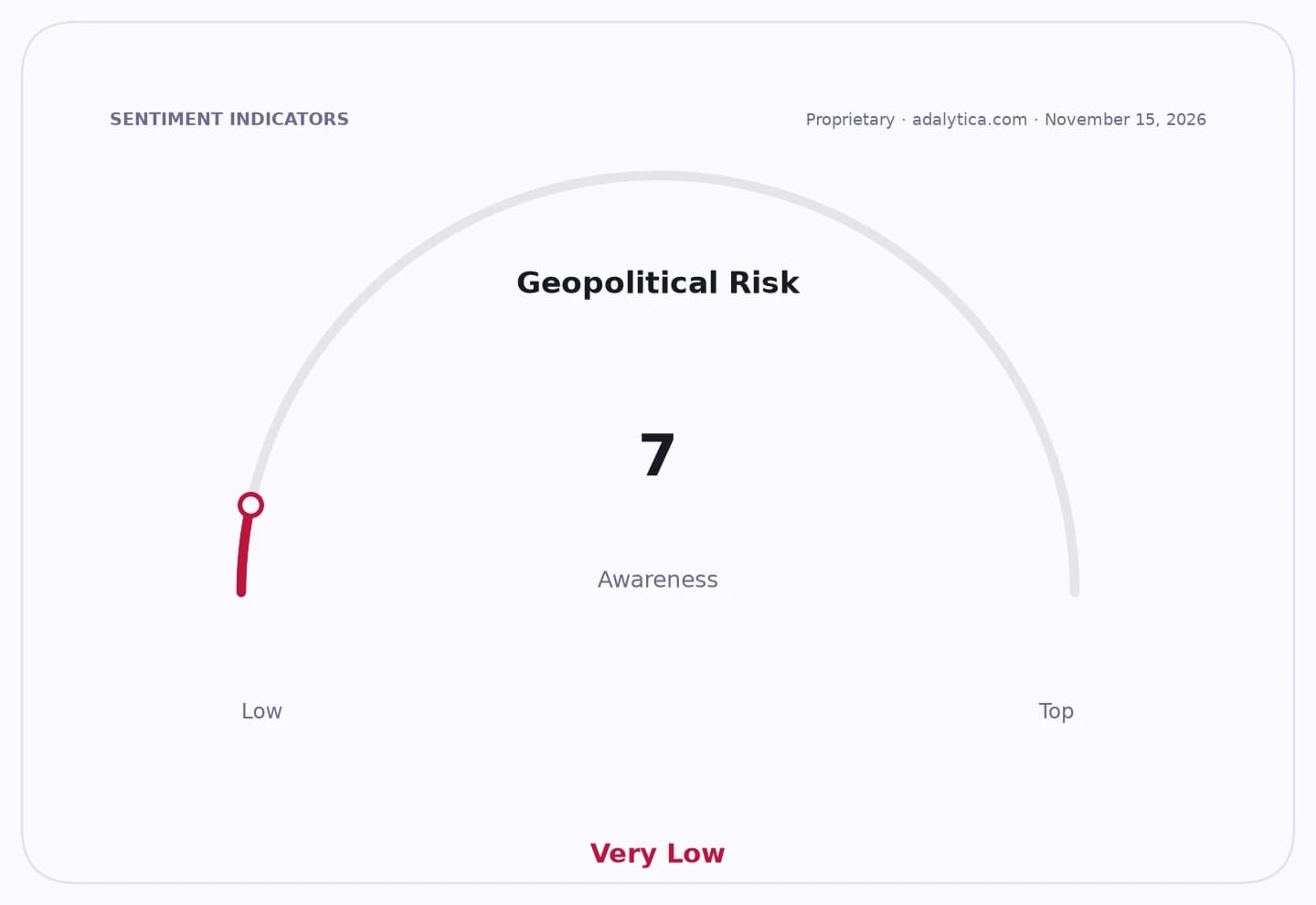
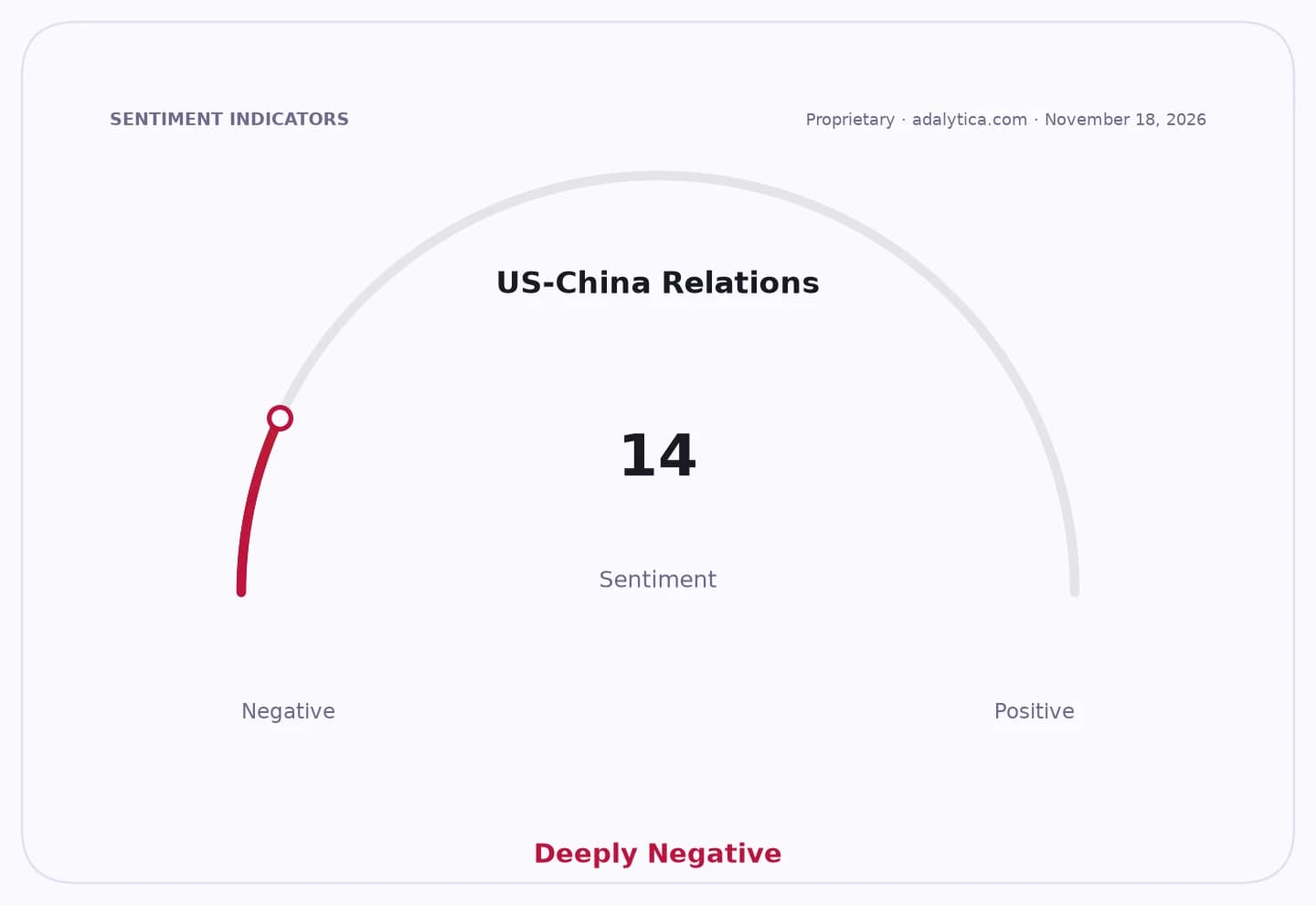
Markets have been treating that risk with caution. Adalytica’s Global Stability Sentiment gauge shows extreme fear at 4, while its U.S.-China relations sentiment sits at 14, also in extreme fear territory, even as awareness of the issue remains elevated. That is consistent with investor behavior that rewards de-escalation prospects but remains wary of any breakdown in negotiations.
The clearest market read-through is for Asia-exposed assets rather than for a single stock or country. Reduced geopolitical stress would tend to benefit exporters, shipping routes and regional equities tied to trade and manufacturing. By contrast, renewed confrontation would likely support hedges and weigh on risk assets, especially in economies most exposed to maritime commerce and foreign direct investment.
For now, the narrative is one of tentative stabilization rather than resolution. The closer ASEAN and China get to a code, the more investors can discount a tail risk that has repeatedly disrupted regional sentiment. But with the final hurdles still unresolved, the South China Sea will remain a live test of whether diplomatic progress can translate into lower risk premia for Southeast Asia.
| Entity | Gains | Losses |
|---|---|---|
| ASEAN exporters | ▲Lower geopolitical risk premia | ▼None from de-escalation |
| Regional shipping and insurers | ▲Fewer incident costs | ▼Higher volatility if talks stall |
| China and ASEAN diplomats | ▲Diplomatic credibility | ▼Pressure from unresolved gaps |
| Risk-averse investors | ▲Greater stability in Asia assets | ▼Safe-haven demand eases |