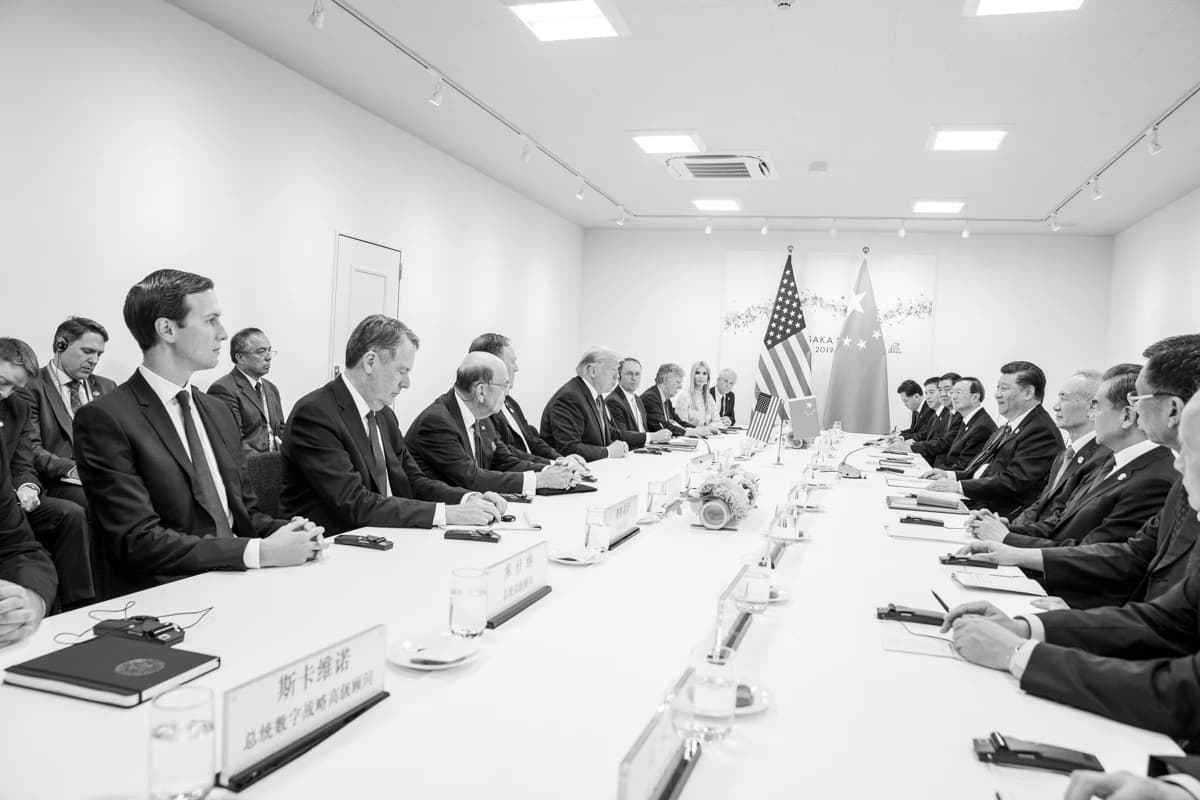
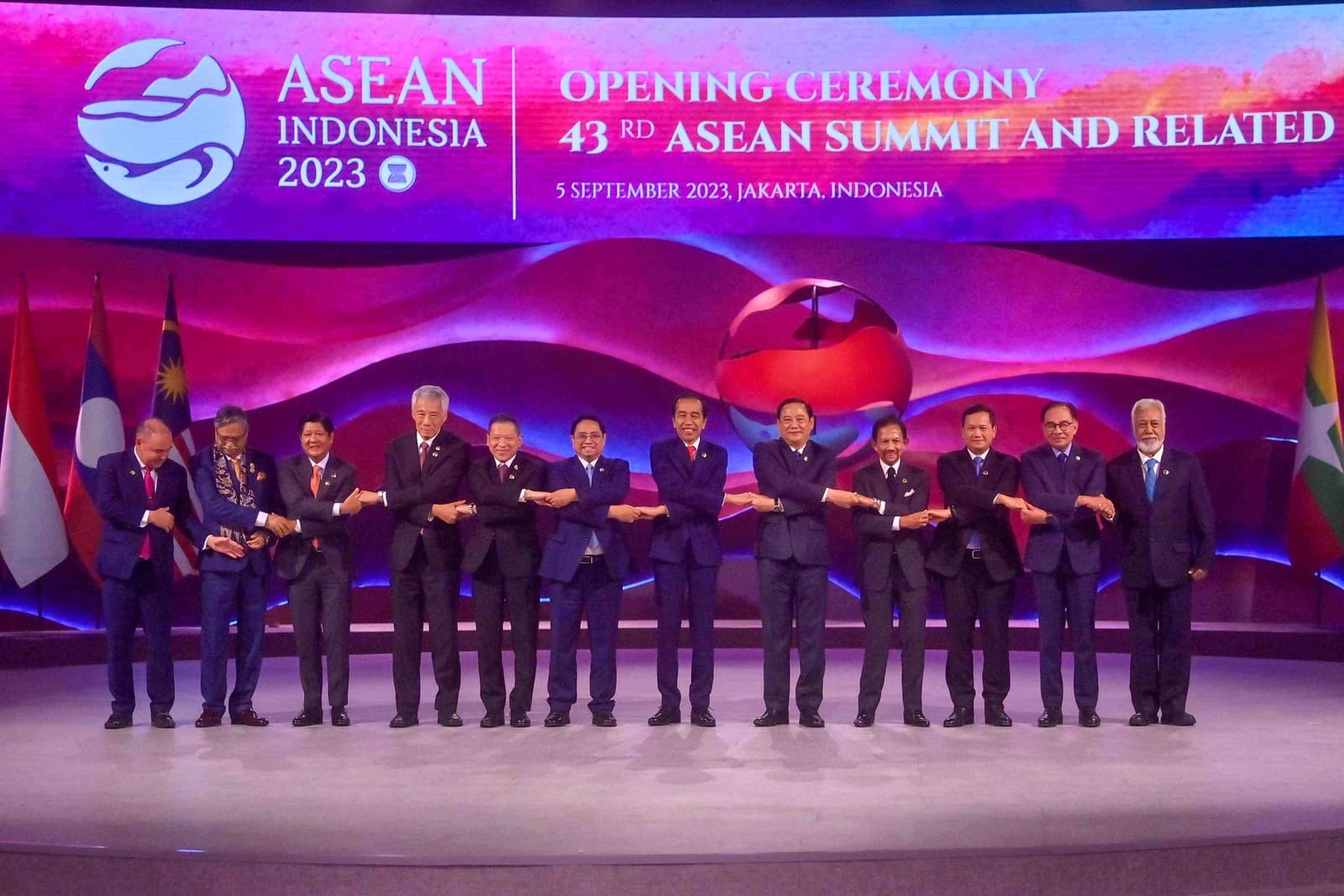
US President Donald Trump’s arrival in Manila puts the next 48 hours of his Asia trip at the center of investor attention, with the first Quad meeting in two years and a looming high-stakes encounter with China likely to shape trade, technology and regional security risks across the Indo-Pacific.
Trump in Manila as Quad, China talks loom
US-China Relations
The immediate economic relevance is the prospect of a fresh line on US policy toward China, tariffs and technology controls just as Washington has tightened restrictions on China’s access to artificial intelligence chips. Any shift in tone or substance could ripple through Asian exporters, chip supply chains and currencies, while also testing a fragile trade truce between the world’s two largest economies.
Sentiment Indicators
Trump is in the Philippines after the ASEAN summit, where protests against his policies continued for a fifth day and regional leaders sought to balance deeper engagement with the US and China. He is due at a US-ASEAN Special Summit and then the Quad meeting with Japan, Australia and India, a gathering that has not been held since 2024 and that officials say will focus on maritime security, export controls, critical minerals, undersea cables and AI.
Markets have little room for complacency. Chinese shares tracked by the FXI ETF have slipped to $32.88, below both the 50-day moving average of $33.81 and the 200-day average of $35.20, while the broader MCHI ETF is at $48.41, also below its 50-day and 200-day moving averages. South Korea’s EWY ETF has been hit even harder, closing at $135.32, beneath its 50-day average of $166.32 and 200-day average of $164.16, underscoring how sensitive Asia-linked assets remain to any escalation in US-China tensions.
US-China Relations — 30-day sentimentadalytica.com
Explore this data interactively — full history, time series and cross-market comparisons.
Adalytica’s US-China relations sentiment gauge sits at 14, or “Extreme Fear,” while its global stability reading is at 4, also “Extreme Fear,” reflecting how fragile investor confidence remains ahead of the talks. The dollar signal is mixed, with sentiment at 30 and awareness at 57, suggesting currency markets are still positioning for policy shock rather than clarity.
The regional backdrop is one of hedging, not alignment. Chinese Premier Li Qiang used the ASEAN summit to stress free trade and cast Beijing as a reliable partner, even as Southeast Asia’s biggest economies continue to seek stronger ties with Washington. Japan’s new prime minister, Sanae Takaichi, also pledged to deepen cooperation with ASEAN on energy resilience, supply chains and AI, a sign that allies are preparing for a more contested policy environment.
Trump is also expected to sign a reciprocal trade statement with Thai Prime Minister Anutin Charnvirakul, with Thailand seeking progress on negotiations while relying on the US as its largest export market. He is scheduled to meet Philippine President Ferdinand Marcos Jr on Wednesday before heading to Shenzhen for APEC, where any US-China-Russia meeting would add another layer of geopolitical risk for investors watching trade, chip policy and supply chains.
| Entity | Gains | Losses |
|---|---|---|
| US allies in Asia | ▲stronger security signaling | ▼policy uncertainty |
| China | ▲chance to shape dialogue | ▼pressure from export controls |
| Asian exporters | ▲trade clarity if talks advance | ▼tariff and tech risk |
| Tech and chip makers | ▲stability in supply chains | ▼tighter AI export restrictions |