Trump’s return to the Quad meeting in Manila matters far less as ceremony than as a test of whether Washington still treats India, Japan and Australia as a durable strategic bloc or as bargaining leverage before talks with China.
Quad Meeting in Manila and India Market Implications
For India, that distinction matters economically and geopolitically. A stronger Quad can help reduce dependence on China for critical minerals, electronics and clean-energy supply chains, while also supporting safer shipping lanes across the Indo-Pacific. A weaker one could leave New Delhi exposed to a familiar pattern: tougher American pressure on India, softer treatment for Beijing, and a more transactional U.S. approach to regional security.
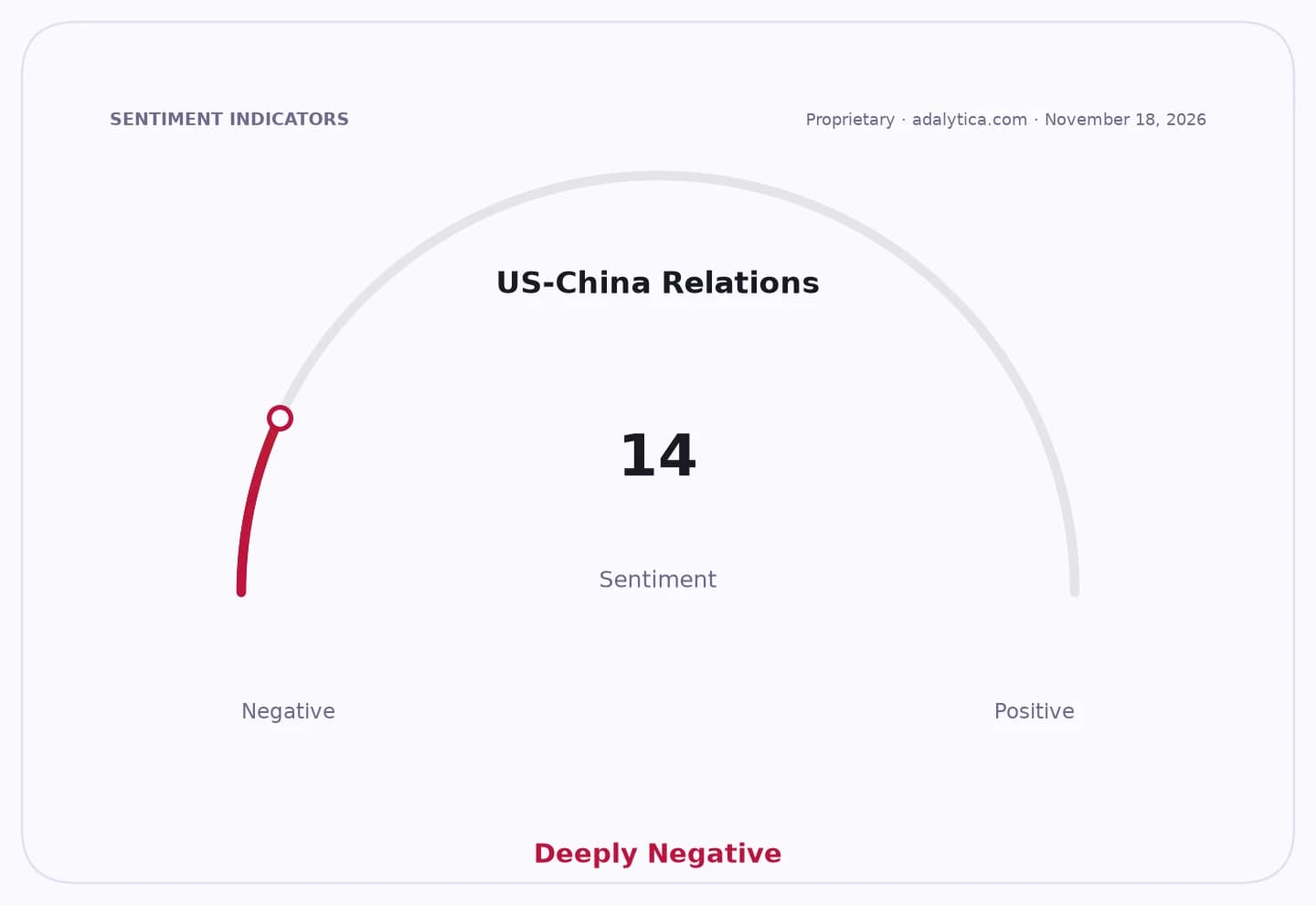
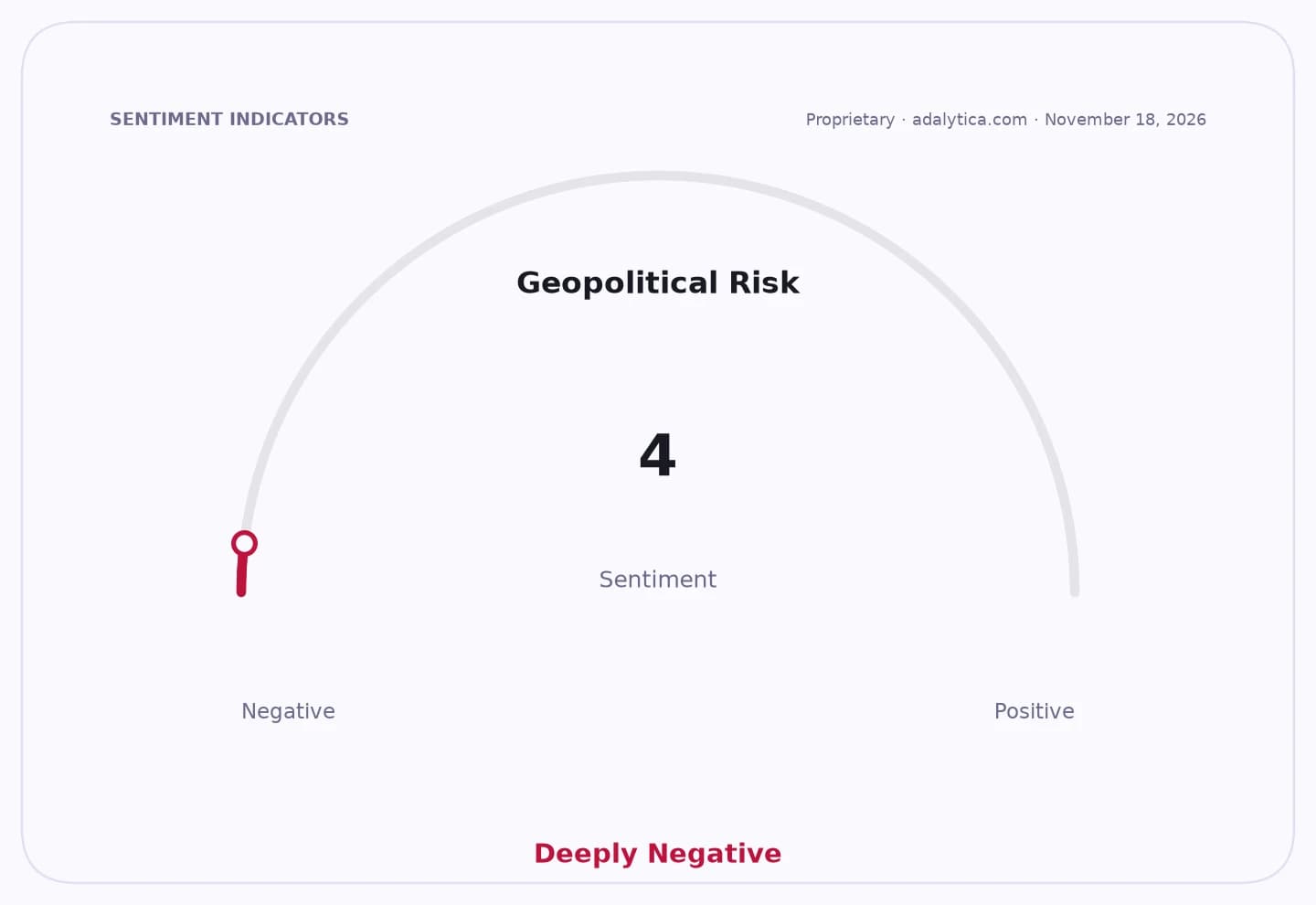
Sentiment Indicators
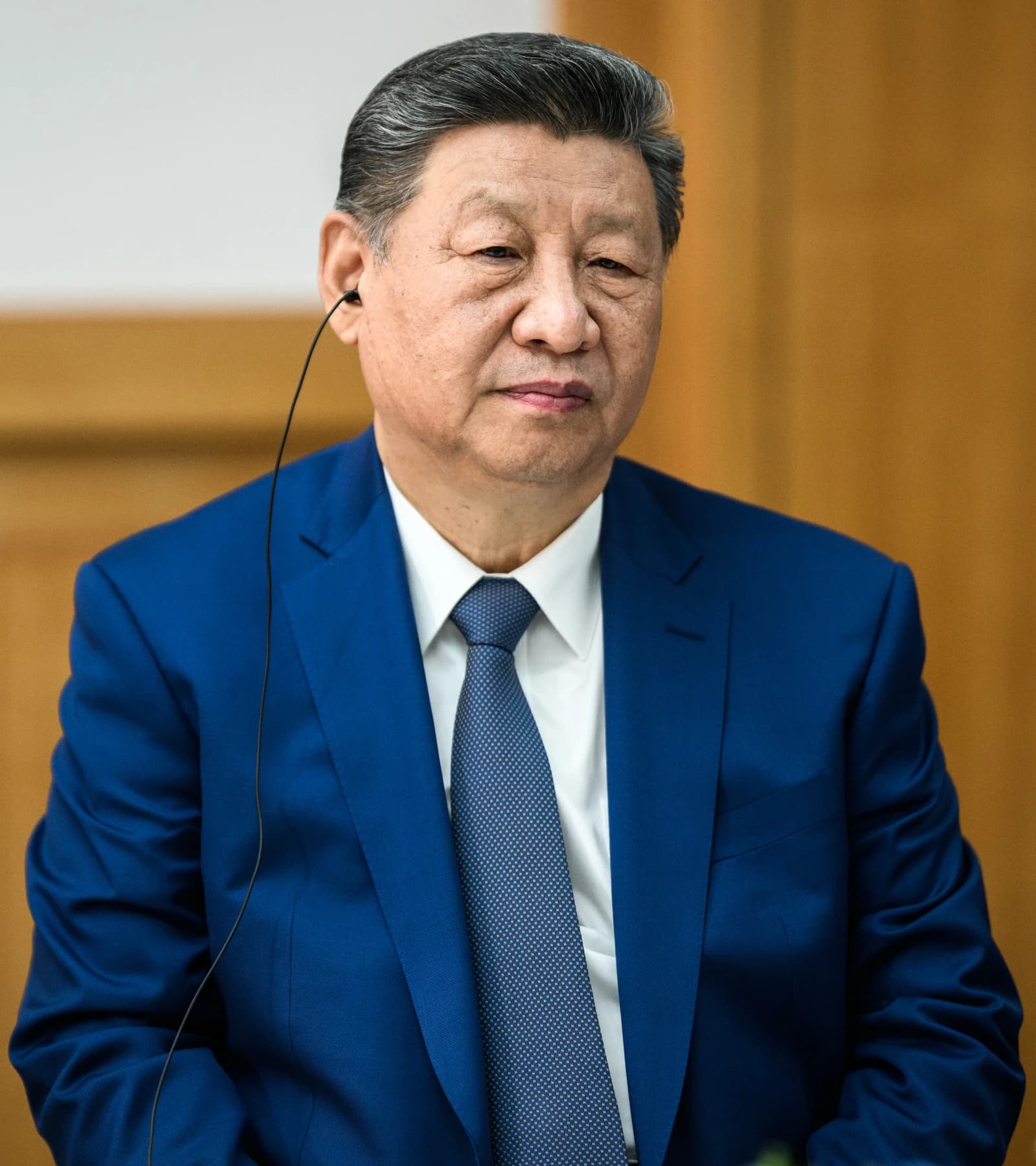
That is why the sequencing is so important. Trump is expected to meet the Quad partners in Manila before heading to Shenzhen for a bilateral with Chinese President Xi Jinping, plus a trilateral with Xi and Russian President Vladimir Putin. India will not have a seat at that table, yet whatever emerges there could shape trade, technology and security calculations across Asia. The worry in New Delhi is not necessarily a grand U.S.-China bargain, but a narrower deal that eases pressure on Beijing while keeping tariffs and energy-related pressure on India intact.
The market angle is straightforward. Investors in Asia want clarity on whether the U.S. is building a stable Indo-Pacific framework or using it as a negotiating chip. The answer affects everything from defense spending and semiconductor strategy to the pricing of critical minerals and the resilience of regional supply chains. It also matters for China-focused assets: the iShares China Large-Cap ETF, FXI, has been fluctuating around the low-33 area and sits below its 200-day moving average, a sign that investors still want policy visibility before paying up for Chinese exposure. India-linked funds such as INDA remain much firmer, with the ETF trading above both its 50-day and 200-day averages, suggesting the market still sees India as the cleaner long-term growth story.
That relative strength fits the broader investment case. India is trying to build an industrial base that can benefit from diversification away from China, not just from foreign headlines. A functional Quad can support that by encouraging cooperation on technology, infrastructure, maritime security and critical minerals. Japan brings manufacturing depth, Australia brings resource access, and the United States brings military reach and advanced technology. India brings scale, geography and a growing consumer economy. Together, that is a far more powerful mix than any single bilateral arrangement.
Still, the danger for investors is assuming the Quad has become a guaranteed policy anchor. It hasn’t. Trump’s style remains transactional, and his meeting with Xi in Shenzhen is the bigger strategic wildcard. If Washington softens its stance on Taiwan, technology controls or trade in exchange for short-term gains, India could find itself facing a tougher standard than China. That would matter for long-duration investors because it could reshape capital flows, supply-chain planning and defense partnerships across the region.
For now, the best interpretation is simple: Manila will tell investors whether the Quad is becoming a real operating framework again, or just a convenient prelude to U.S.-China bargaining. If the four leaders leave with concrete commitments rather than another statement about a “free and open Indo-Pacific,” that would be constructive for India, its partners and companies tied to Asian supply chains. If not, the region may learn that Washington still prefers deals over durable alliances — and markets will have to price that uncertainty in for longer.
| Entity | Gains | Losses |
|---|---|---|
| India, Japan, Australia | ▲stronger Quad coordination | ▼policy uncertainty |
| China | ▲room for bilateral leverage | ▼tighter Quad alignment |
| U.S. investors in Asia | ▲clearer security framework | ▼lower visibility on trade policy |
| China-linked equities | ▲short-term relief from deal hopes | ▼tougher strategic backdrop |