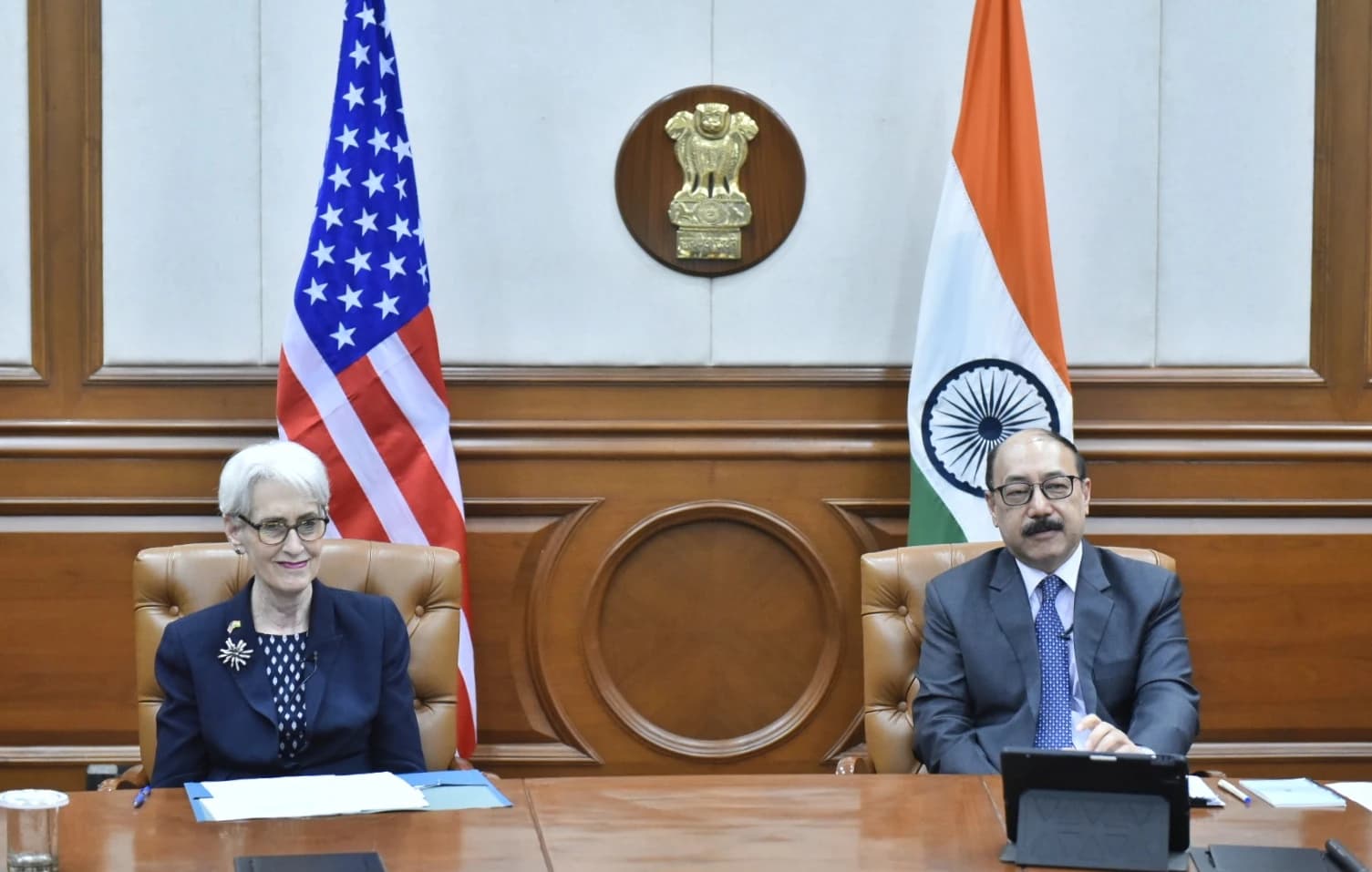
India’s external affairs minister S. Jaishankar pushed back on the description of India as a “middle power,” arguing the country’s scale, economy and geography make it a power that sits in the middle of today’s global fault lines, not a lesser player. The exchange with former British prime minister Rishi Sunak at the Bloomberg New Economy Forum underscores how New Delhi wants to be seen by investors and policymakers: not as a regional economy, but as a swing state in a more fractured world.
India Pushes Back on Middle Power Label
Jaishankar said India’s $4 trillion economy and status as the world’s most populous nation make “middle power” too narrow a label. Instead, he argued India now matters because the US and Europe are moving in different directions and the country is increasingly one of the few capable of bridging blocs on trade, diplomacy and security.
Sentiment IndicatorsⓘProprietary · adalytica.com · October 24, 2026
This is a snapshot — live sentiment, awareness and momentum for 130+ markets update continuously in the dashboard.Open AlphaPulse
That positioning matters economically because India is trying to convert geopolitical weight into capital flows, supply-chain migration and industrial expansion. For investors, the message is that India is not only a consumer-market story; it is also a strategic destination as companies diversify away from China and look for politically aligned manufacturing bases.
The comments also fit a broader effort by Prime Minister Narendra Modi’s government to present India as a cornerstone of a reworked global order, alongside efforts to build capacity in semiconductors, power and infrastructure. The country’s ability to play mediator between competing blocs could strengthen its leverage in trade talks, technology partnerships and energy security.
Shares of the iShares MSCI India ETF have slipped in recent months, with the fund closing at $46.46 on Oct. 23, below both its 50-day and 200-day moving averages, while the S&P 500 was flagged by Adalytica’s trade signals as in “Extreme Fear.” That leaves investors watching whether India’s geopolitical pitch translates into renewed foreign inflows or whether macro risks and elevated valuations keep sentiment cautious.
The next test will be whether India can back its diplomatic clout with faster growth, deeper infrastructure and more reliable power, as foreign investors look for proof that the country’s ambitions can scale beyond rhetoric.
| Entity | Gains | Losses |
|---|---|---|
| India | ▲Great-power positioning | ▼“Middle power” label |
| New Delhi | ▲Strategic leverage | ▼Policy limits |
| Foreign investors in India | ▲Geopolitical tailwind | ▼Uncertainty on execution |
| China-centered supply chains | ▲Diversification pressure | ▼Market share risk |