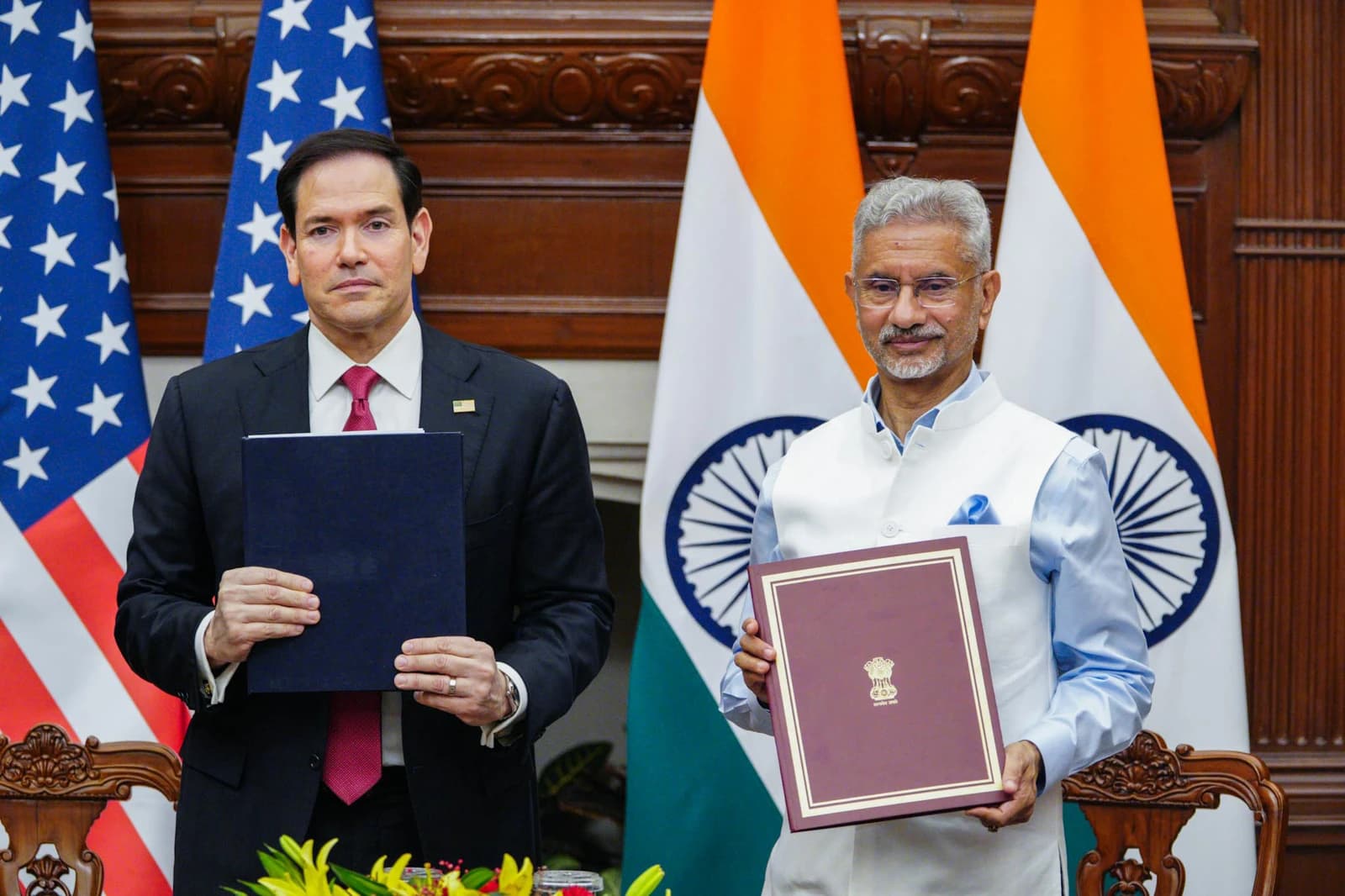
India’s foreign minister has put a sharper edge on New Delhi’s diplomacy at a time when investors are already repricing geopolitical risk, arguing that India and other countries must rethink how they deal with the United States as global alliances become more transactional.
India weighs US ties amid geopolitical risk
That matters because the world's two biggest economic powers are no longer the only variables in the trade and capital equation. For India, the issue is not whether to break with Washington, but how to protect strategic autonomy while still drawing in the technology, defense and supply-chain investment that has made the US partnership economically valuable. For investors, that raises the stakes for every asset tied to India’s growth story: if relations with Washington become more conditional, the winners will be the countries and sectors that can absorb more of the world’s industrial and strategic reordering.
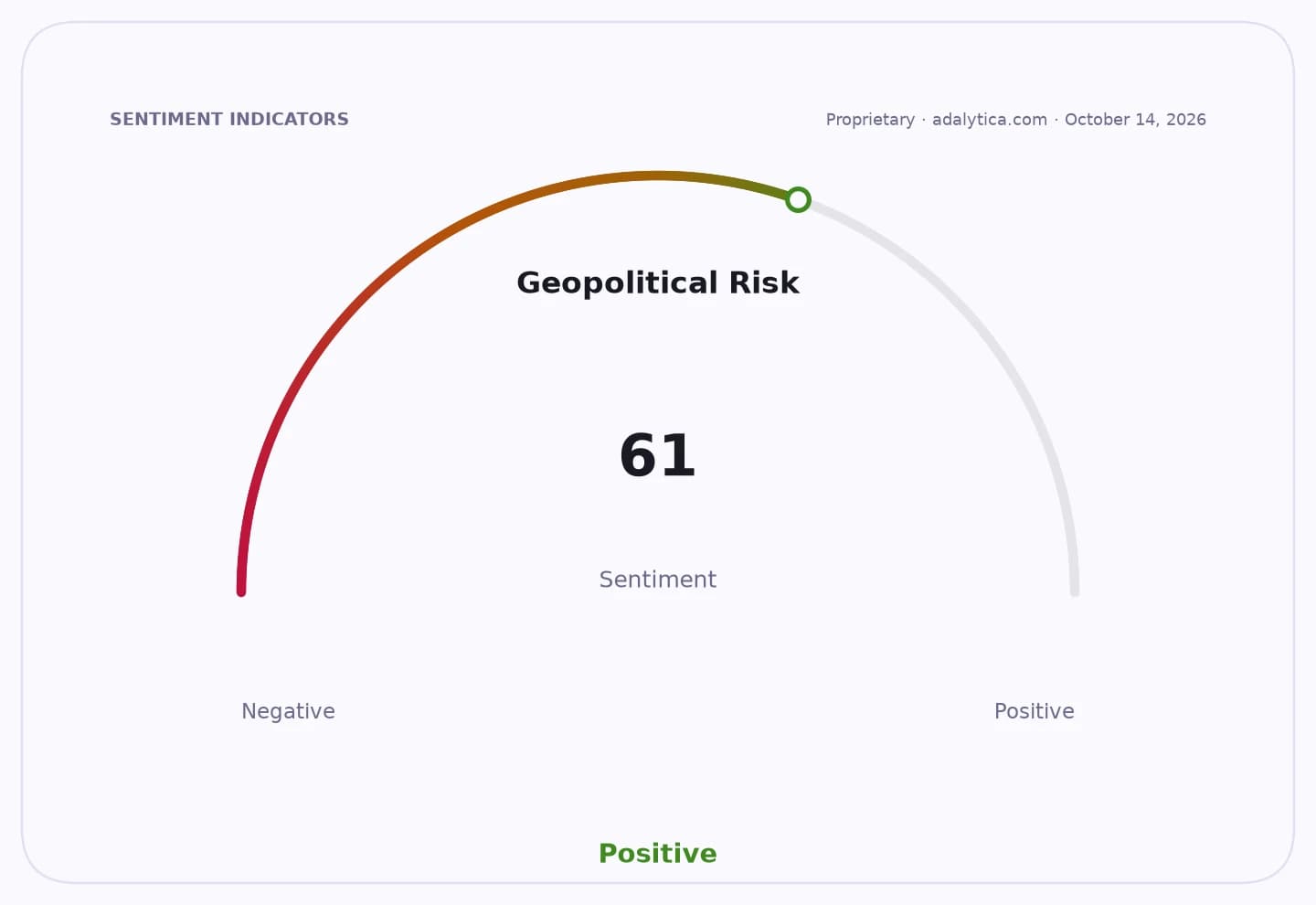
Sentiment IndicatorsⓘProprietary · adalytica.com · October 15, 2026
This is a snapshot — live sentiment, awareness and momentum for 130+ markets update continuously in the dashboard.Open AlphaPulse
The market backdrop shows why this is landing now. The US 10-year Treasury yield has climbed to around 5.2%, a level that keeps dollar funding expensive and narrows room for risk assets globally. That puts more pressure on emerging markets to offer not just growth, but policy stability. India has so far held up better than many peers, but the India ETF INDA has slipped to 47.24 from above 50 in late August, while the iShares India 50 ETF, EPI, is hovering near 40.8. Both sit below their 50-day and 200-day moving averages, a sign that investors are taking profits even in one of the market’s most durable structural growth stories.
The message is that geopolitics is now a valuation input, not background noise. India has built its investment case on being a beneficiary of China-plus-one supply chains, a friendlier manufacturing base, and a bridge between the West and the Global South. But Jaishankar’s warning reflects the reality that Washington’s priorities can shift quickly, from trade and tariffs to sanctions, defense procurement and technology controls. That creates a premium on flexibility — for policymakers and for portfolios.
US Dollar vs INDAadalytica.com
Explore this data interactively — full history, time series and cross-market comparisons.Open AlphaPulse
Adalytica’s US dollar trade signals currently show neutral sentiment but elevated fear awareness, while S&P 500 signals point to extreme fear in awareness even as headline sentiment remains neutral. That combination is consistent with a market that is not panicking, but is increasingly alert to cross-border policy shocks. In that environment, India’s appeal is not just as a growth market, but as a geopolitical hedge against overdependence on any single power center.
The clearest investment implication is to focus on the toll roads of this realignment. India’s domestic manufacturing, defense suppliers, logistics platforms, data-center infrastructure and energy-transition names stand to benefit if New Delhi accelerates self-reliance while still courting Western capital. At the same time, multinational exporters and sectors dependent on seamless US-India policy alignment face more headline risk than they did a year ago. The market underestimates how quickly strategic autonomy can turn into a capital-allocation theme.
For now, the trade is not to abandon India. It is to own the parts of India’s story that get stronger when the world becomes less predictable: infrastructure, defense, electronics assembly, and industrial buildout. If Jaishankar is right, the next phase of global markets will reward countries that can do business with everyone without belonging to anyone.
| Entity | Gains | Losses |
|---|---|---|
| India domestic industry | ▲Strategic autonomy premium | ▼Dependence on US policy goodwill |
| Defense and infrastructure stocks | ▲More public capex and localization | ▼Import-reliant contractors |
| US-India aligned exporters | ▲Market access if ties hold | ▼Tariff and policy volatility |
| Global investors | ▲New diversification themes | ▼Simple pro-globalization trade |