Donald Trump’s vow that the White House line is “always on” for Quad partners is the most important signal from the Manila summit: Washington is leaning harder into Indo-Pacific security just as global risk sentiment has plunged to “Extreme Fear,” and investors should expect the region’s defense, shipping and supply-chain winners to stay in play.
India Quad Defense Outlook After Manila Summit
The immediate market significance is not the praise for Indian Prime Minister Narendra Modi, but the direction of travel in U.S. strategy. Trump used the Quad leaders’ meeting to elevate India, Japan and Australia as core pillars of a “free, open, stable and prosperous” Indo-Pacific while announcing deeper military coordination, including expanded naval drills and a new exercise involving maritime patrol aircraft. That matters because it reinforces a long-running shift away from episodic diplomacy toward more persistent security integration aimed at deterring China without saying its name.
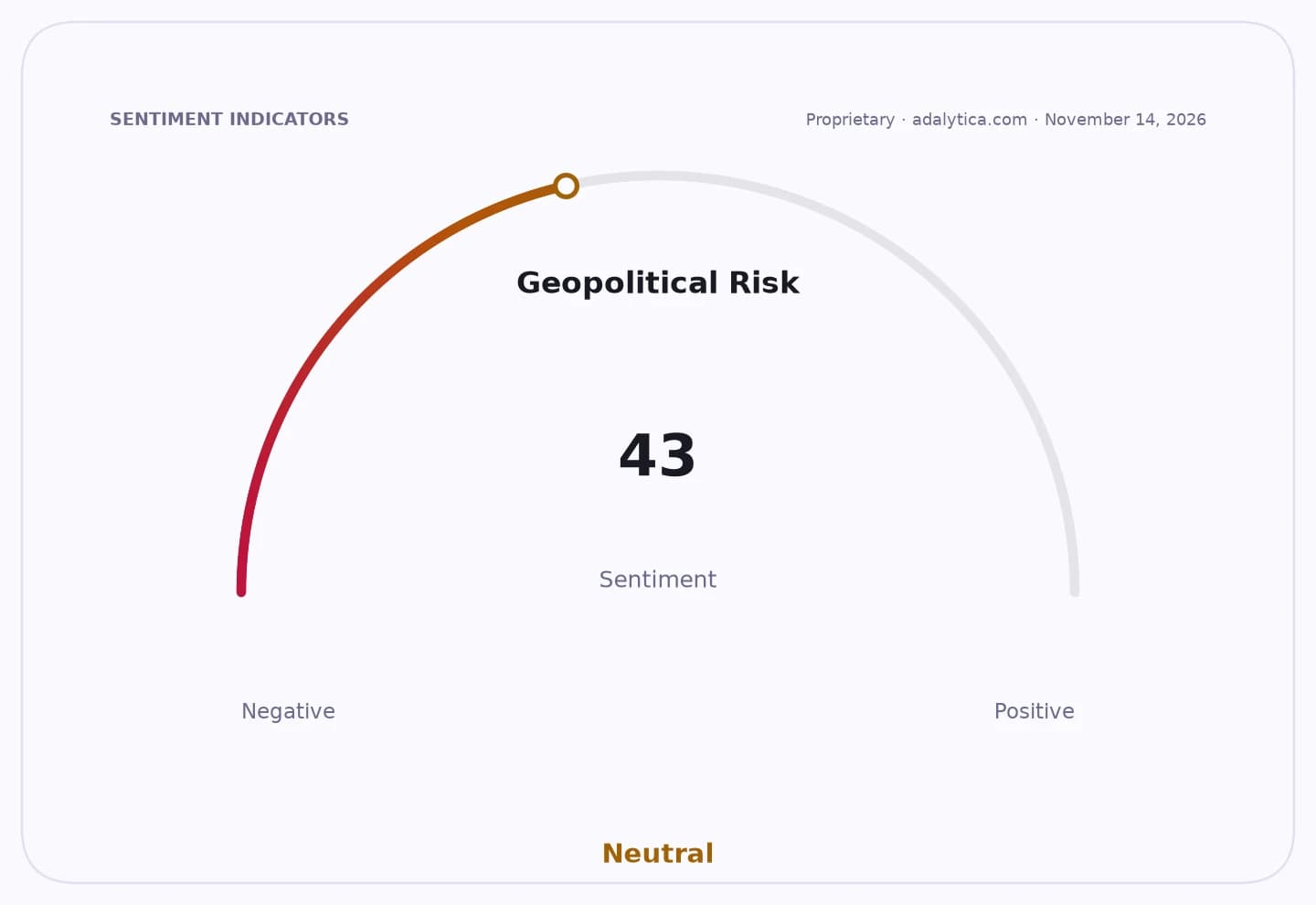
Sentiment Indicators
For investors, that means the policy premium on Indo-Pacific defense infrastructure is rising, not fading. More anti-submarine warfare training, more maritime patrol activity and tighter naval coordination all point to sustained demand for surveillance systems, undersea warfare equipment, aerospace assets and logistics networks. The market is underestimating how much recurring exercises can morph into recurring procurement, maintenance and capex. In other words, today’s drills often become tomorrow’s orders.
The timing also matters. Adalytica’s Global Stability Sentiment gauge is at 4.0, labeled “Extreme Fear,” after a 54-point drop over seven days. That kind of deterioration usually pushes capital toward perceived safety, but it can also accelerate spending on deterrence. When geopolitical confidence collapses, governments do not stop buying capability; they tend to buy more of it. That is the setup for defense contractors, port-security names, satellite and surveillance providers, and the broader industrial supply chain tied to regional rearmament.
Geopolitical Risk vs INDAadalytica.com
Explore this data interactively — full history, time series and cross-market comparisons.
India is especially well positioned in this frame. Modi’s elevated status in Trump’s remarks is not just personal flattery; it is a geopolitical underwriting of India’s role as a counterweight in Asia. That helps keep India’s strategic relevance high even when trade frictions and political noise flare up elsewhere. For U.S. investors, India-linked exposure through broad emerging-market vehicles such as INDA can benefit if the Quad translates into greater capital flows, manufacturing diversification and defense cooperation. For those seeking a more direct read on China risk, FXI remains the cleaner expression of the pressure point.
The relative price action fits the narrative. INDA has climbed back above its 50-day moving average and is trading near recent highs, while EWU is still holding above its long-term trend support. FXI, by contrast, remains below both its 50-day and 200-day moving averages, a reminder that China-linked assets are still being priced with caution despite intermittent rebounds. This is exactly the kind of divergence that emerges when diplomacy hardens into blocs: capital rewards the countries aligned with security integration and discounts the ones facing it.
The real opportunity here is not a one-day summit headline. It is the multi-year buildout that follows when major powers start treating the Indo-Pacific as an operational theater rather than a talking point. The Quad’s expanding military agenda points to more exercises, more interoperability and more procurement, and that is where I believe the asymmetric upside lies.
Investors should position for a longer cycle in defense, maritime security and India-linked strategic infrastructure before the market fully prices it in.
| Entity | Gains | Losses |
|---|---|---|
| India / INDA | ▲Strategic relevance | ▼None immediate |
| US defense contractors | ▲More procurement | ▼Budget skeptics |
| China / FXI | ▲None | ▼Greater strategic pressure |
| Maritime security and aerospace names | ▲Recurring demand | ▼Peace dividend trades |