Australia’s strategic value is rising as the U.S.-China rivalry edges toward negotiation rather than war, according to geopolitical forecaster George Friedman, whose view has implications well beyond diplomacy. If Washington and Beijing can strike a deal around trade and Taiwan, it would reduce the risk premium that has hung over Asia-Pacific assets, but it would also shift pressure onto middle powers such as Australia to assume more regional responsibility.
Australia, BHP in focus as U.S.-China talks loom
Friedman, the founder of Stratfor and now head of Geopolitical Futures, told investors ahead of UBS’s Australasia Conference in Sydney that Australia must decide whether it is willing to “bear the burden” of a more influential role in the region. His argument is that China remains more dependent on continued access to the U.S.-led economic system than many assume, making a grand bargain more likely than military confrontation.
Sentiment Indicators
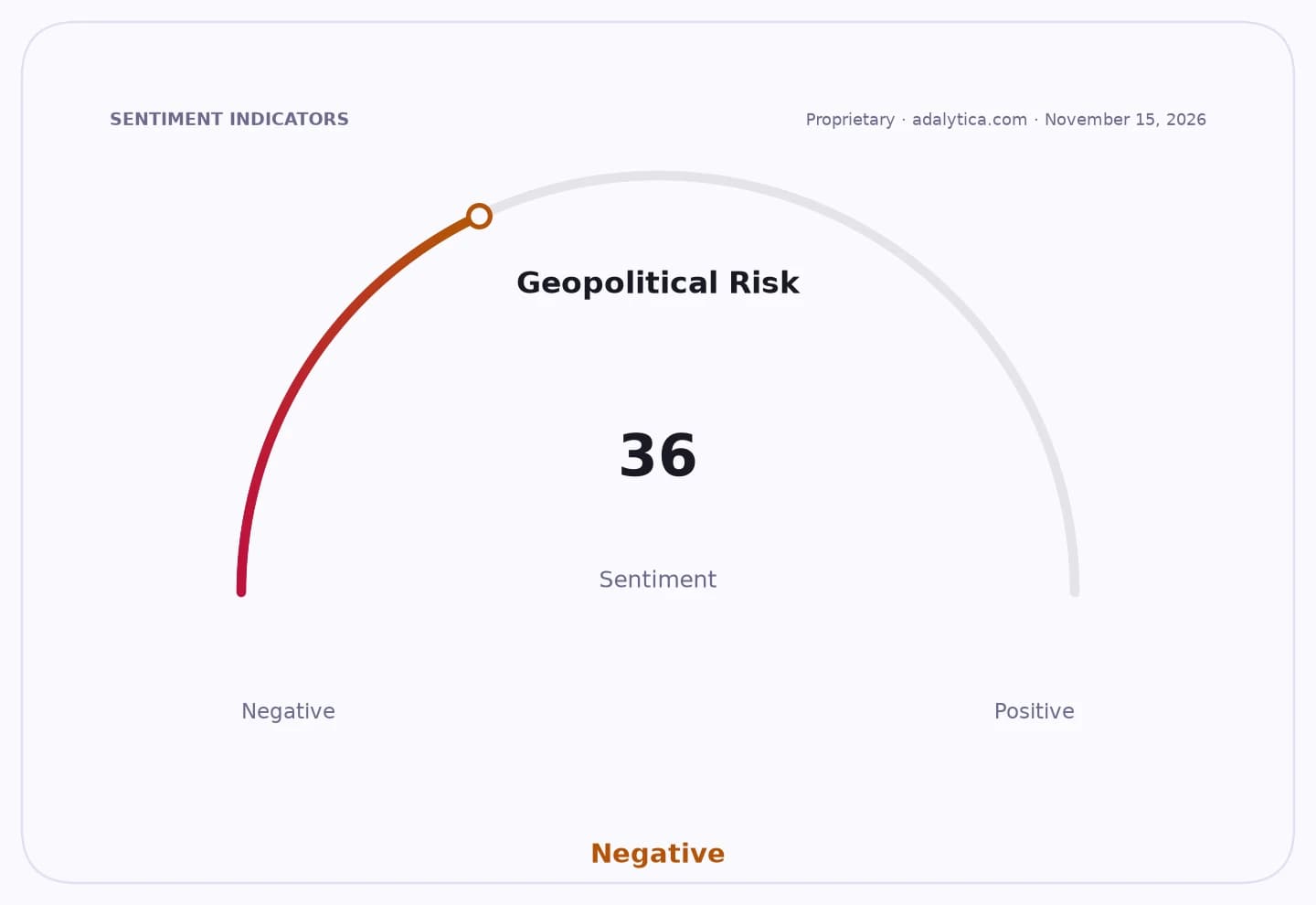
Geopolitical Risk
That matters economically because the baseline scenario for global trade, commodities and capital flows hinges on whether the world’s two largest economies are heading for managed coexistence or strategic rupture. A durable truce would support cross-border commerce, ease pressure on supply chains and lower the risk of fresh tariff shocks. A breakdown would do the opposite, hitting Asian growth, reviving inflationary pressure and forcing investors to reprice everything from industrial metals to defense spending.
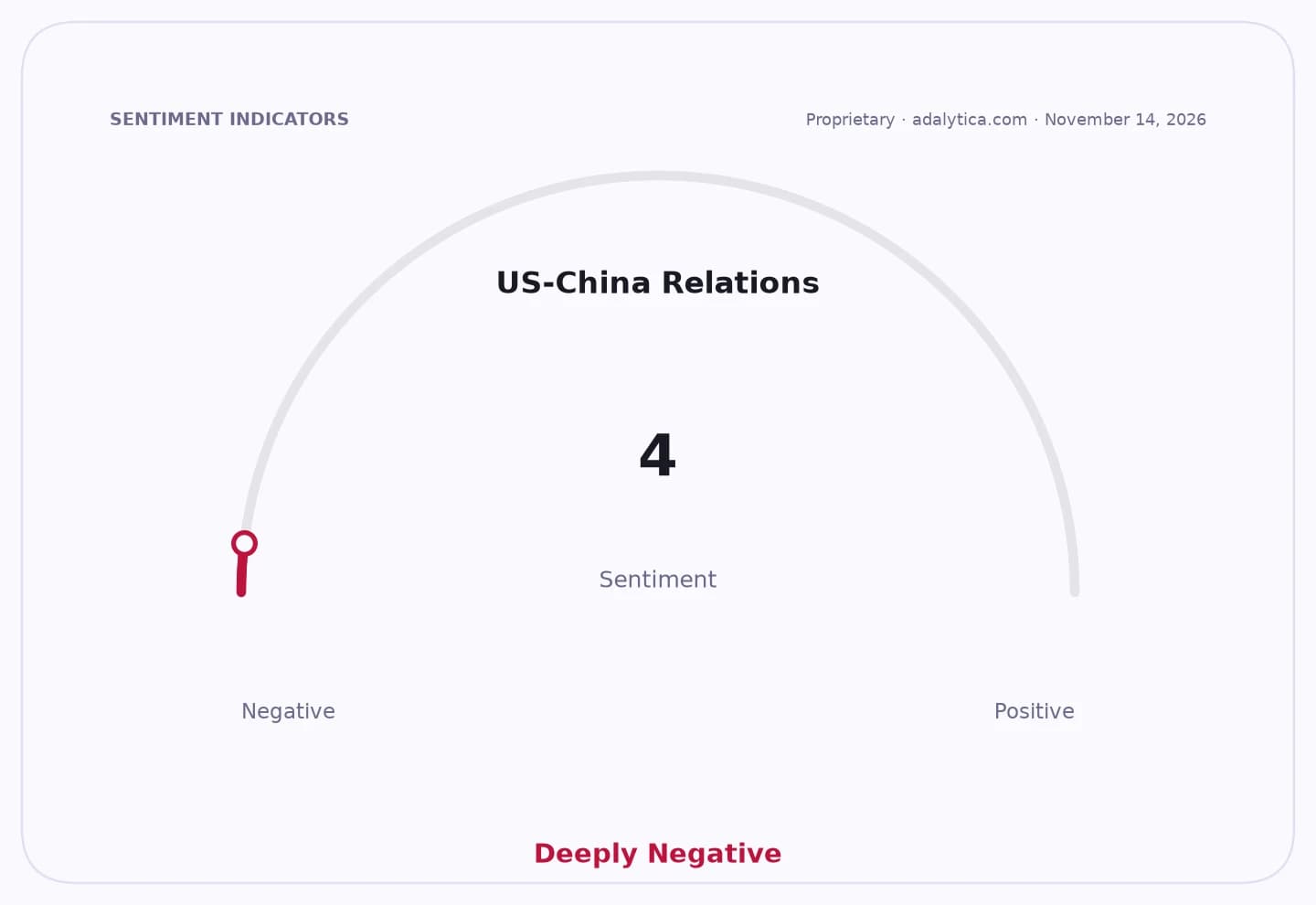
Markets are already signalling caution. A proprietary Adalytica gauge of U.S.-China relations shows “Extreme Fear,” with sentiment at 4 and awareness elevated at 79, reflecting heightened attention around the upcoming Trump-Xi meeting and the fragile tariff pause. The broader global-stability measure is also weak, at 36, indicating that investors are not yet pricing a clean de-escalation.
US-China Relations — 30-day sentimentadalytica.com
Explore this data interactively — full history, time series and cross-market comparisons.
US-China Relations
For Australia, the stakes are direct. The country sits at the intersection of Chinese demand and U.S. security architecture, and its listed companies are leveraged to both. BHP, one of the world’s biggest miners, has seen its shares swing alongside iron ore and base-metals expectations as traders assess whether Chinese growth can hold up if trade tensions intensify. The stock recently traded at 79.49, below its 50-day moving average of 83.81 and just above its 200-day average of 80.63, reflecting a market still unsure how to balance commodity demand against geopolitical risk.
The irony in Friedman’s view is that even a less confrontational U.S.-China relationship does not necessarily reduce Australia’s strategic burden. A negotiated arrangement could give Beijing more room to focus on its own regional influence while leaving Canberra to spend more on security, diversify trade and navigate a more contested Indo-Pacific. That would be supportive for some domestic sectors tied to defense and infrastructure, but it could also keep investors wary of Australia’s exposure to Chinese demand.
The market’s broader lesson is that the next phase of the Trump-Xi dynamic is less about headlines than about whether both sides accept a stable division of interests. If they do, Australia may gain room to act as a regional pivot. If they do not, the region’s economic premium stays elevated, and commodity markets, miners and Asia-linked assets will continue to trade on every twist in the relationship.
| Entity | Gains | Losses |
|---|---|---|
| Australia | ▲Regional strategic relevance | ▼Need for higher defense burden |
| U.S. and China | ▲Reduced risk of direct conflict | ▼Harder bargaining on trade and Taiwan |
| BHP and miners | ▲Stable China demand | ▼Trade-war escalation and price volatility |
| Investors | ▲Lower geopolitical risk premium | ▼More uncertainty if talks fail |