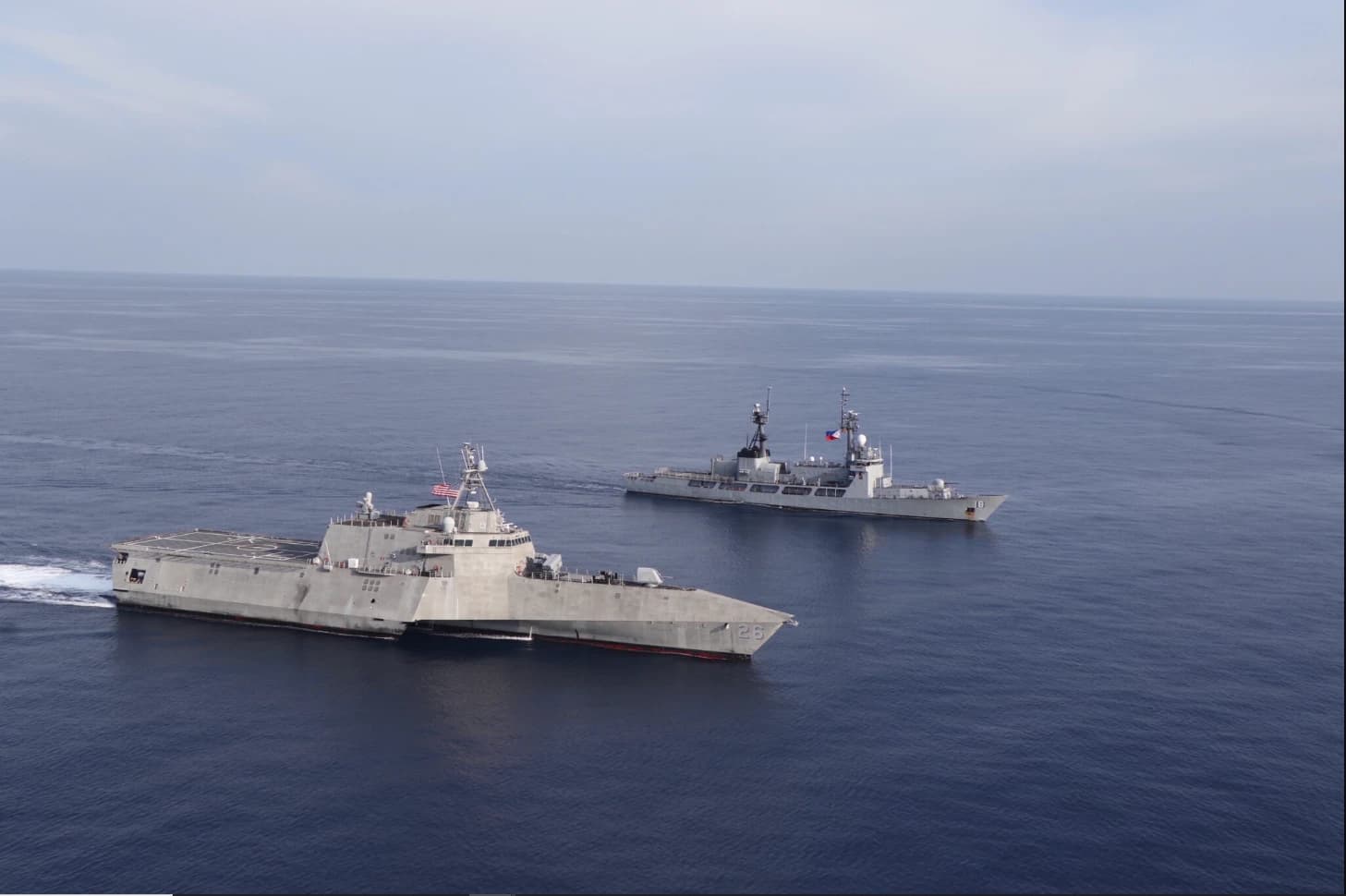
China’s rapid naval buildup is sharpening security risks for India and the US by extending Beijing’s reach well beyond the Taiwan Strait and into the Indian Ocean, where a larger, more active fleet could complicate trade routes, surveillance and crisis response.
China naval buildup raises Indian Ocean security risks
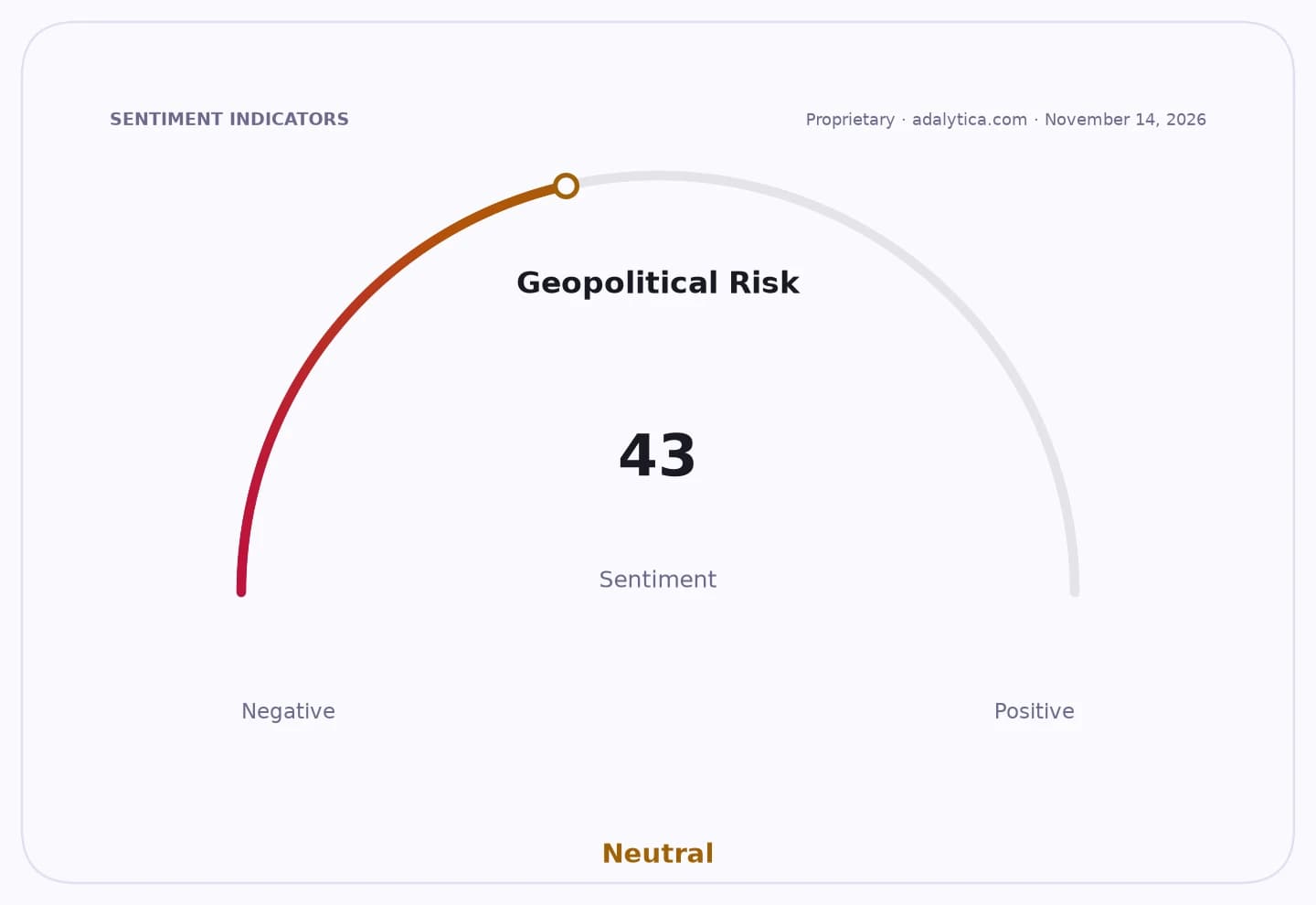
Geopolitical Risk
Beijing now has more than 400 warships and submarines, according to US defense figures cited in reporting, a fleet roughly 35% larger than the US Navy’s total. That scale matters because it gives China the capacity to sustain simultaneous pressure across the Western Pacific and Indian Ocean, not just occasional show-of-force deployments. For India, the immediate concern is maritime encirclement: Chinese ships are already present in the South China Sea, around Taiwan and increasingly along the Indo-Pacific sea lanes that connect the Middle East, Africa and Asia.
Sentiment Indicators
The strategic significance goes beyond raw numbers. China has built the world’s largest shipbuilding base, producing more than half of global commercial vessels, and is using that industrial depth to accelerate military production. Since 2020, it has added 71 major warships and submarines, including 19 last year alone, according to the source material. Satellite imagery cited in the report showed multiple combatants under construction at the Changxing Island complex near Shanghai, alongside work on a fourth aircraft carrier that Western military analysts believe could be nuclear-powered. That would deepen Beijing’s ability to project force at range and to keep ships at sea longer without relying on vulnerable refueling networks.
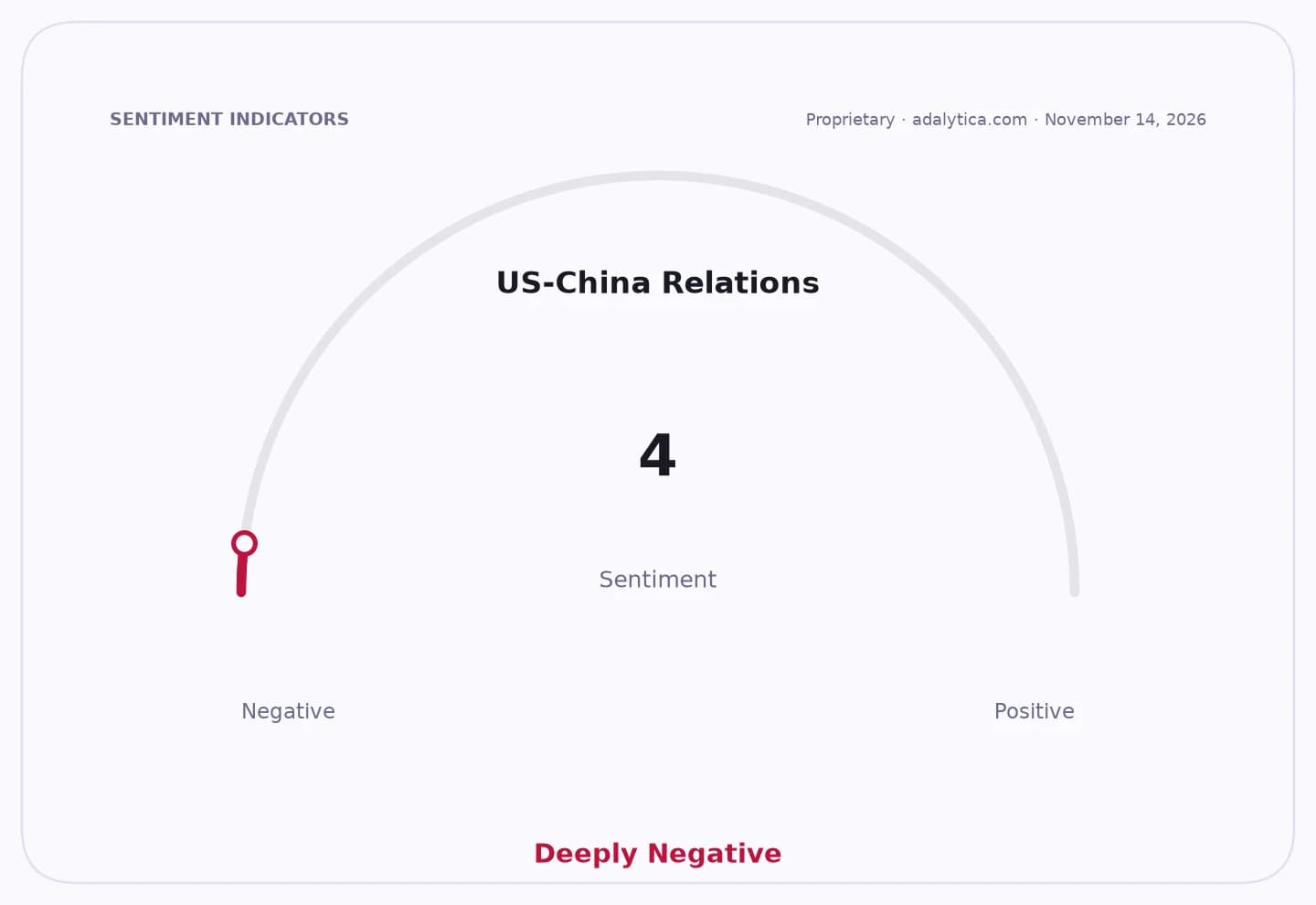
For investors, the implications are twofold. First, the naval expansion supports continued spending across defense, shipbuilding and maritime surveillance supply chains in the US and allied economies. Second, a more contested Indian Ocean raises the odds of shipping disruptions, insurance costs and geopolitical premiums that can spill into energy, commodities and freight markets. The strain is already visible in the wider backdrop: Adalytica’s Global Stability Sentiment sits at a neutral 43, but awareness is at an “Extreme Fear” reading of 4, underscoring how quickly geopolitical risk can reprice when tensions escalate.
US defense contractors have already been rewarded by a stronger long-cycle rearmament theme. Lockheed Martin and Northrop Grumman have both seen their shares move sharply over the past year, reflecting expectations for sustained demand from missile defense, naval systems and advanced platforms. Lockheed closed at $596.04 on Nov. 13, above its 50-day moving average of $553.54 but below its 200-day average of $564.47, while Northrop ended at $550.43, slightly above its 50-day average of $520.56 and below its 200-day average of $581.24. The technical picture suggests investors are still pricing strategic demand, but not in a straight line.
The bull case is that China’s buildout locks in a multi-year spending cycle for rivals and keeps defense order books full. The bear case is that markets may become desensitized unless the naval expansion translates into a concrete incident involving India, Taiwan or shipping lanes. For now, the bigger message is that Beijing’s maritime strategy is no longer regional. It is global, and the Indian Ocean has become one of its most important pressure points.
| Entity | Gains | Losses |
|---|---|---|
| China | ▲Maritime reach | ▼Strategic suspicion |
| India | ▲Defense urgency | ▼Sea-lane security |
| US defense contractors | ▲Order visibility | ▼Valuation volatility |
| Global shipping | ▲Security investment | ▼Higher disruption risk |