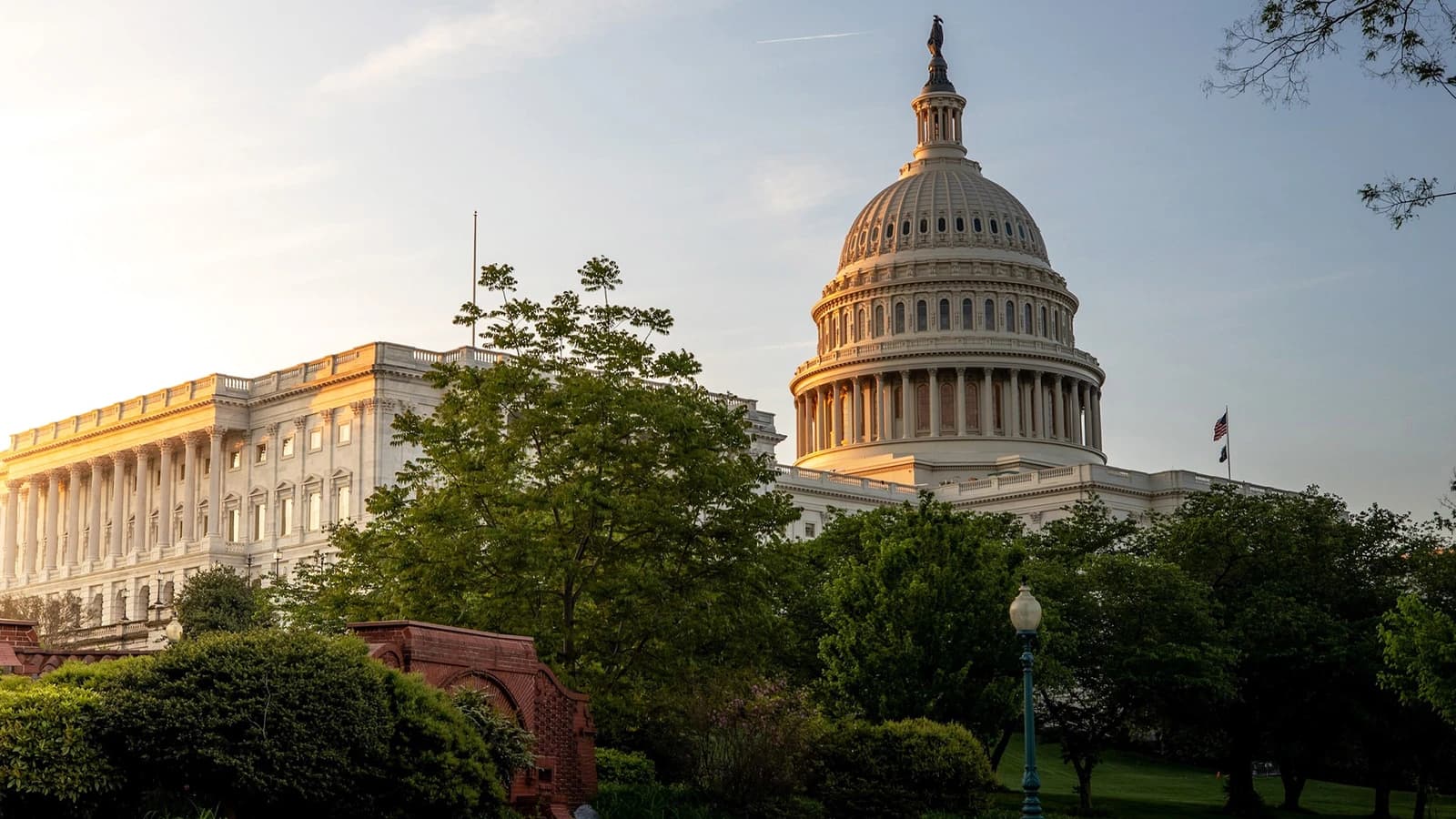
The Democratic takeover of both chambers of Congress after the US midterm elections is likely to make Washington’s approach to India and Pakistan less erratic, even if it does not fundamentally alter the broad strategic alignment around China.
India ETF Rises as Congress Shifts US South Asia Policy
That matters because the biggest immediate change is not a wholesale policy reversal, but a shift in how much room President Donald Trump now has to maneuver. With Democrats holding the House and Senate, the White House is more constrained on tariffs, aid, and congressional oversight, reducing the odds of abrupt moves that have often complicated ties with New Delhi and Islamabad. For investors and policymakers, that points to a more legislated, and potentially more predictable, US posture on South Asia.
Sentiment Indicators
India stands to benefit most from that stability. Successive Republican and Democratic administrations have treated India as a central partner in balancing China in the Indo-Pacific, but Trump’s first and second terms have shown a tendency toward transactional pressure, including tariff threats and uneven messaging on trade. A stronger Democratic Congress could check some of that volatility, making it easier for the US to sustain defense, technology and counterterrorism cooperation with India without sudden reversals driven by presidential whim.
The market signal is directionally consistent with that reading. The iShares MSCI India ETF, INDA, has risen to 51.45 as of Nov. 13 from 45.56 on Oct. 8, trading above both its 50-day and 200-day moving averages. Its RSI of 94.8, however, indicates the move has run hot in the short term, suggesting investors have already priced in a fair amount of optimism around India’s external environment. By contrast, broader emerging-markets exposure via EEM remains below its 200-day average at 60.92, with an RSI near 46, pointing to a more muted regional risk backdrop.
Pakistan is more exposed to the shift. Democratic lawmakers have been more explicit than Trump about tying military assistance to human rights and democratic norms, a stance that could complicate Islamabad’s long-standing strategy of using security cooperation, aid appeals and geopolitical leverage to secure US support. That is especially relevant at a time when Pakistan’s leadership has been courting Trump personally, betting on the kind of executive discretion Democrats are now better placed to restrain.
The deeper economic implication is that Washington’s South Asia policy may become less personality-driven and more institutionally enforced. For India, that could lower the premium on political hedging and support longer-horizon investment decisions in defense, digital infrastructure and US-linked supply chains. For Pakistan, it raises the risk that access to American military and financial goodwill becomes more conditional, which is problematic for a country that still depends on external support to manage balance-of-payments stress.
There is still a ceiling on how much Congress can reshape geopolitics. The White House retains substantial executive authority, and the US-China rivalry will continue to dominate strategic thinking in Washington. But the new balance of power suggests fewer sudden tariffs, less improvisation in aid policy, and more scrutiny over how South Asia fits into the broader contest with Beijing.
For investors, that means India looks better positioned than Pakistan to benefit from a more disciplined US policy regime. The main risk is that Washington’s anti-China agenda could still pull India into commitments it does not fully want, while Pakistan faces the opposite problem: less room to extract concessions from a divided American political system.
| Entity | Gains | Losses |
|---|---|---|
| India | ▲More policy stability | ▼Less room for ad hoc concessions |
| Pakistan | ▲— | ▼Tighter aid scrutiny |
| Democrats in Congress | ▲More leverage over foreign policy | ▼Limited control over White House |
| US investors in India | ▲Lower policy volatility | ▼Higher near-term valuation risk |