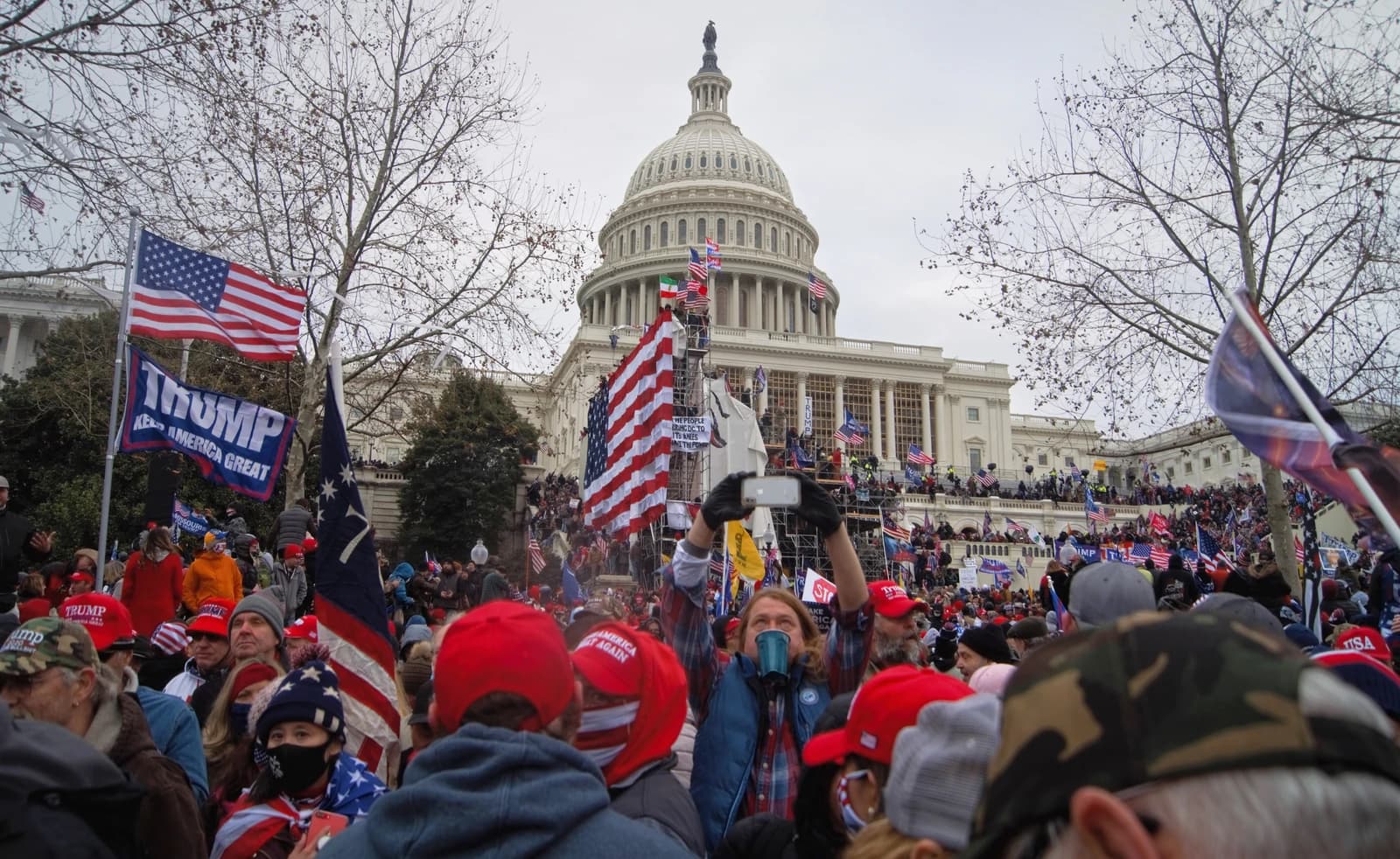
Donald Trump is heading into the most dangerous stretch of his presidency, with Democrats poised to control Congress, launch investigations and use their new leverage to block or delay parts of his agenda. The shift matters for markets because it raises the odds of legislative gridlock, tougher oversight and a more volatile policy backdrop just as investors are already pricing in political stress.
Trump Congress Gridlock Raises Policy Market Risk

The immediate economic risk is that Washington’s next fights will spill into taxes, tariffs, spending and the debt ceiling. Democrats are preparing to target Trump’s tariff policy, extend more help to lower health-insurance costs and push higher taxes on wealthy Americans, moves that could reshape fiscal arithmetic and trade flows if any gain traction.
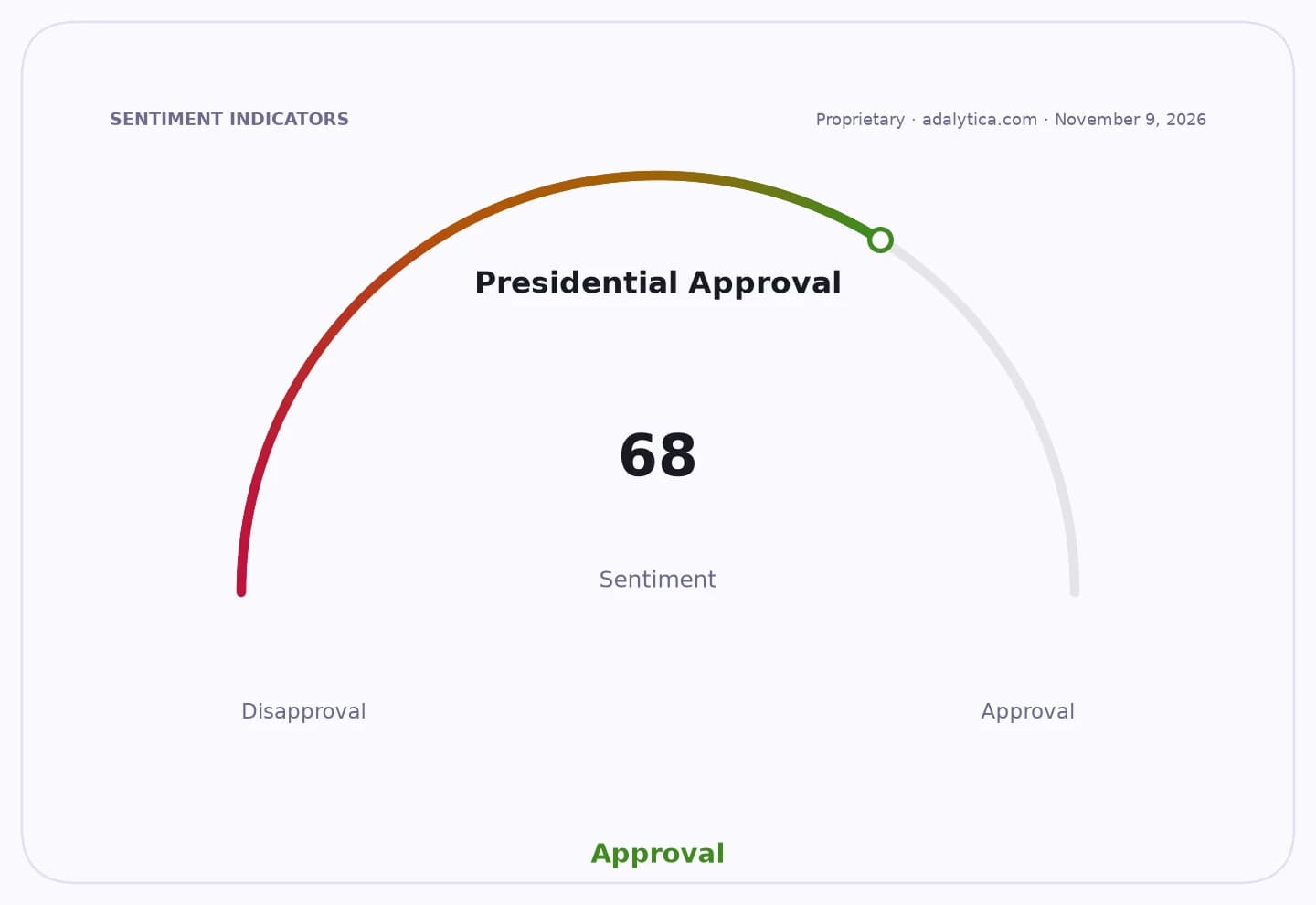
Sentiment Indicators
Presidential Approval
But the bigger reality is that neither side is heading for cooperation. Trump has installed Stephen Miller as chief of staff, a signal the White House is preparing for confrontation rather than compromise, while Democrats are openly talking about subpoenas, investigations and impeachment proceedings. That combination points to a Congress consumed by oversight rather than policymaking, which tends to slow down fiscal negotiations and cloud business planning.
For investors, the most immediate market read-through is uncertainty. Companies exposed to trade policy, defense spending, healthcare and financial regulation could face a choppier two-year window, while any renewed fight over funding or the debt ceiling could pressure Treasury markets and risk assets. The 10-year Treasury yield was recently near 4.98%, underscoring how sensitive the market remains to Washington’s fiscal path.
White House Policy Direction
Trump’s political position is also under strain beyond Capitol Hill. His administration is facing a barrage of legal and oversight threats, and he has already talked about sweeping pre-emptive pardons for aides if prosecutions advance. That raises the stakes for cabinet turnover, confirmation battles and even potential Supreme Court vacancies once Democrats have the Senate’s leverage.
The economic backdrop makes the fight even more consequential. Consumer sentiment has fallen to 48.1 in the latest reading, down sharply from 55.2 in July, suggesting households are already uneasy before the next wave of political brinkmanship. At the same time, the White House policy backdrop remains highly supportive of risk-taking, according to Adalytica’s US White House Policy Direction gauge, which sits at 79 with a “Greed” reading, leaving markets vulnerable if confrontation overtakes policy execution.
Trump’s own media stock has already reflected that turbulence. Shares of Trump Media & Technology Group have dropped to $4.97 from $9.52 on Sept. 3, with the stock trading below both its 50-day and 200-day moving averages and its RSI stuck near 35.7, a sign that investors are still punishing the name as political noise rises.
The next catalysts are clear: investigations, budget talks, debt-ceiling negotiations and any attempt by Democrats to turn their election wins into actual legislative pressure. The coming two years look less like a transition to normal governance than a prolonged contest that could shape policy, markets and the 2028 race at the same time.
| Entity | Gains | Losses |
|---|---|---|
| Democrats | ▲Oversight power | ▼Risk of overreach |
| Trump White House | ▲Executive control | ▼Legislative gridlock |
| Bond investors | ▲Fiscal discipline demand | ▼Debt-ceiling volatility |
| Healthcare and tariff targets | ▲Policy debate leverage | ▼Revenue and margin pressure |