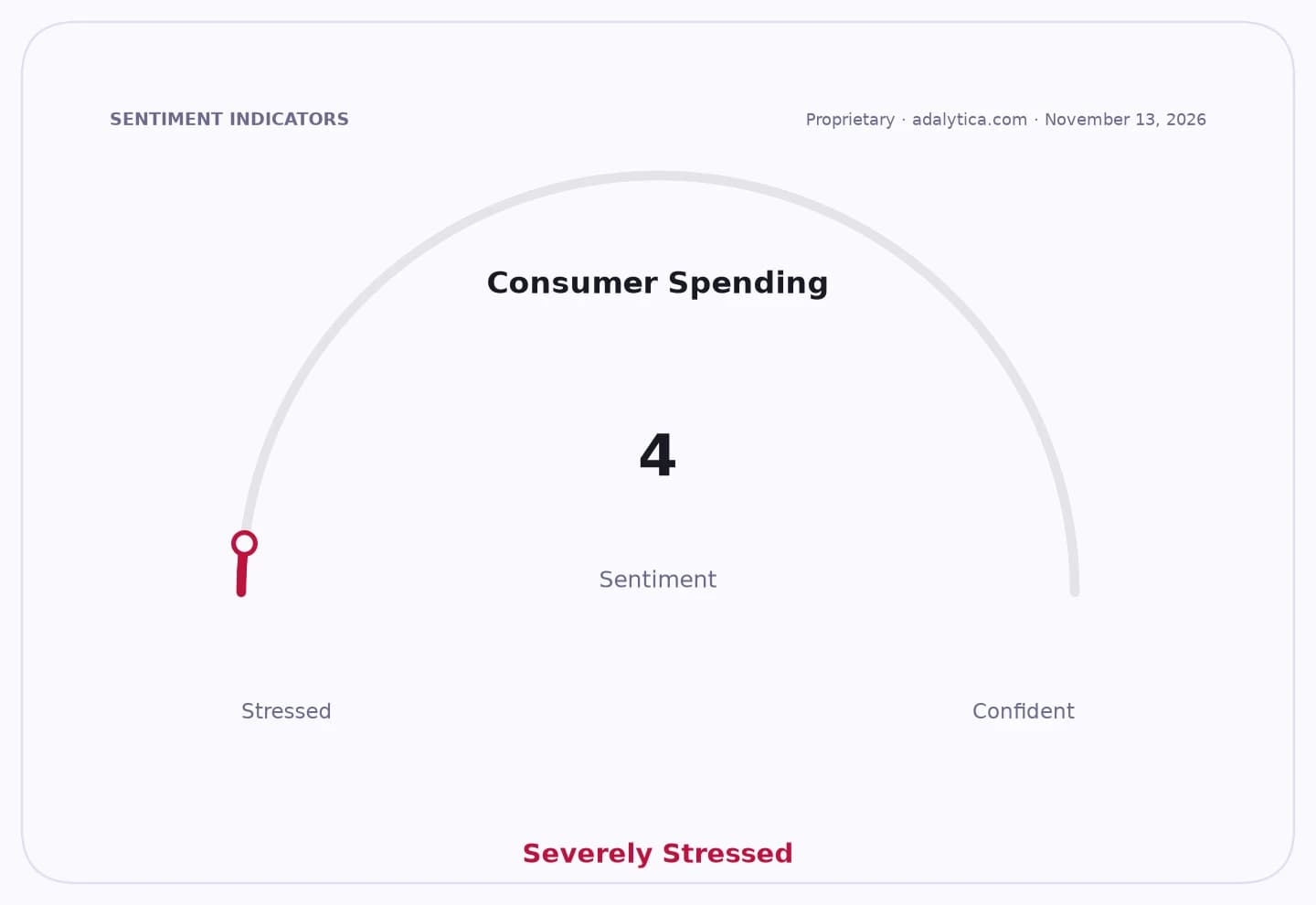
President Donald Trump’s core voters are losing patience with his economic agenda, and that matters because it is starting to reshape both the politics and the market backdrop around tariffs, inflation and growth.
Trump Voter Backlash Over Tariffs and Inflation
The clearest message from the latest post-midterm reaction is that the White House’s argument is no longer landing with the people it needs most. Trump lashed out at Democrats and voters after the stock market drop, saying $3 trillion in value vanished in a single day, but the real problem is bigger than one selloff. Rising costs, especially from tariffs and energy prices, are squeezing household budgets, and voters are connecting that pain directly to policy.
Sentiment Indicators
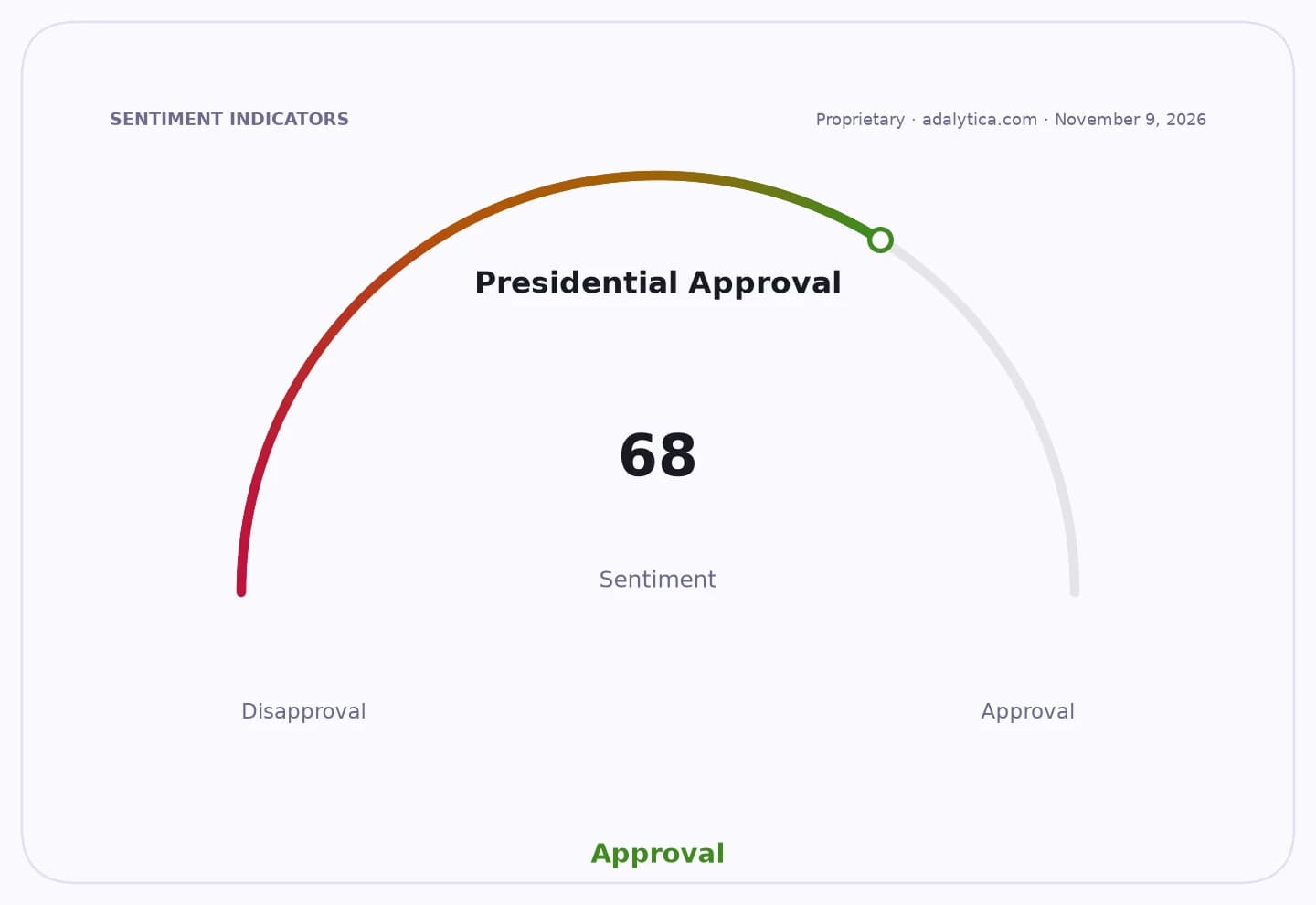
Presidential Approval
That is economically significant because tariffs do not just change trade flows — they filter into the price of goods, transport and industrial inputs. When diesel prices are said to have surged 90%, and consumers are already angry about living costs, the risk is not just political backlash but slower spending and weaker demand across the economy. For investors, that is the key issue: if voters believe the promise of stronger growth has turned into higher prices and weaker purchasing power, then policy support for tariffs and other protectionist measures becomes harder to sustain.
The data points in the sentiment gauges back that up. Adalytica’s US Presidential Approval Sentiment sits at 18, in “Fear” territory, after falling 57% over the past week and 51% over the past month. The White House Policy Direction Sentiment is still in neutral at 64, but it too has slipped 11 points in a day and 18 points over a week. In plain English, confidence in the administration’s direction is eroding fast even before any major policy reversal has happened.
White House Policy Direction
That shift matters for markets because policy expectations drive everything from bond yields to sector leadership. If tariffs stay in place, importers and consumer-facing companies bear more pressure. If the administration backs away, the political cost rises and the market has to reprice the possibility of slower revenue growth in protected industries. Either way, investors are now dealing with a less predictable policy regime, and unpredictability usually commands a valuation discount.
There is also a broader macro lesson here. The trade deficit remains high despite the tariffs, which suggests the policy has not delivered the kind of clean economic win supporters were promised. At the same time, voters are increasingly focused on real-world living standards rather than political messaging. That is often the point at which administrations begin to shift course, especially after an electoral warning shot.
For long-term investors, the takeaway is not to overreact to a single political cycle, but to recognize what the cycle is telling you. When a president’s own voters begin to reject the economic trade-offs, policy can change quickly, and sectors tied to imports, consumer spending and industrial costs can move with it. This is worth watching closely, because the next phase of the story may be about whether Washington responds to voter anger with softer trade policy, more spending support or a fresh attempt to defend tariffs despite the cost.
| Entity | Gains | Losses |
|---|---|---|
| Consumers | ▲lower prices if policy shifts | ▼higher costs under tariffs |
| Importers | ▲easier access to goods | ▼margin pressure from duties |
| Tariff-protected producers | ▲policy shelter | ▼demand if economy slows |
| Trump administration | ▲if it pivots on inflation | ▼voter trust and approval |