Don’t spend the money just yet: the bigger story is not whether Donald Trump keeps talking about $5,000 “midterm payments,” but whether households are actually going to get a fiscal boost at a time when consumer confidence is already cracking.
Trump $5,000 payments and consumer spending
Consumer Spending
That matters because consumer spending is the backbone of the U.S. economy. When shoppers pull back, earnings growth gets harder to sustain, especially for retailers, travel companies and other consumer-facing businesses that depend on steady demand rather than one-off policy headlines.
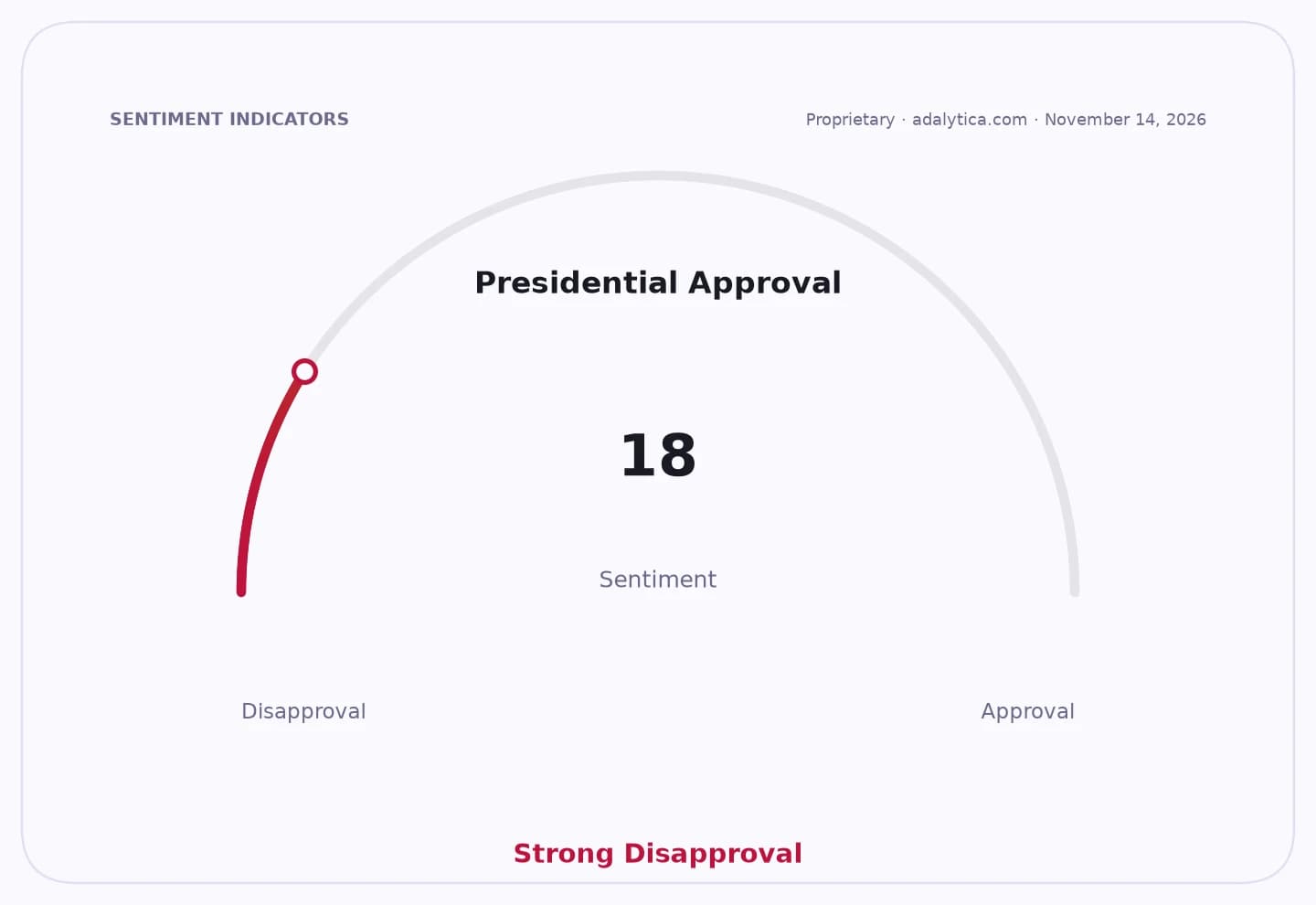
Sentiment Indicators
The latest data suggest Americans are already feeling squeezed. The University of Michigan’s consumer sentiment index has fallen to 48.1 from 55.2 in July, with a forecasted bounce only back to 52.5 next month. A reading below 50 is a warning sign that households are in no mood to spend aggressively, even before any promised cash shows up.
That weakness is showing up in broader market signals too. Adalytica’s consumer spending sentiment gauge is in “Extreme Fear” at 4, down 58 points over the past month. In plain English, the market is telling investors that consumers are nervous, and nervous consumers tend to save stimulus-like payments rather than rush out and spend them.
For investors, the question is not just whether the checks happen. It is whether any payment would be large enough, broad enough and quick enough to change the earnings picture for the companies that matter most. A one-time transfer can provide a short-term lift to discretionary spending, but it rarely creates a durable profit tailwind unless it arrives into a healthy consumer backdrop. Right now, the backdrop looks fragile.
That helps explain the mixed market setup. The S&P 500, tracked by SPY, has been trading with elevated greed signals from Adalytica’s trade-sentiment model, even as the index itself has shown some technical fatigue, with the 50-day moving average near 764 and the 200-day near 729. Investors are still chasing upside, but the consumer side of the economy is flashing caution. Those two forces do not stay disconnected for long.
Treasuries and the dollar are also telling a cautious story. TLT has slipped below its 200-day moving average, while the USD gauge remains volatile, suggesting traders are still adjusting to a policy mix that could swing between growth support and inflation pressure depending on what Washington ultimately does. If cash payments become real, they could support spending but also complicate the inflation path and the Federal Reserve’s job.
That is why the best investing lesson here is to ignore the headline and focus on the mechanism. If payments are still just a political promise, there is no immediate boost to consumer demand. If they do arrive, investors should think about who benefits most: big-box retailers, discount chains, travel, and some leisure names could see a temporary lift, while savers, bondholders and companies exposed to inflation-sensitive consumers may not celebrate as much.
Long term, the right move is still the same: build around durable businesses, not election-year handouts. Stimulus checks can move spending for a season, but compounding wins over years. Keep the story on your watchlist, but don’t base an investment thesis on money that has not been sent.
| Entity | Gains | Losses |
|---|---|---|
| Consumers receiving checks | ▲Short-term cash relief | ▼Incentive to save, not spend |
| Retailers and leisure stocks | ▲Possible spending bump | ▼Benefit may fade quickly |
| Bondholders and savers | ▲Little direct benefit | ▼Higher inflation risk if spending jumps |
| Treasury/Fed policymakers | ▲More fiscal support flexibility | ▼Harder inflation and policy tradeoffs |