Donald Trump’s loss of congressional control is the biggest political shift for U.S. markets, but it does not amount to a surrender of power — and that is exactly why investors should care. A divided government makes sweeping legislation harder to pass, raises the odds of policy stalemate and boosts the value of the White House’s remaining tools: the veto, executive orders and administrative maneuvering.
Trump’s Congress Loss and Market Impact
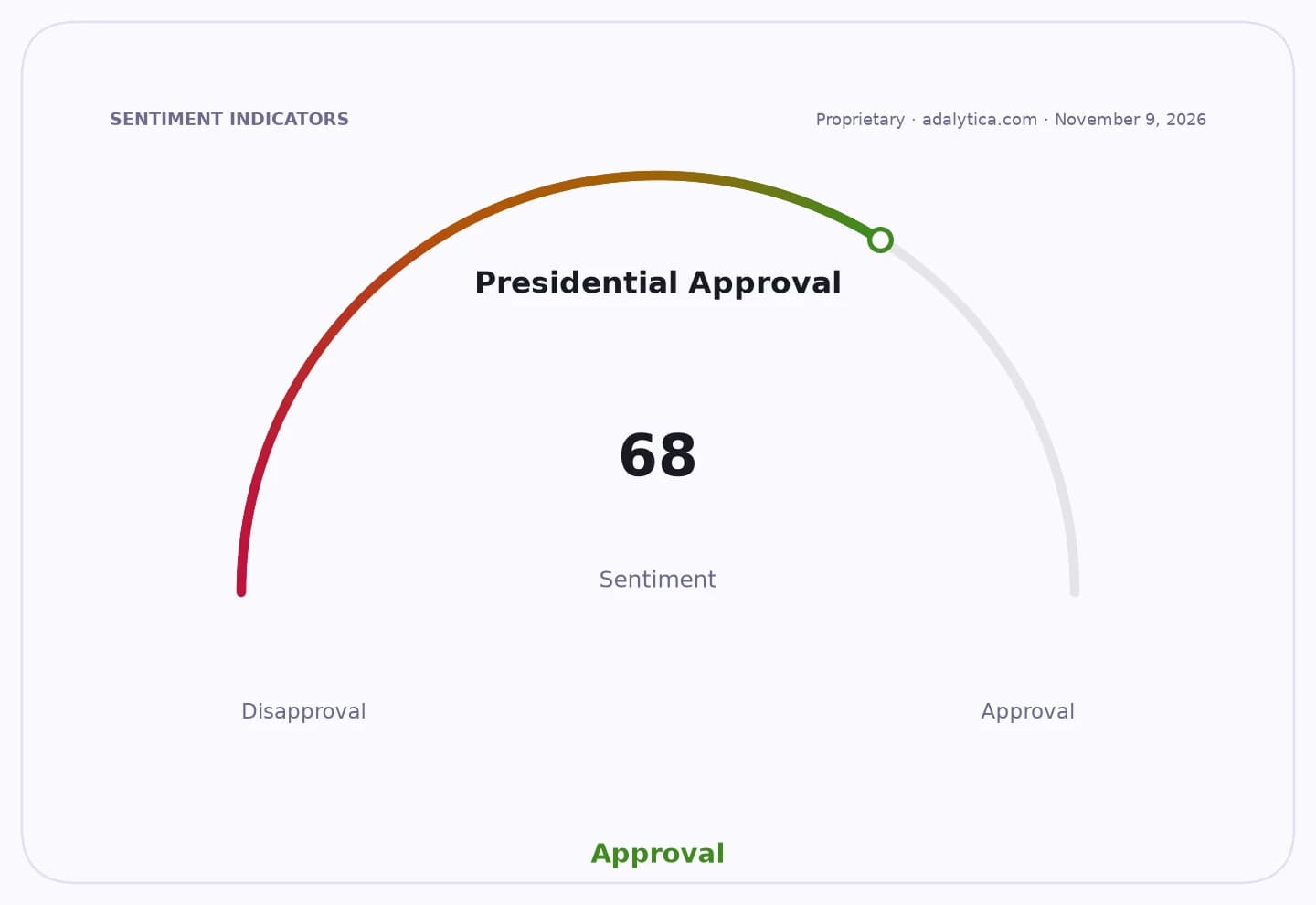
Presidential Approval
That matters economically because gridlock tends to slow the pace of change on taxes, tariffs, spending and regulation, even when one party wins a landslide midterm result. In this case, Democrats are positioned to block or delay Trump-backed measures, challenge nominations and potentially push back on tariffs and other trade policies that have already become a source of business uncertainty. But Trump still has enough leverage to shape the direction of policy, especially by forcing Congress into compromise or simply bypassing it where he can.
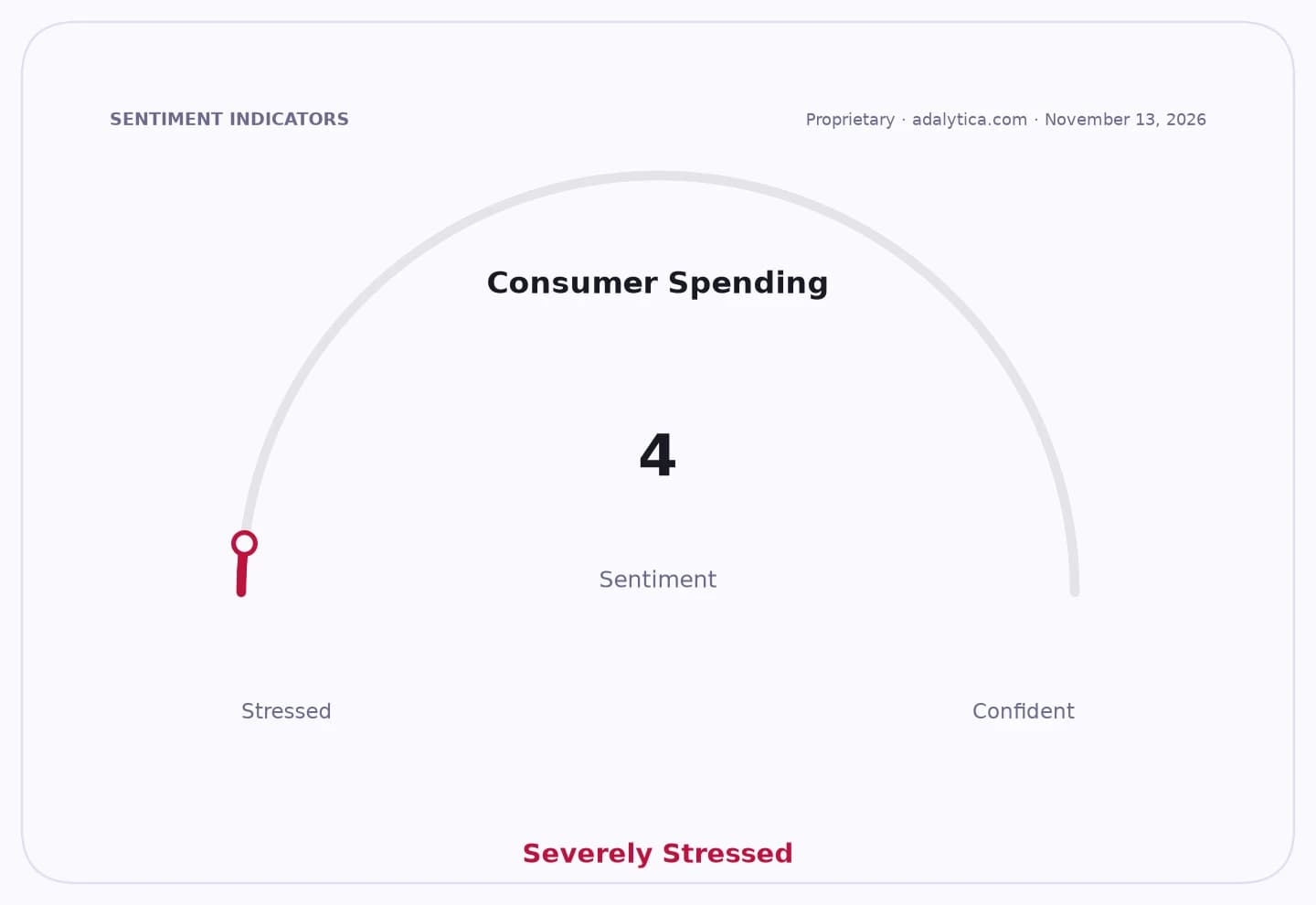
Sentiment Indicators
For investors, the message is that policy risk is lower than under a fully unified government, but not gone. The market is already treating this as a Washington stand-off rather than a regime change. The S&P 500, tracked by SPY, is still near 754, well above its 200-day moving average of 729.32, even after slipping from recent highs. Adalytica’s U.S. White House Policy Direction Sentiment remains in “Greed,” while the broader S&P 500 trade signal is in “Extreme Greed,” suggesting investors are leaning into the idea that Washington friction will be noisy but not immediately destructive to earnings.
That fits the bond and currency reaction as well. The 10-year Treasury yield has pushed to about 5.12%, while the dollar has strengthened, with UUP at 29.50 and still above both its 50-day and 200-day moving averages. That combination points to a market that expects policy uncertainty, but not a collapse in growth or credibility. Credit markets are sending a similar message: U.S. high-yield spreads remain contained around 3.14, indicating investors are not yet pricing in a recession shock from the political transition.
White House Policy Direction vs SPYadalytica.com
Explore this data interactively — full history, time series and cross-market comparisons.
The real economic significance is that Trump’s defeat in Congress weakens the odds of aggressive new fiscal or trade initiatives, but it does not remove his ability to influence the business cycle. Executive orders can still reshape agency behavior, and the veto gives him a negotiating weapon that can slow or redirect legislation. That is why sectors exposed to tariffs, healthcare policy, defense spending and regulatory enforcement will remain the most sensitive to headlines.
The opportunity, in my view, is not to bet on Washington drama, but to position for a prolonged era of policy friction. That favors companies with domestic pricing power, less tariff exposure and exposure to defense, AI infrastructure and industrial investment that can survive regardless of which party is blocking whom. It also keeps the case intact for long-duration assets tied to capex and productivity rather than to stimulus or easy policy.
The market underestimates how much value there is in simply having power concentrated in the executive branch but constrained in the legislature. That is the definition of a negotiation market, not a directional one. Expect more veto threats, more executive action and more political bargaining — and expect investors to continue paying up for businesses that can grow through gridlock rather than because of it.
| Entity | Gains | Losses |
|---|---|---|
| White House | ▲Executive leverage | ▼Legislative freedom |
| Democrats in Congress | ▲Blocking power | ▼Agenda unity |
| SPY / large-cap equities | ▲Policy predictability | ▼Tariff/spending surprises |
| Treasuries / TLT | ▲Safe-haven demand | ▼Fiscal policy clarity |