Joe Biden’s victory in the 2020 presidential election mattered most because it reset the policy outlook for the world’s biggest economy at a moment when investors were already grappling with recession, a pandemic and a violently polarized electorate.
Biden win resets U.S. policy outlook for markets

For markets, a change in the White House is never just political theater. It alters the odds on fiscal stimulus, regulation, taxes, trade and climate policy — the kinds of levers that shape corporate earnings, Treasury yields and the leadership of major sectors for years, not weeks. Biden’s win over Donald Trump after securing enough electoral votes in battleground states such as Pennsylvania, Georgia, Wisconsin and Arizona gave investors a new baseline for how Washington might approach the recovery.
Sentiment Indicators
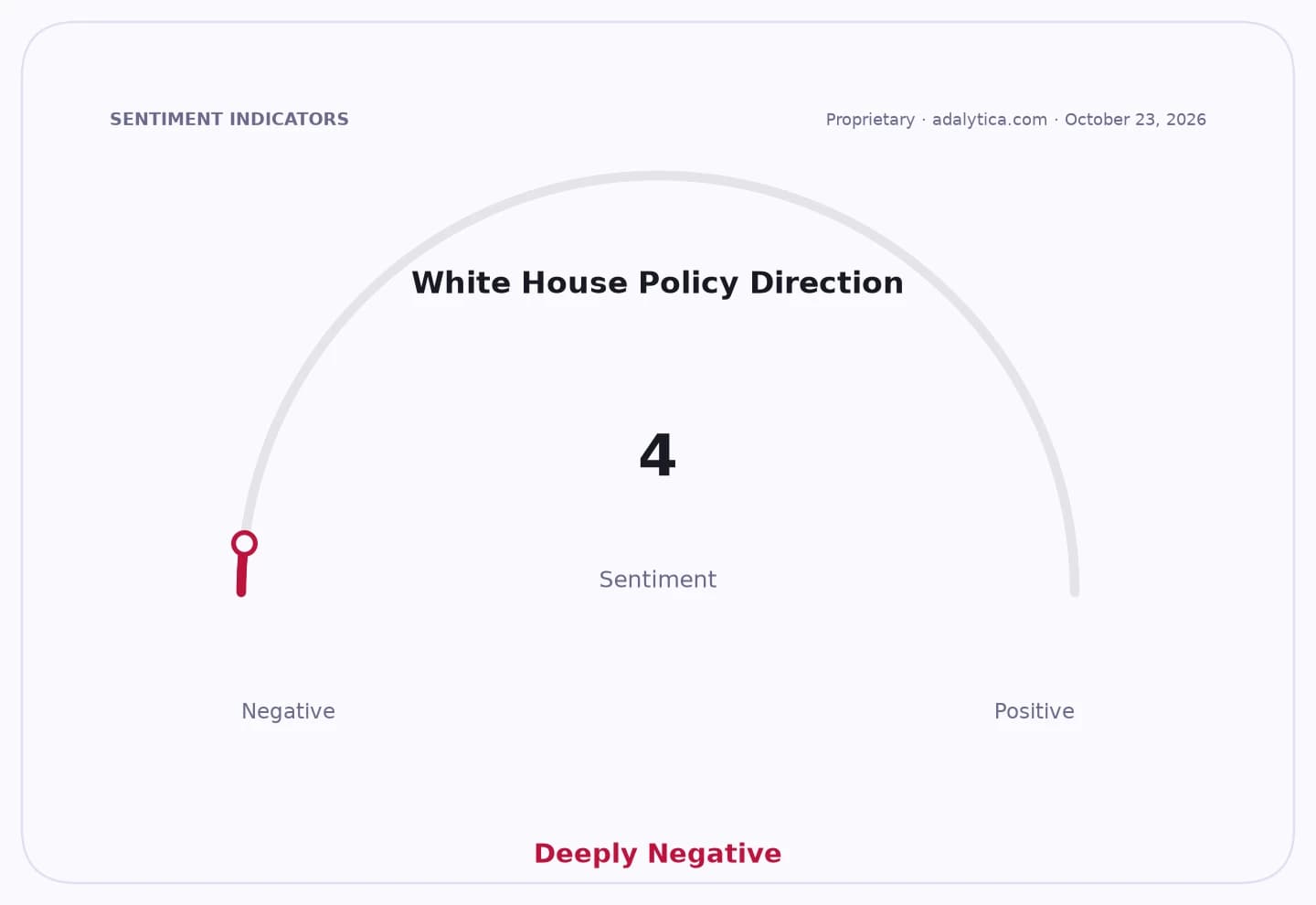
White House Policy Direction
That matters because the election arrived against the backdrop of a deep economic shock. The U.S. economy had already suffered a historic contraction in 2020, while the unemployment rate had surged to levels not seen in decades. In that kind of environment, investors are not just trading a president; they are pricing the scale and speed of government response. A more predictable policy path can support risk assets, but it can also bring sharper scrutiny for industries that benefited from lighter regulation under Trump.
The message in markets is clear: investors were not waiting for a winner just to settle political uncertainty, they were waiting for clarity on what comes next. The S&P 500, tracked by SPY, has since recovered strongly from its pandemic lows and remains well above its long-term trend, even as the 50-day moving average and RSI readings point to a market that has had to digest periodic stretches of overbought enthusiasm and consolidation. That is exactly what happens when a new administration collides with an economy trying to restart.
White House Policy Direction — 30-day sentimentadalytica.com
Explore this data interactively — full history, time series and cross-market comparisons.

The sector winners and losers also fit the Biden narrative. Health care, represented here by XLV, has held up far better than broad-market volatility would suggest, reflecting the appeal of large, defensive cash-generating businesses in a slower-growth, policy-sensitive environment. At the same time, clean-energy exposure through ICLN shows how a Democratic victory can feed a multiyear investment theme tied to climate spending, regulation and infrastructure. That is the kind of policy shift long-term investors should watch closely, because it can reshape capital allocation across utilities, renewables, industrials and electric-vehicle supply chains.
Bond and currency markets also tell the same story. The 10-year Treasury yield was already pinned near historic lows in 2020, underscoring how much support the economy needed and how sensitive financial conditions were to Washington’s response. Meanwhile, the U.S. dollar’s recent “extreme greed” reading in Adalytica’s trade signals suggests investors continue to view the currency as a favored haven when policy and growth expectations move around. Elections can change that mix quickly if they alter deficit expectations, Fed pressure or the pace of global capital flows.
For long-term investors, the key takeaway is not to treat the Biden victory as a one-day event. It is a policy regime change that can influence earnings power, valuations and sector leadership over multiple years. If you own a diversified portfolio, this is the kind of shift that rewards patience: more emphasis on quality balance sheets, more attention to regulation-sensitive industries, and more room for themes like infrastructure, health care and decarbonization to compound.
The bigger lesson is simple. Presidential elections rarely move every stock equally, but they often decide which trends get the wind at their back. Biden’s win gave markets a new map, and investors who think in years, not days, should use that map to reassess where the durable opportunities may be.
| Entity | Gains | Losses |
|---|---|---|
| Biden administration | ▲Policy mandate | ▼Trump-era agenda |
| Health care stocks | ▲Defensive positioning | ▼Regulatory uncertainty |
| Clean-energy ETFs | ▲Climate-policy tailwind | ▼Fossil-fuel favoritism |
| Treasury bond investors | ▲Safe-haven demand | ▼Higher growth-inflation risk |