JD Vance has emerged as the clear political winner from the Republican midterm defeat, and that matters because the election turned the Iran war into a direct constraint on Donald Trump’s room to maneuver. With Trump now a lame duck and Vance positioning himself against further escalation, the fight over whether the US resumes military action is shifting from battlefield politics to a test of congressional power, party discipline and market exposure to Middle East supply risk.
Oil, gold, yields react to Iran war risk
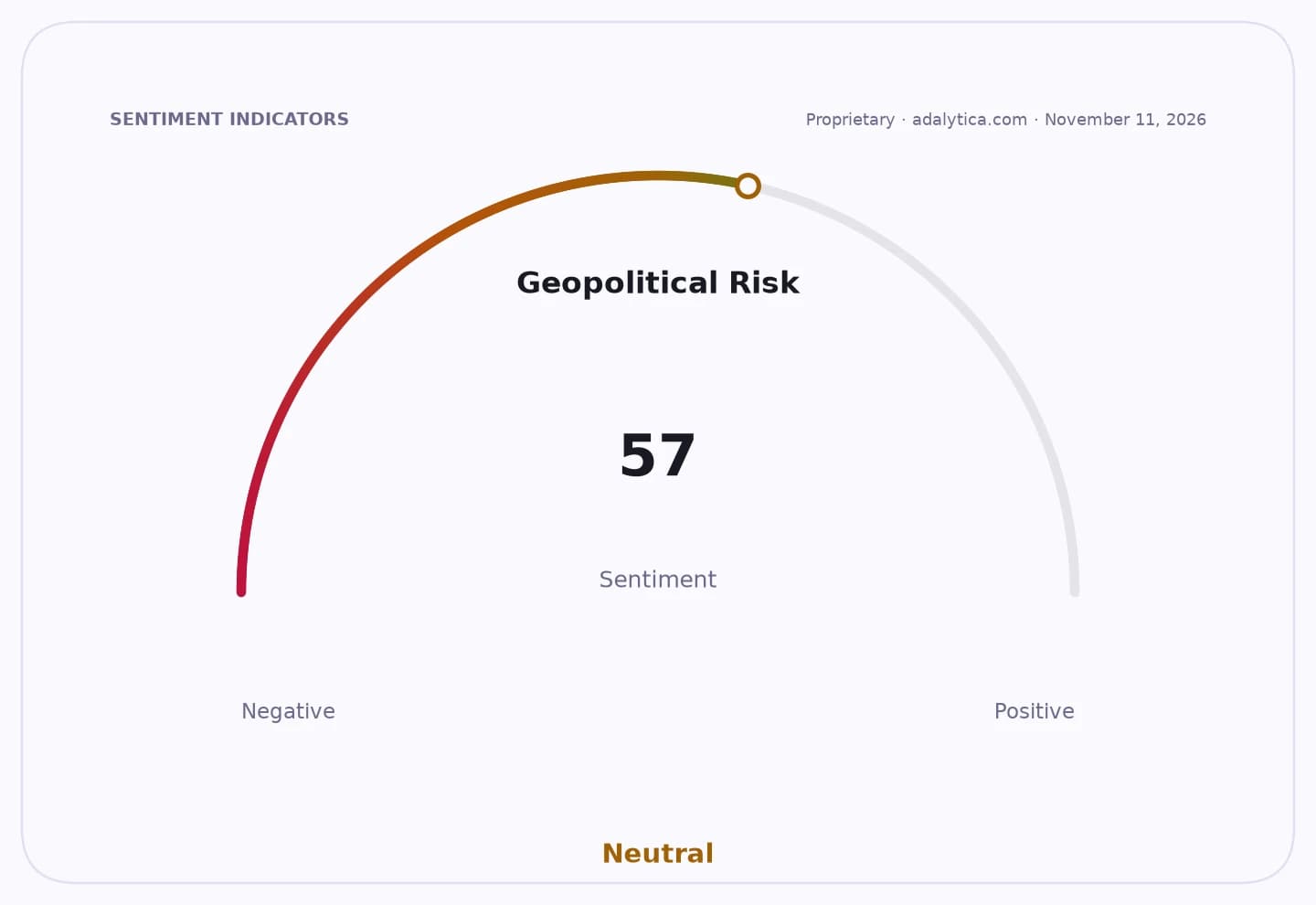
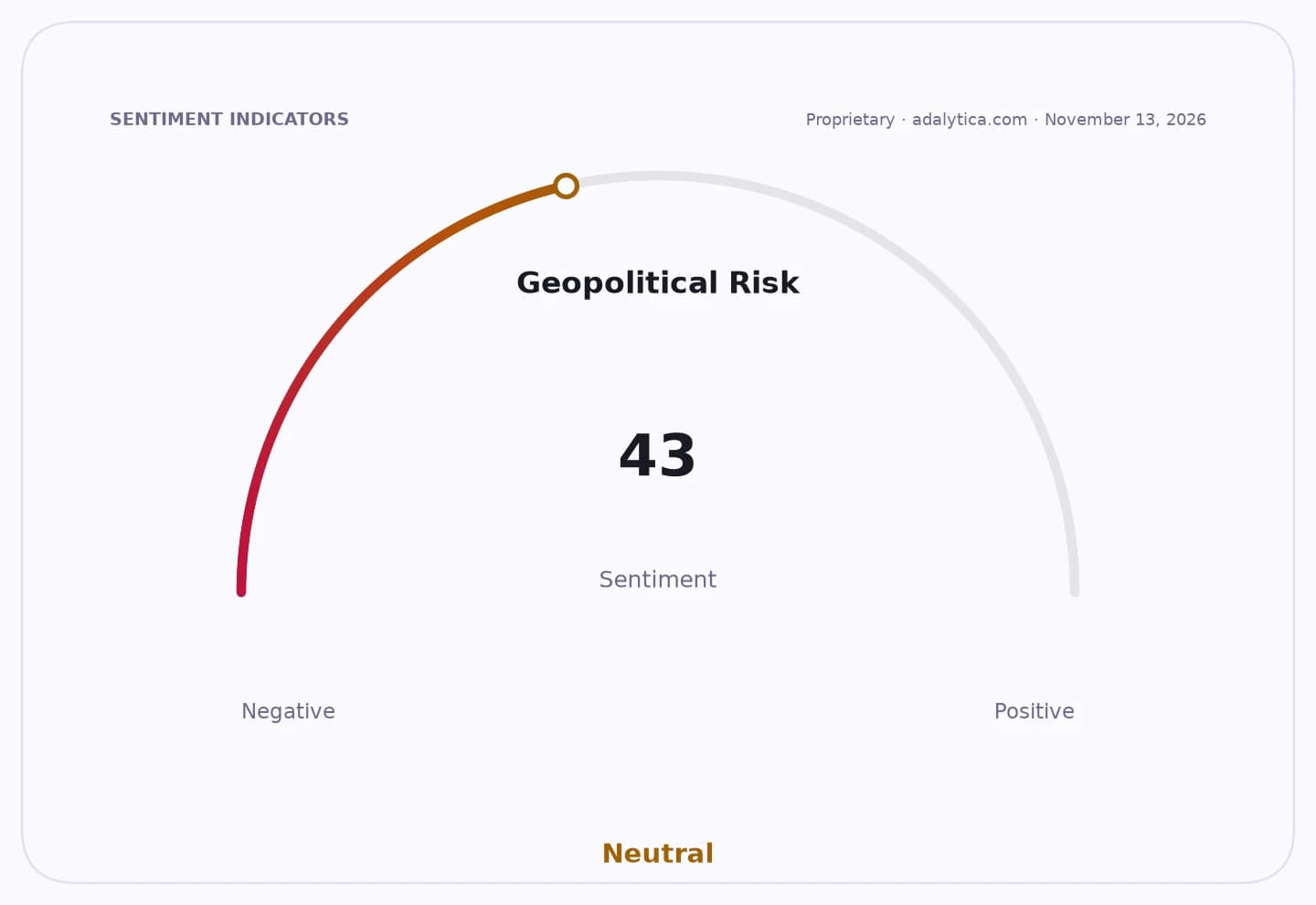
Geopolitical Risk
The economic stakes are immediate. Energy prices are the first channel through which a wider war with Iran feeds into the US economy, and they are already doing damage: higher fuel costs were a central part of the voter backlash described in the election coverage, while market data shows crude has been volatile and elevated even after the latest pullback. USO, the oil ETF, is still trading well above its 50-day and 200-day moving averages despite recent weakness, a sign the market continues to price geopolitical risk into energy assets.
Sentiment Indicators

That tension matters for inflation, consumer demand and the Federal Reserve outlook. The 10-year Treasury yield has climbed to 5.12%, up sharply from earlier levels, while credit spreads remain contained but not complacent, with the ICE BofA high-yield spread near 3.20 percentage points. In other words, investors are not pricing a financial crisis, but they are demanding more compensation for macro uncertainty. If the Iran conflict escalates again, the path would likely run through higher gasoline prices, firmer inflation expectations and a harder landing for rate-sensitive assets.
The political narrative is straightforward. Vance has linked the party’s poor showing to “the war,” and his ability to say so openly after the election gives him leverage heading into 2028. Trump can still move quickly as commander in chief, but the new Congress may be better placed to resist if a vice president and enough Republicans break with him. That creates a rare split-screen for investors: near-term policy risk remains highly dependent on Trump, while medium-term policy direction may start tilting toward de-escalation.
Geopolitical Risk — 30-day sentimentadalytica.com
Explore this data interactively — full history, time series and cross-market comparisons.
Markets are already reflecting the same divide between fear and normalization. Adalytica’s Global Stability Sentiment remains in neutral territory, but awareness is at “Extreme Fear,” suggesting investors and policymakers are highly attuned to the risk of renewed conflict even if broad sentiment has stabilized. The US dollar trade signal is also flashing “Extreme Greed,” consistent with a flight to safety, while gold has eased from earlier highs but is still well above levels seen before the latest Middle East escalation. That combination points to a market that has not fully priced peace, only a temporary pause.
For investors, the key question is whether this becomes a genuine policy inflection or just a political pause before another strike. A congressional move to restrict funding would lower the risk premium across oil, gold and defense supply chains, while a renewed attack on Iran before January would likely reverse that quickly. Until the constitutional and political fight is resolved, war premium remains embedded in energy, inflation and risk assets.
| Entity | Gains | Losses |
|---|---|---|
| JD Vance | ▲2028 positioning | ▼Trump loyalists |
| Donald Trump | ▲Short-term war powers | ▼Political capital |
| Oil producers | ▲Higher geopolitical premium | ▼Consumers |
| Gold holders | ▲Safe-haven demand | ▼Risk assets |