The euro area’s retail engine slowed in September, with sales rising just 0.4% from a year earlier, a step down from August’s 1.3% pace and below the 0.6% economists had expected.
Euro area retail sales rise 0.4% in September

That matters because consumer spending remains one of the cleanest reads on how willing households are to spend after a long stretch of inflation, higher borrowing costs and policy tightening. When retail volumes cool, it usually means consumers are becoming more selective, delaying bigger purchases or trading down to essentials. For the European Union, that points to an economy still growing, but not with much momentum from the shopper.
Sentiment Indicators
Investors should care because weak retail demand can ripple well beyond supermarkets and clothing chains. It affects everything from consumer-discretionary earnings to industrial orders, logistics volumes and the broader earnings outlook for European listed companies. A softer spending backdrop also makes it harder for the European Central Bank to argue that demand is running hot enough to keep inflation pressures elevated.
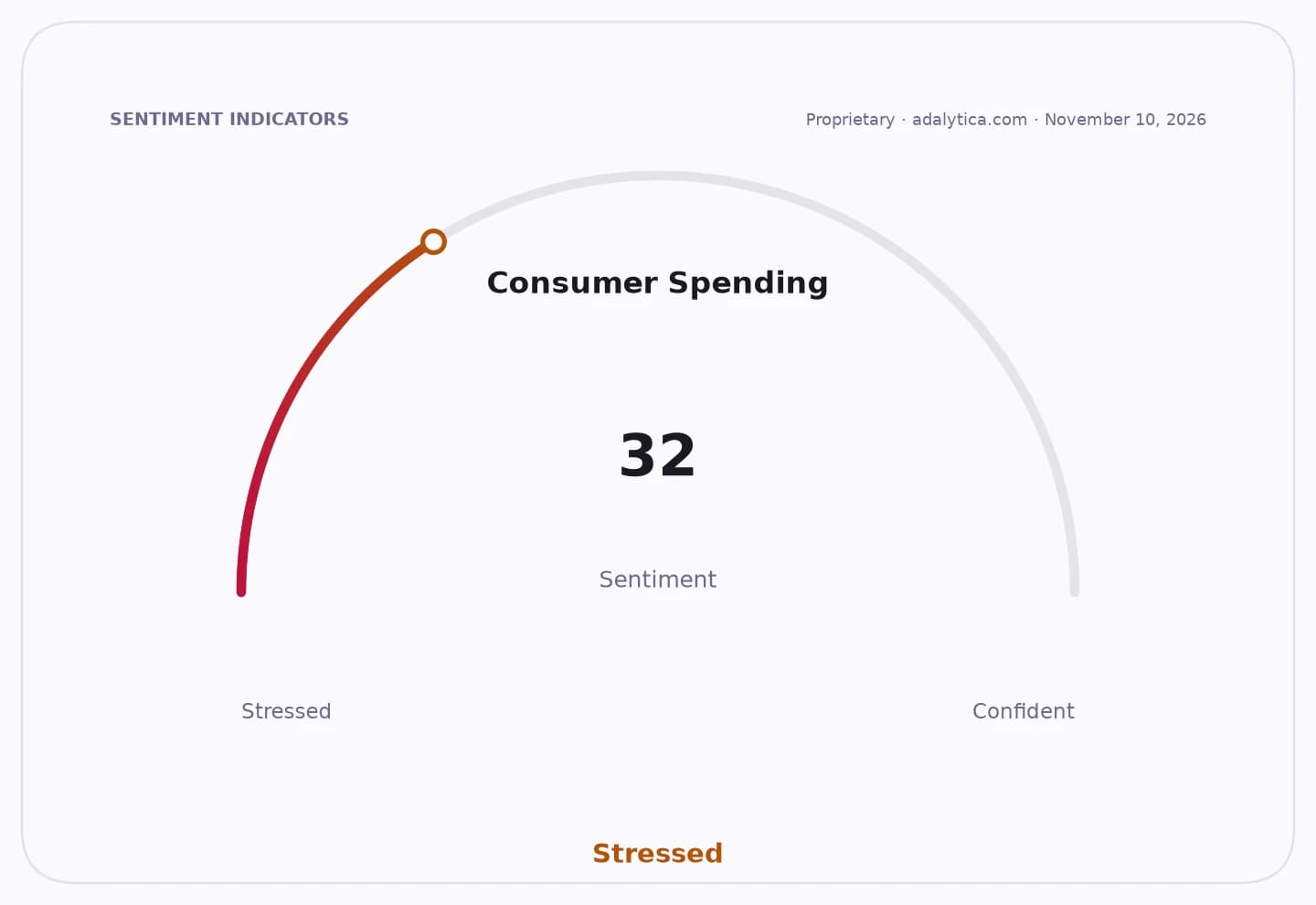
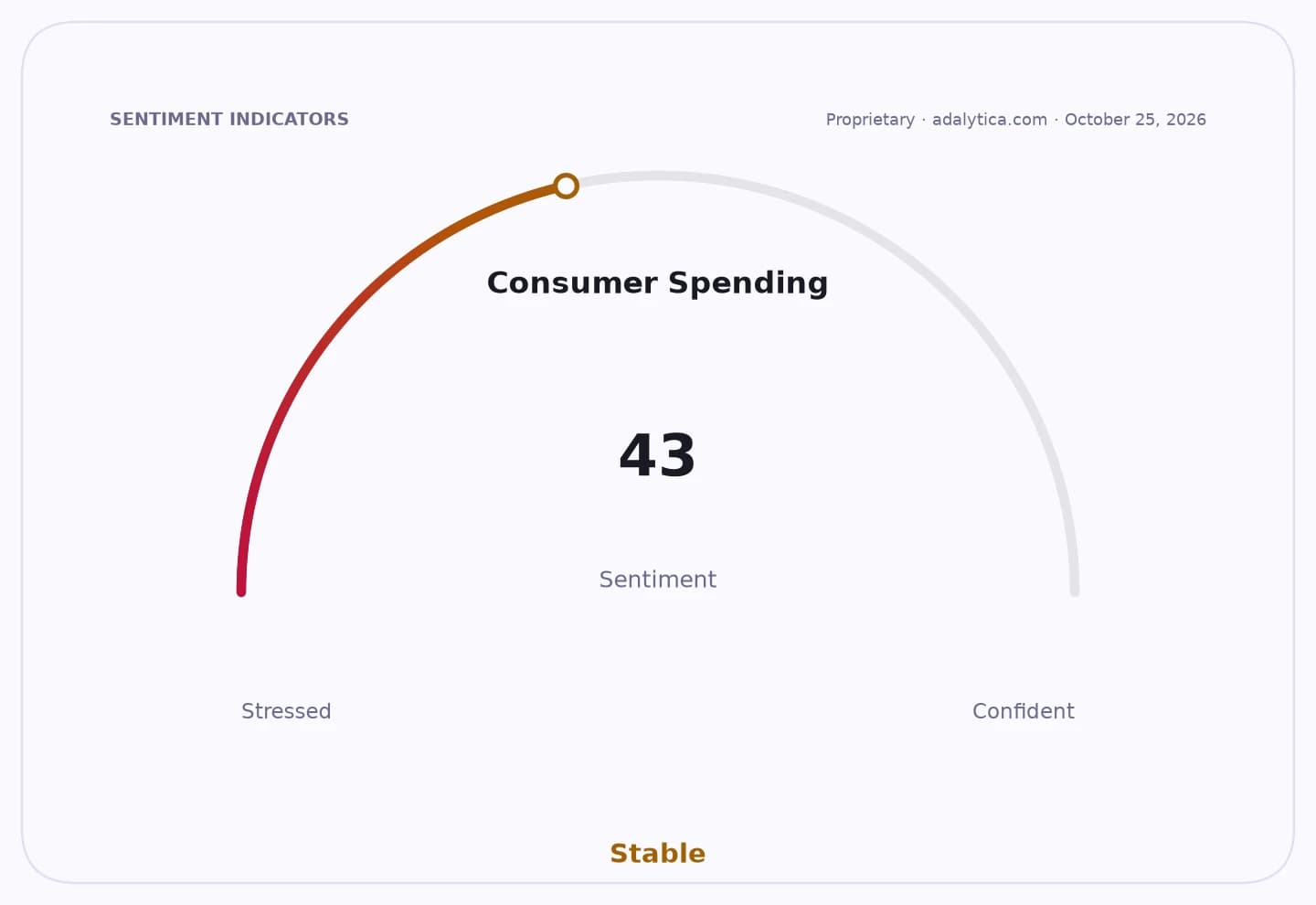
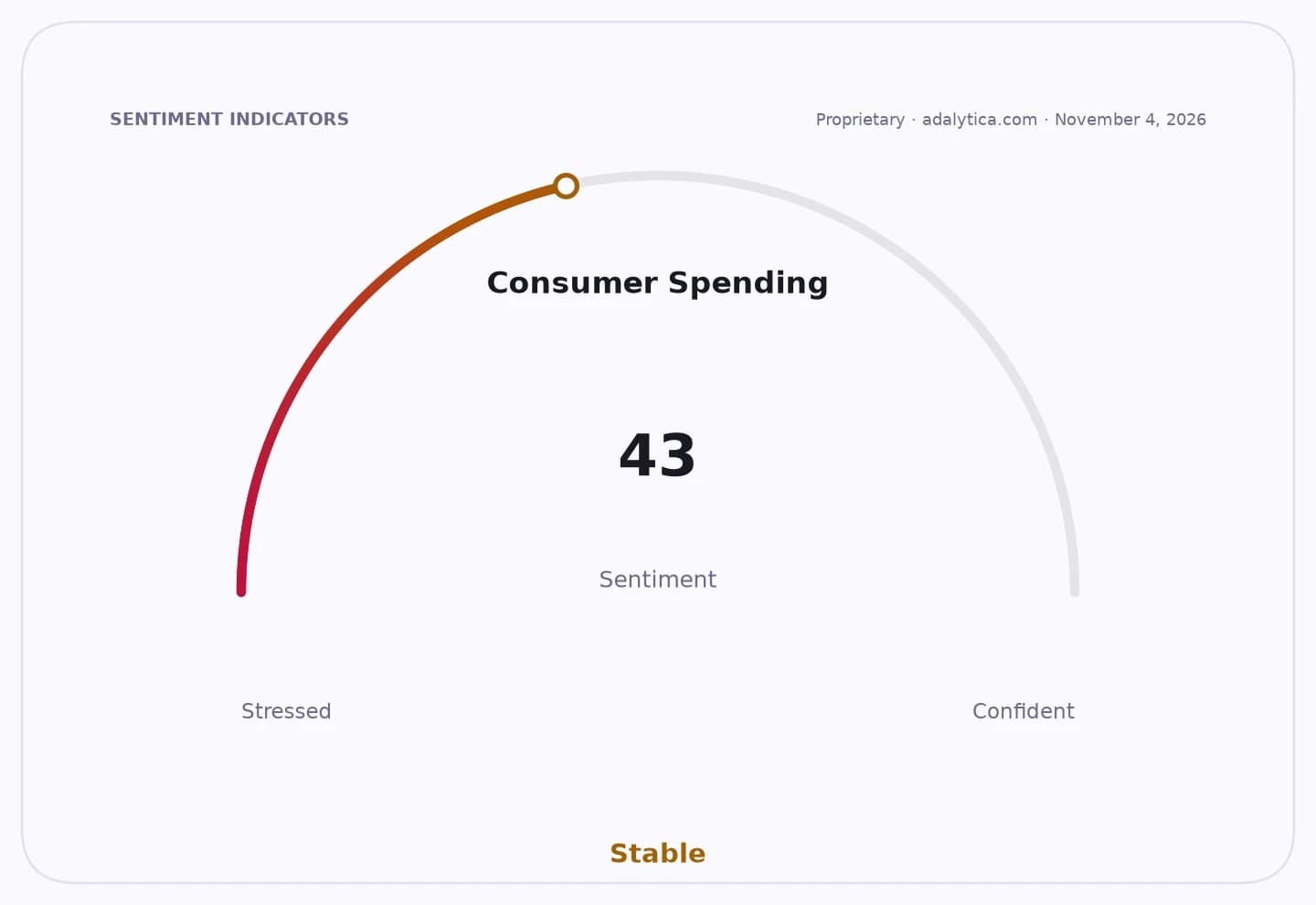
The reading fits with a picture of fragile but not collapsing demand. Adalytica’s Consumer Spending Sentiment gauge sits in neutral territory at 54, after swinging sharply over recent months, while its Consumer Confidence Recession Sentiment measure is also neutral at 43. In plain English, consumers are not panicking, but they are not spending with much conviction either.
That is an important setup for long-term investors. A subdued consumer does not automatically mean recession, but it does tend to favor companies with pricing power, recurring revenue and resilient cash flow over businesses that depend on big-ticket discretionary spending. It also reinforces the case for patience: in a slow-growth environment, strong franchises often compound quietly while cyclical names wait for the next upswing.
For now, September’s retail number says the European consumer is still standing, just not sprinting. That keeps the spotlight on wage growth, interest-rate expectations and the next few months of holiday spending for clues on whether the slowdown is temporary or the start of a longer period of caution. For investors, it is worth watching rather than chasing.
| Entity | Gains | Losses |
|---|---|---|
| Defensive consumer staples | ▲Steady demand | ▼Limited upside from weak spending |
| Discretionary retailers | ▲Lower inventory risk | ▼Softer sales growth |
| ECB | ▲More room to ease caution | ▼Less evidence of demand strength |
| Savers/households | ▲More purchasing discipline | ▼Fewer signs of broad spending momentum |