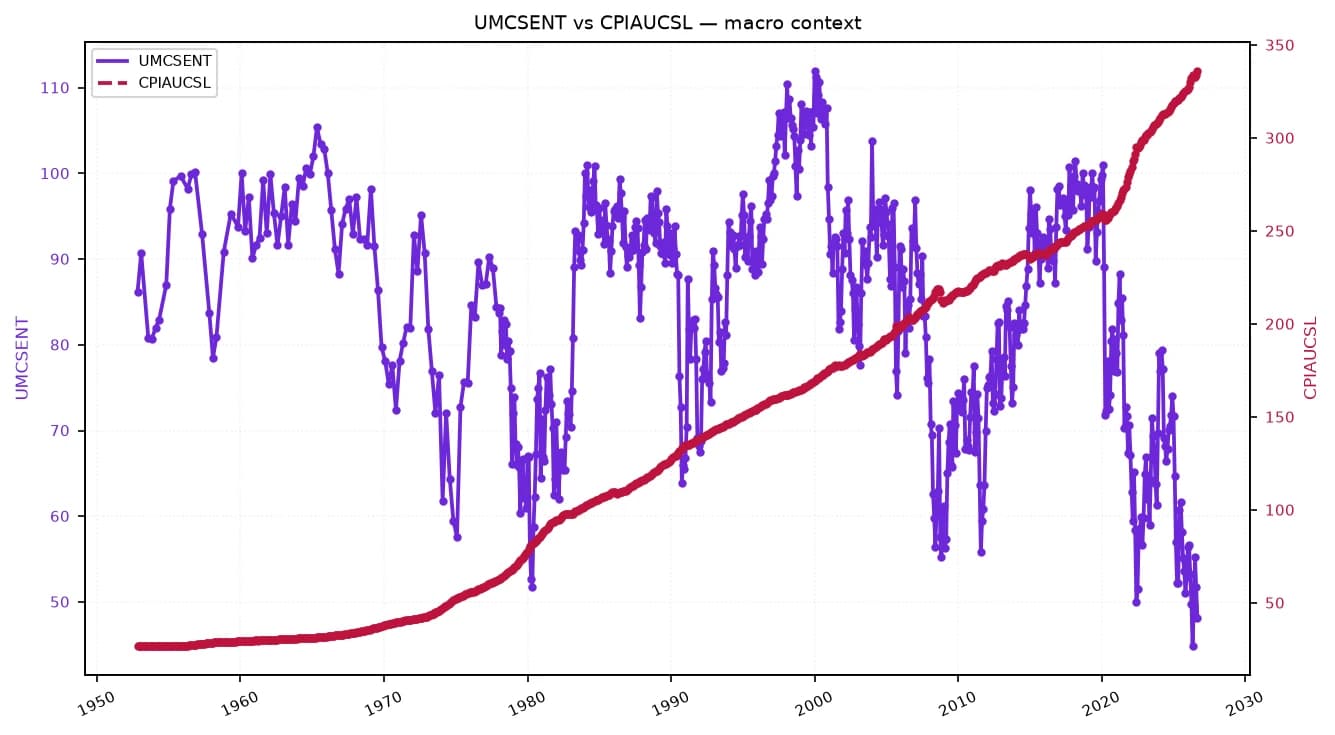
U.S. consumer sentiment improved in November, with the University of Michigan index rising to 51 from 48 in September and beating forecasts, but the reading still leaves households deeply cautious heading into the holiday spending season.
U.S. Consumer Sentiment Rises to 51 in November
The modest rebound matters because consumer confidence is one of the clearest gauges of whether American households are willing to keep spending, borrow and absorb higher prices. At 51, the index remains far below levels historically associated with healthy discretionary demand, suggesting shoppers are still sensitive to inflation, interest rates and labor-market uncertainty.
Sentiment Indicators
That caution has direct implications for growth. Consumer spending drives roughly two-thirds of U.S. economic activity, so even a small shift in sentiment can affect retail sales, travel, dining and other discretionary categories if households choose to delay purchases or trade down to cheaper goods.
For investors, the data is a mixed signal. A better-than-expected confidence print can support cyclical stocks and broader risk appetite, but a reading this low also argues for restraint on earnings expectations in consumer-facing sectors, especially as retailers head into the critical year-end period. The SPDR S&P Retail ETF, XRT, has been trading above both its 50-day and 200-day moving averages, while momentum readings such as RSI and MACD suggest the sector has recovered from earlier weakness, but sentiment remains fragile under the surface.
UMCSENT vs RSXFS — macro contextadalytica.com
Explore this data interactively — full history, time series and cross-market comparisons.
The backdrop is still inflationary. The consumer price index was up 0.35% in October and continues to leave households feeling squeezed, even as inflation has eased from peak levels. That helps explain why confidence can improve from a recent low without signaling a full demand rebound.
The next test is whether the November confidence gain translates into actual spending over the holidays and whether inflation moderates further. If not, retailers, travel operators and other consumer names may face a more defensive buyer than markets are currently pricing in.
| Entity | Gains | Losses |
|---|---|---|
| U.S. retailers | ▲Slightly better holiday demand outlook | ▼Persistent price sensitivity |
| Consumer discretionary stocks | ▲Support from improved sentiment | ▼Risk of cautious spending |
| U.S. households | ▲Some relief from confidence rebound | ▼Still squeezed by inflation |
| Short sellers / defensives | ▲Less immediate panic in growth names | ▼Easier case for cyclical rotation |