U.S. households turned a bit less pessimistic in November as inflation expectations cooled, giving consumers and investors a modest but important signal that price anxiety is easing even after months of stubborn cost pressures.
U.S. Consumer Sentiment Rises as Inflation Expectations Ease

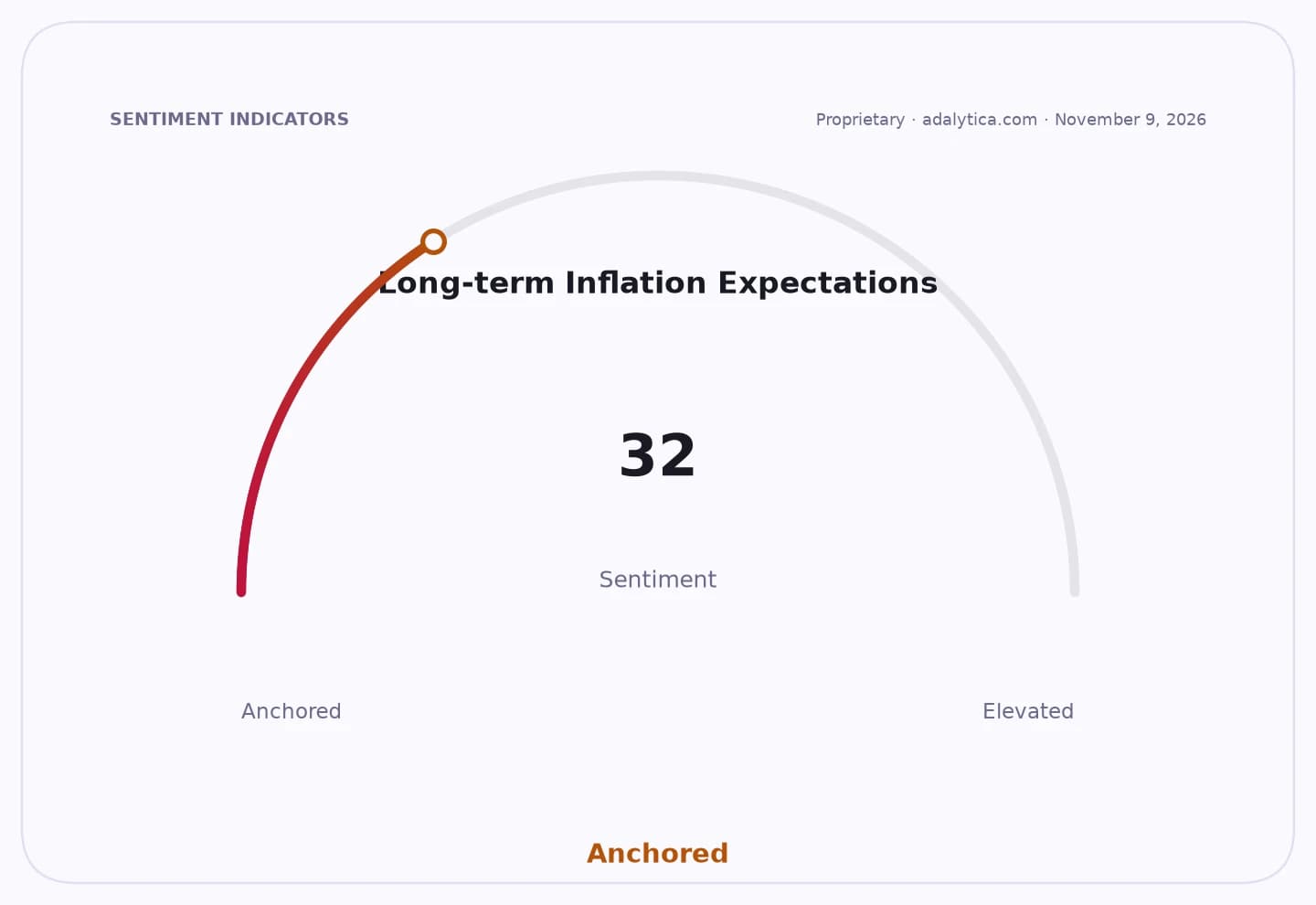
The University of Michigan’s preliminary consumer sentiment index rose to 51 from 48 in October, better than expected and its first meaningful improvement in weeks. More importantly for markets, year-ahead inflation expectations fell to 4.3% from 4.7%, while long-run expectations edged down to 3.4% from 3.5%. That combination matters because it suggests the public is not yet losing faith in the Federal Reserve’s ability to tame inflation, a key ingredient in keeping wage demands, pricing behavior and bond yields from spiraling higher.
Sentiment Indicators
5-Year Breakevens
The bounce in sentiment is not a clean victory for the economy. The index remains 10% below its February level, and the survey showed deep unease over the cost of living, with 57% of respondents spontaneously saying high prices have eroded their living standards — the highest share since May. That is a reminder that consumer behavior is still constrained, especially for lower- and middle-wealth households. The survey also found sentiment fell 5% among consumers with the largest stock portfolios after a turbulent stretch in equities, underscoring how financial-market volatility can bleed into household confidence.
For investors, the key message is that inflation psychology is becoming less dangerous at the margin, even as actual price pressures remain elevated. That is the kind of setup that can support duration assets if the trend persists: Treasury yields, rate-sensitive equities and high-quality growth names all benefit when inflation expectations ease faster than realized inflation. The latest survey also gives the Fed some breathing room, though not a green light to relax. Policymakers will care less about one month’s sentiment rebound than about whether expectations continue to drift lower in the face of still-firm consumer prices.
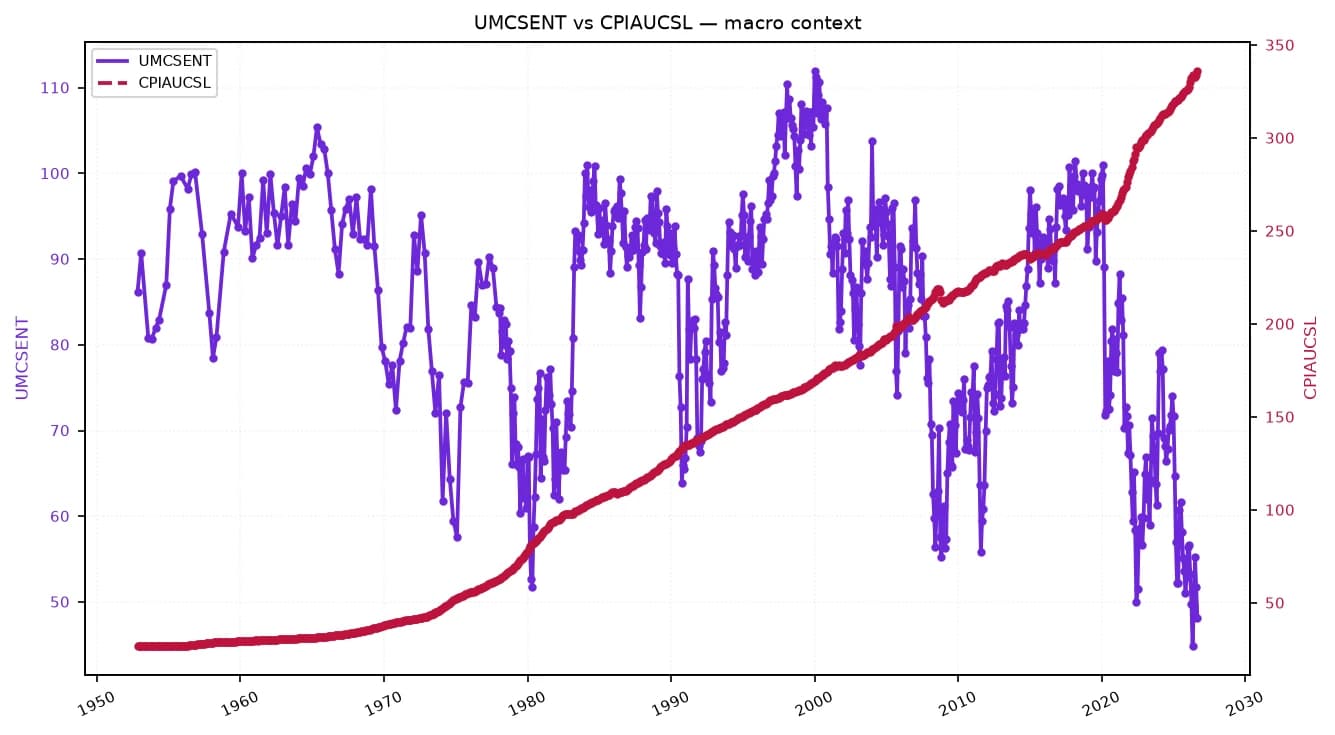
UMCSENT vs CPIAUCSL — macro contextadalytica.com
Explore this data interactively — full history, time series and cross-market comparisons.

That tension is the real narrative here. Consumers are feeling a little better, but they are not suddenly comfortable. Inflation has not disappeared; it is just becoming less frightening. If that continues, the market’s next trade is not a broad risk-on snapback, but a more selective rotation into assets that gain from lower real-rate pressure and a less hostile inflation backdrop. In our view, that makes quality bonds, profitable technology and defensive consumer names more attractive than the market may currently appreciate.
| Entity | Gains | Losses |
|---|---|---|
| U.S. consumers | ▲Slightly stronger confidence | ▼Still-battered purchasing power |
| Treasury bulls | ▲Lower inflation expectations | ▼Higher-for-longer rate fears |
| Federal Reserve | ▲More anchored expectations | ▼Less urgency to ease policy |
| Rate-sensitive stocks | ▲Easier valuation support | ▼Inflation-protected assets |