The South China Sea has remained broadly stable despite rising regional tensions, and that matters because a calmer sea lowers the odds of a shipping disruption that could hit Asian trade, freight rates and energy flows.
South China Sea stays stable as talks continue
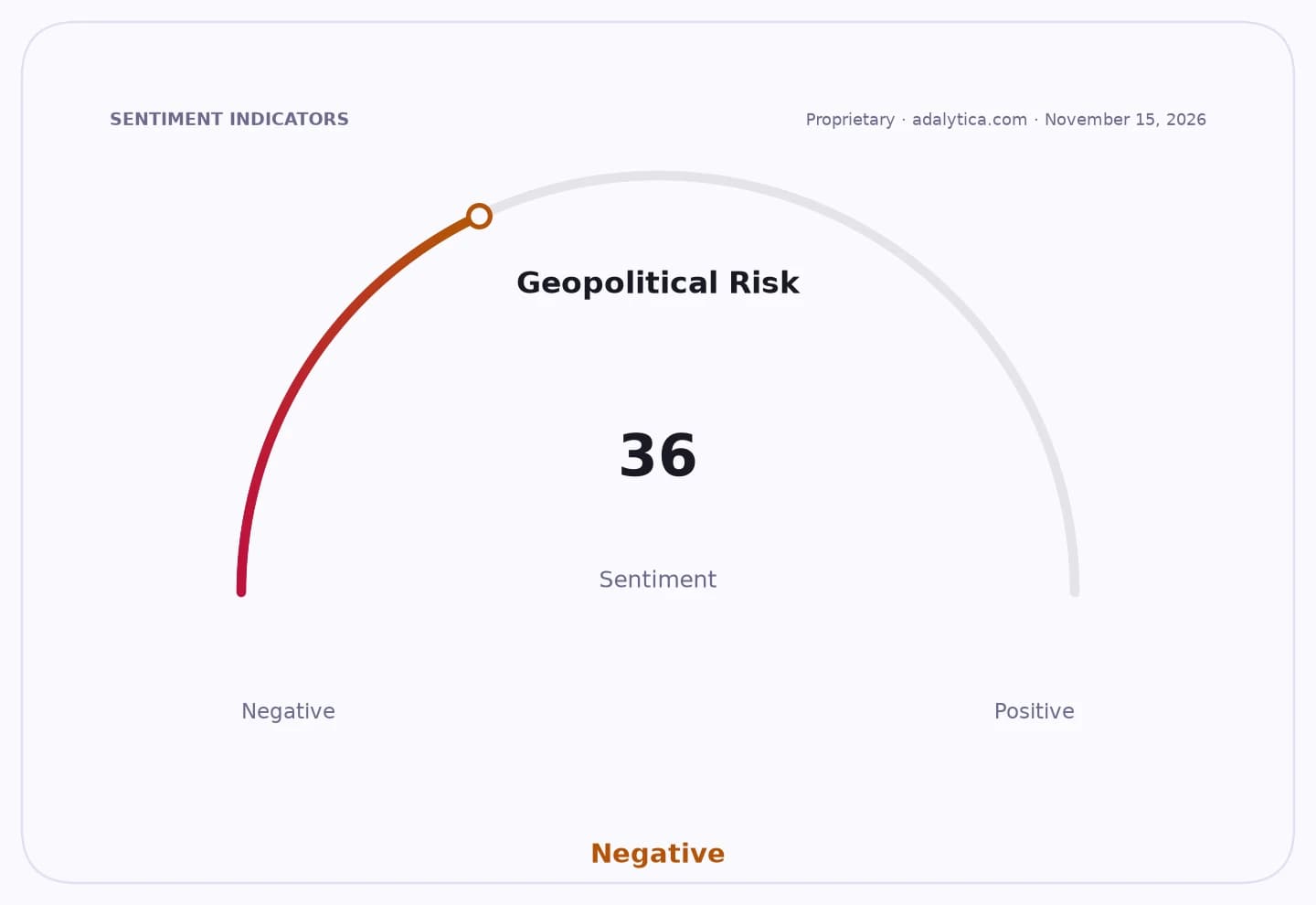
Geopolitical Risk
A Chinese maritime research center said in a report on global maritime security that the South China Sea stayed “generally stable and manageable” over 2025-26, even as the area remains one of the world’s most sensitive flashpoints. The report said continued consultations between China and ASEAN on a South China Sea code of conduct, alongside more practical cooperation, could help contain disputes and preserve order in key sea lanes.
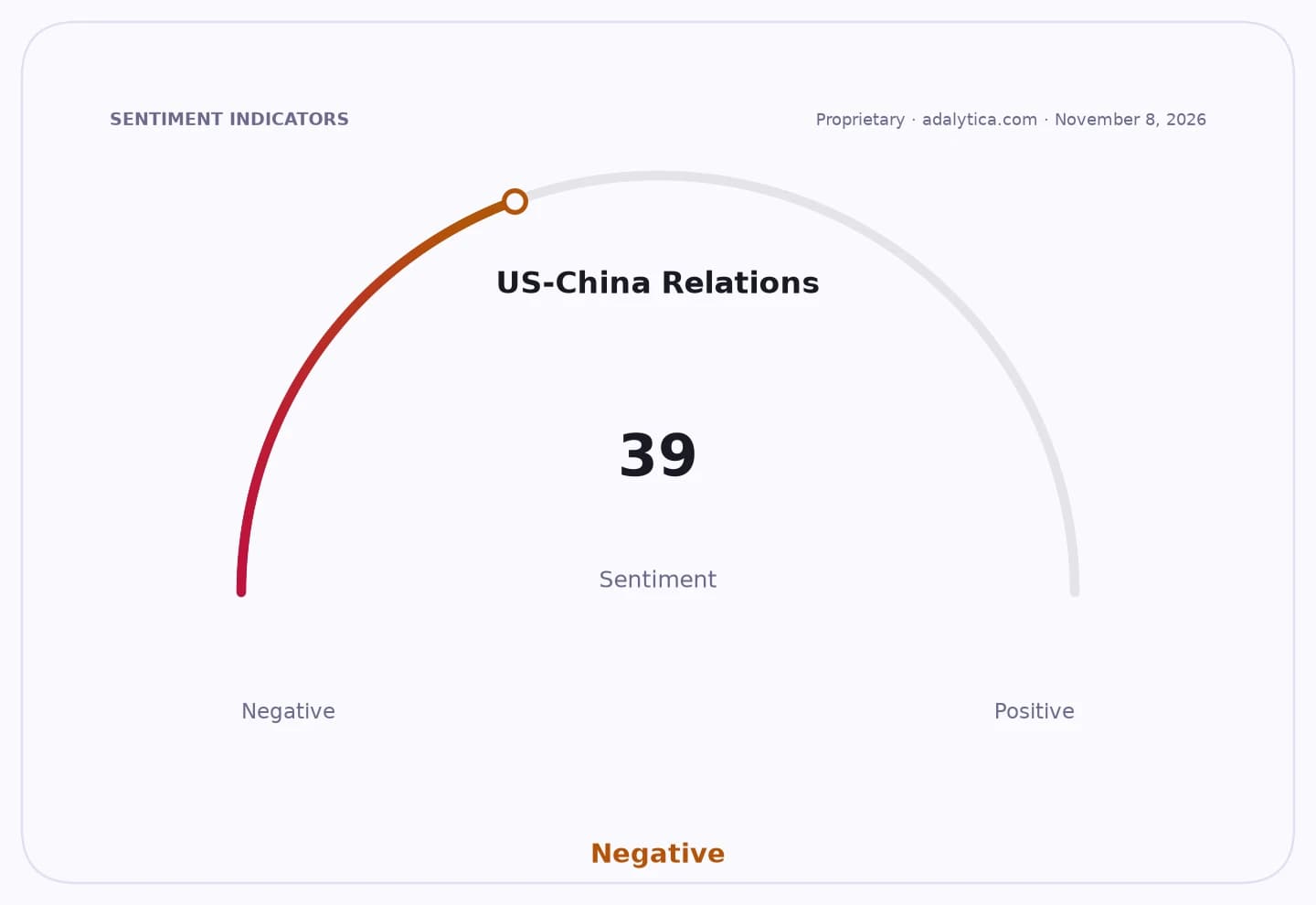
Sentiment Indicators
That is the market-relevant takeaway: the region is tense, but not yet tipping into a shock that would force a broad rerating of shipping risk. For investors, that means the premium on disruption is still there, but it has not become the kind of acute event that would justify panic buying across maritime defense, energy or freight names. Instead, the more durable opportunity lies in the steady buildout of capacity, surveillance and regional security partnerships that follow from prolonged but contained rivalry.
The report also underscores the real source of instability: not just naval deployments, but coast guard actions, legal maneuvers, administrative steps and patrols by rival claimants. Beijing continues to press its claims through baseline definitions and natural reserve designations, while rejecting the 2016 arbitration ruling. That combination keeps the strategic temperature elevated even if day-to-day conditions remain manageable.
Adalytica’s Global Stability Sentiment has fallen to 36, with awareness at an “Extreme Fear” reading, while its US–China relations gauge sits at just 4, also in “Extreme Fear.” That gap tells the story: the market is highly alert to the geopolitical risk, but the actual South China Sea backdrop has not yet broken into a crisis. The dislocation between fear and realized disruption is where investors should focus.
The investable angle is straightforward. Shipping names with exposure to Asia trade routes can benefit from stability, but any renewed flare-up would likely lift rates, insurance costs and reroute demand quickly. Defense and maritime surveillance suppliers remain the longer-dated beneficiaries because even a stable South China Sea still requires patrols, monitoring and fleet modernization. The clearest loser would be importers and exporters that depend on frictionless passage through the region, especially if rhetoric hardens into actual restrictions.
For now, the key is that diplomacy is still working hard enough to keep the system from breaking. With most of the code-of-conduct framework reportedly completed, the next catalyst is whether China and ASEAN can close the remaining gaps without a fresh confrontation. If they do, the market may be underestimating how long this uneasy stability can persist — and how selectively it can reward the companies that supply it.
| Entity | Gains | Losses |
|---|---|---|
| China-ASEAN negotiators | ▲More room for compromise | ▼Hardliners seeking escalation |
| Global shippers | ▲Lower disruption risk | ▼Disruption hedgers |
| Maritime security contractors | ▲Steady demand for patrols/monitoring | ▼None from calm alone |
| Importers/exporters in Asia | ▲Fewer route shocks | ▼Higher-risk logistics operators |