Donald Trump’s visit to China is aimed at lowering the temperature in one of the world’s most important bilateral relationships, but the summit is more likely to produce tactical deals than any lasting shift in U.S.-China rivalry.
Trump China visit may ease trade tensions
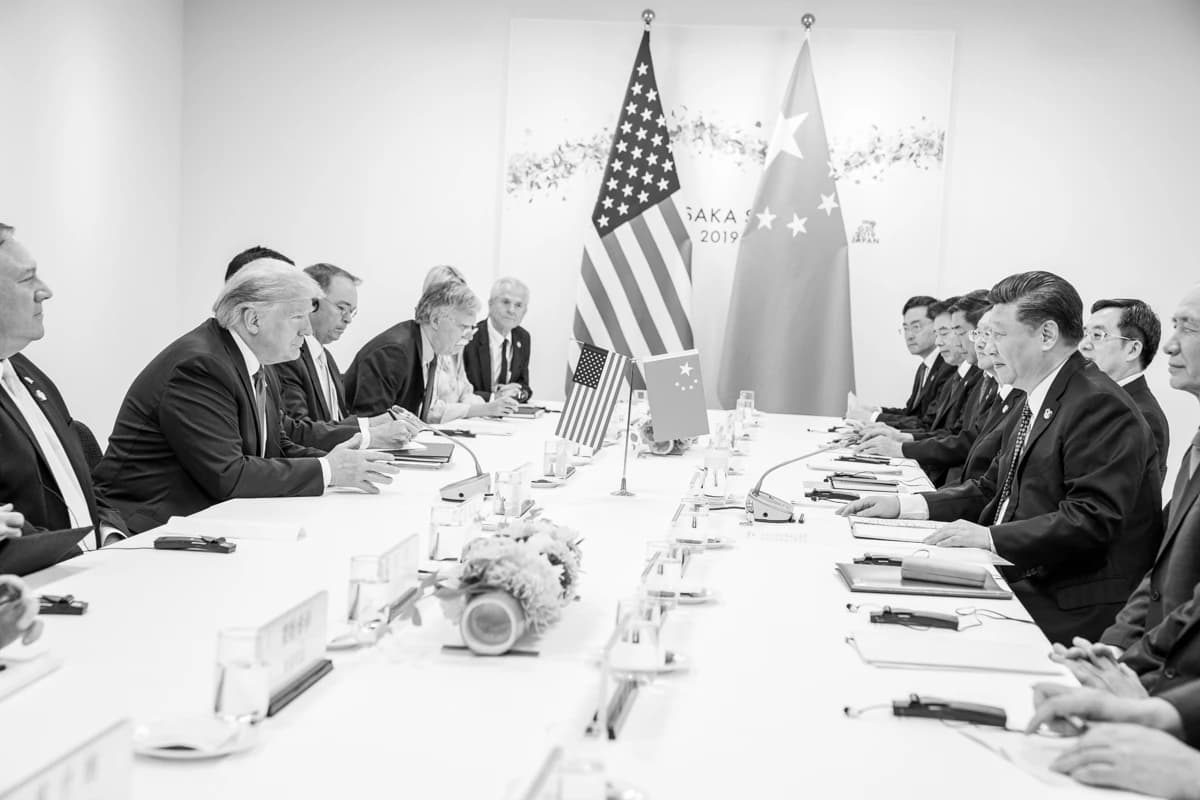
That matters economically because even a modest easing in tensions can affect tariffs, export controls, energy flows and agricultural trade, all of which ripple through supply chains, corporate margins and risk appetite across global markets. The talks in Beijing, set for May 14-15, come as both sides try to preserve channels of communication while avoiding a deeper rupture that would raise costs for companies and consumers on both sides of the Pacific.
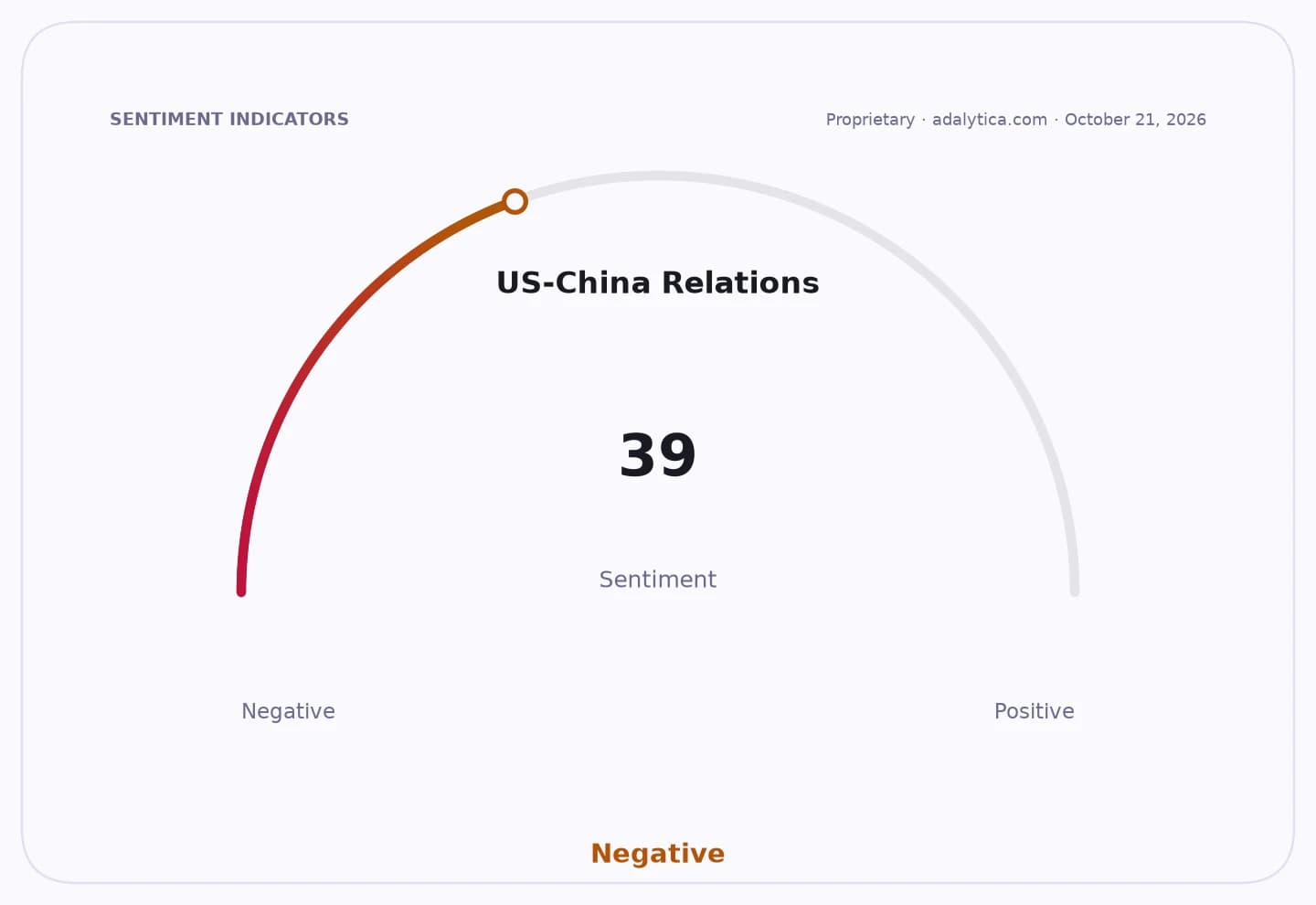
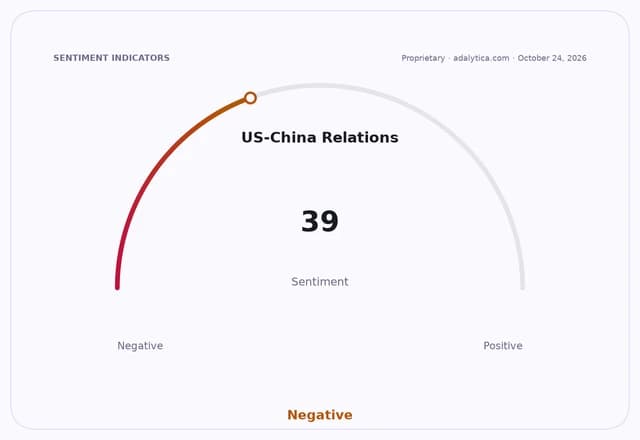
Sentiment IndicatorsⓘProprietary · adalytica.com · October 24, 2026
This is a snapshot — live sentiment, awareness and momentum for 130+ markets update continuously in the dashboard.Open AlphaPulse
The agenda spans Boeing aircraft purchases, U.S. farm goods and possible mechanisms to make cross-border investment easier, according to official sources. Those are the kinds of deals Washington and Beijing have used before to signal progress without resolving the broader disputes over technology restrictions, security and trade policy. Analysts say the real goal is management, not transformation: keeping the relationship stable enough to prevent escalation while deeper disagreements remain untouched.
The geopolitical backdrop has only sharpened the stakes. Taiwan, nuclear issues and the war in Iran have all complicated the diplomatic map, underscoring how trade talks now sit alongside security concerns that can move markets as quickly as tariffs. China and the U.S. have both been trying to avoid another round of economic confrontation at a time when policy-makers are already dealing with fragile global growth and persistent uncertainty around supply chains.
Markets are treating the meeting as a source of limited relief rather than a major catalyst. China-tracking funds remain under pressure: FXI has fallen to $32.31, below its 50-day moving average of $34.45 and its 200-day average of $35.70, while the RSI has slipped to 30.9, a reading that points to weak momentum. The leveraged bullish China ETF YINN has dropped to $21.07 from $29.71 earlier this month, with its price also below both the 50-day and 200-day moving averages, showing how little confidence investors have in a durable policy thaw.
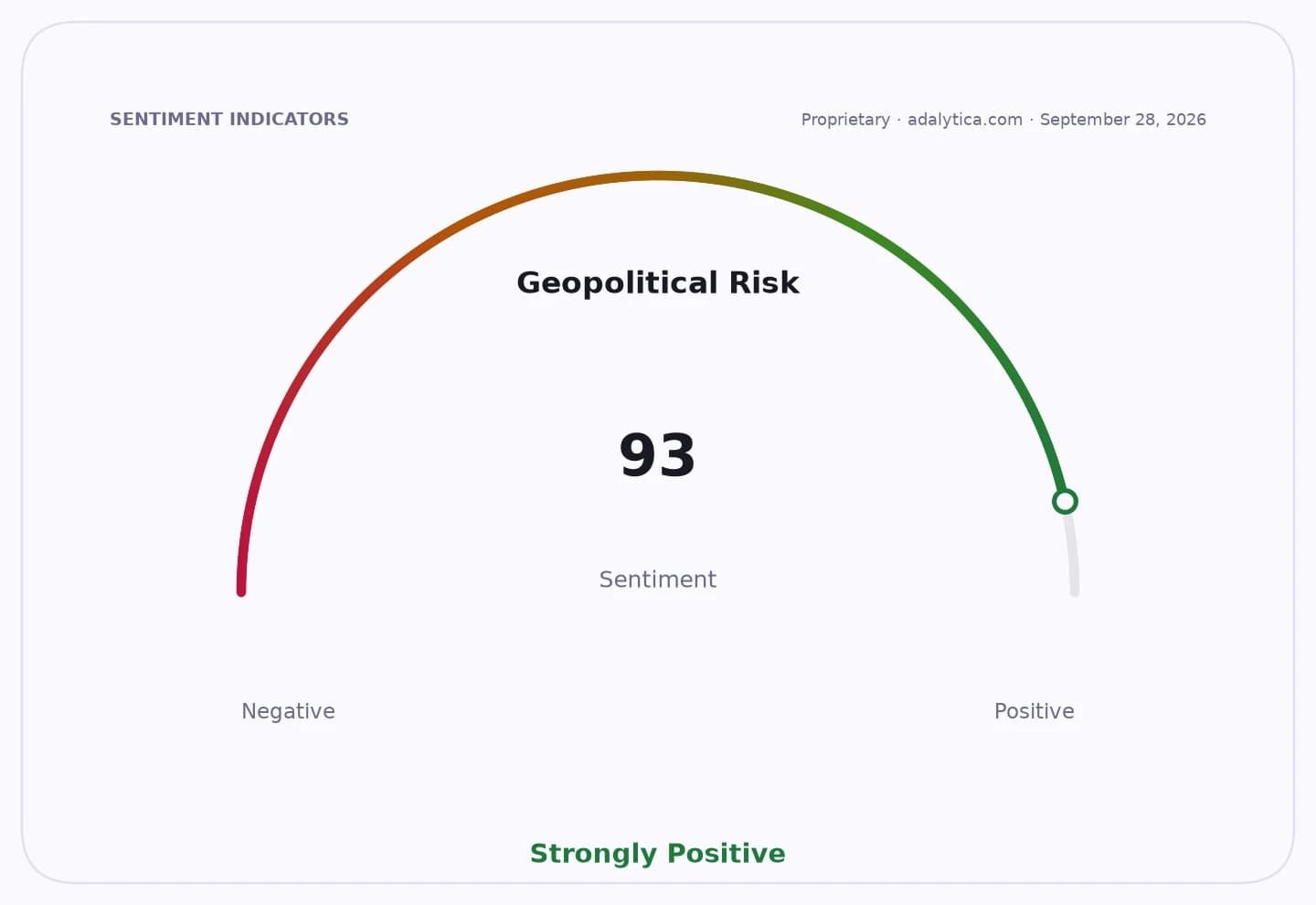
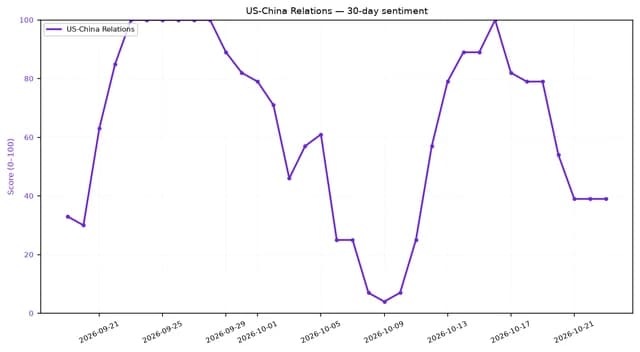
The market message is consistent with the wider sentiment picture. Adalytica’s U.S.-China relations gauge shows neutral sentiment at 39, but with awareness in “extreme fear,” suggesting investors are still focused on downside risks rather than a broad rapprochement. A separate global stability indicator also shows neutral sentiment alongside elevated caution, reinforcing the view that the summit is being priced as a de-risking event, not a breakthrough.
For investors, the upside case is straightforward: even a narrow truce could help exporters, industrials and sectors exposed to Chinese demand, while reducing the odds of fresh restrictions on technology and capital flows. The downside case is that any headline-friendly agreements on aircraft or agricultural purchases may prove temporary, leaving the structural issues — especially technology competition, security policy and supply-chain realignment — unchanged. That would keep pressure on China-sensitive equities and preserve the premium investors demand for policy uncertainty.
The more likely outcome is a managed pause, not a reset. If the leaders can maintain dialogue and avoid new retaliation, that alone would be meaningful for global trade stability. But until the two sides show progress on the issues that matter most to corporate planning and long-term capital allocation, the meeting will remain a diplomatic stopgap rather than a decisive turning point.
| Entity | Gains | Losses |
|---|---|---|
| U.S. exporters | ▲Potential market access | ▼Ongoing policy uncertainty |
| Chinese importers | ▲Smoother trade channels | ▼Less leverage in talks |
| Boeing / farm sector | ▲Possible orders | ▼No structural tariff relief |
| China and U.S. equity longs | ▲Reduced escalation risk | ▼Limited upside from headlines |